Ghana's Housing Crisis: NHF and Stakeholders Unveil Joint Plan to Fix Finance System
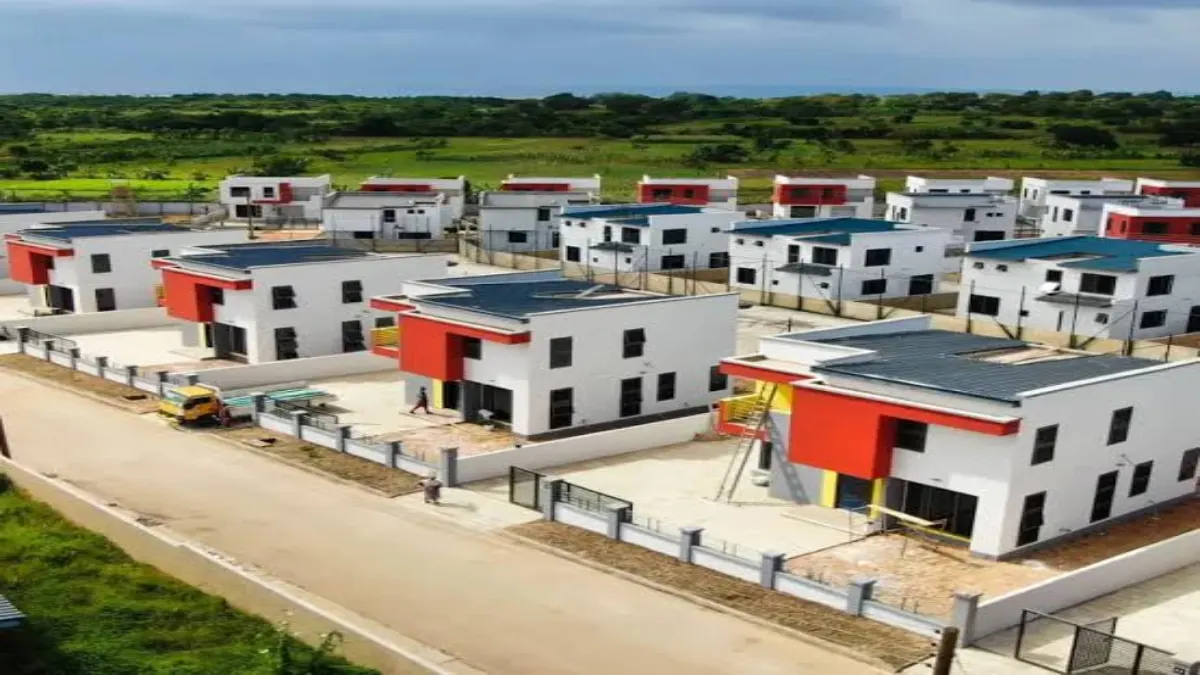
Ghana's chronic housing shortage and affordability crisis took a step forward this week as the National Housing Fund convened a landmark meeting bringing together financial institutions, housing developers, development partners and other sector stakeholders to hammer out a unified approach to the country's persistent housing finance challenges.
The collaborative resolution marks a rare moment of consensus among traditionally fragmented actors in Ghana's property and finance sectors. The housing deficit remains one of the most acute development issues facing the country, with millions of Ghanaians unable to access affordable, quality accommodation despite strong population growth and urbanisation pressures.
The scope of Ghana's housing challenge
Ghana faces an estimated housing deficit of over 1.7 million units, with the problem particularly acute in urban centres like Accra, Kumasi and Sekondi-Takoradi. Limited access to long-term financing, high interest rates, property registration inefficiencies, and weak regulatory frameworks have historically constrained housing supply and pushed homeownership out of reach for ordinary Ghanaians. The gap has widened as rural-to-urban migration accelerates and informal settlements expand around major cities.
Financial institutions cite credit risk and limited collateral documentation as obstacles to lending for housing, whilst developers struggle with project finance accessibility and inconsistent policy environments. This disconnect between lenders and builders has starved the sector of the capital needed for large-scale housing development.
What the joint resolution targets
While specific details of the adopted resolutions were not immediately detailed, stakeholder meetings of this nature typically focus on several core areas:
- Strengthening the National Housing Fund's lending capacity and reducing borrowing costs for developers and homebuyers
- Improving property titling and land registration systems to reduce lender risk
- Establishing standardised appraisal and risk assessment protocols across financial institutions
- Creating long-term mortgage products with affordable repayment terms for middle and lower-income Ghanaians
- Coordinating policy advocacy to government for regulatory reforms and tax incentives
Why this matters for Ghana
Housing finance reform is foundational to Ghana's broader development goals. Affordable homeownership builds household wealth, stabilises communities and stimulates construction employment. Conversely, the current crisis perpetuates poverty cycles, drives informal settlement expansion, and strains public infrastructure.
The NHF-led stakeholder approach signals recognition that no single actor—whether government, private lender or developer—can solve this alone. Banks need policy certainty; developers need capital access; homebuyers need affordable products; and government needs increased tax revenue and reduced pressure on social services. Coordination between these groups, facilitated by the NHF, creates opportunities for innovative financing structures, risk-sharing mechanisms and economies of scale that individual actors cannot achieve independently.
Successful implementation of these resolutions could unlock billions of cedis in housing investment, particularly if accompanied by complementary government reforms to land tenure security, building regulation enforcement and tax policy. Regional and international development partners present at the meeting may also offer technical support and concessional financing to catalyse early progress.
The next phase will be translating resolutions into concrete action plans with timelines, accountability mechanisms and measurable targets. Ghanaians watching this sector will need to see tangible outcomes—lower mortgage rates, faster loan approvals, and visible new housing construction—within the next 12 to 18 months for stakeholder enthusiasm to translate into sustained momentum.
Source: 3News


Comments (0)
Be the first to comment.