Ghana's firms must see AI as growth engine, not just efficiency shortcut, experts warn
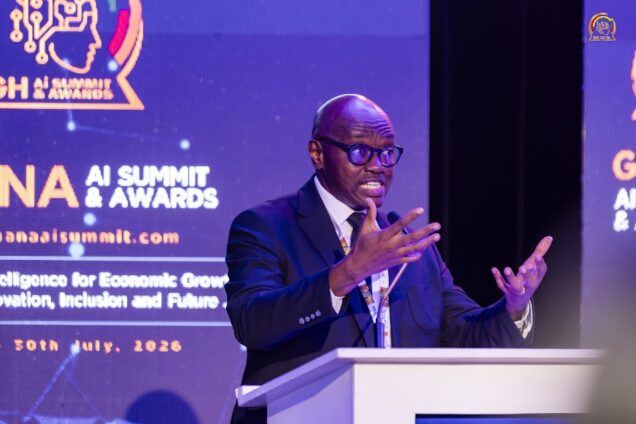
Ghana's business community has been challenged to fundamentally rethink how they deploy artificial intelligence, moving beyond simple cost-reduction strategies to embrace AI as a transformative strategic asset that can drive innovation, create competitive advantage and unlock sustainable growth.
Speaking at the 2026 Ghana AI Summit and Awards, Edward Aikins, Senior Manager of Technology and Transformation at Deloitte, outlined a critical gap in how many Ghanaian organisations currently approach AI adoption. While most companies have successfully implemented AI to streamline operations, reduce expenses and accelerate delivery timelines, relatively few are using the technology to reimagine their business models or create lasting differentiation in the market.
"Most companies are using AI to reduce costs, improve efficiency and achieve savings," Aikins noted. "However, organisations should leverage AI as a core strategic capability rather than simply as a cost reduction tool. Use AI to create sustainable competitive differentiation." He stressed that since technology access is now democratised across industries, creativity and strategic vision will become the true competitive differentiator.
Data integration and infrastructure: the foundation for success
Aikins emphasised that successful AI implementation requires two critical foundations. First, organisations must consolidate data currently held in departmental silos into centralised systems that AI can effectively analyse. This data integration is essential for generating accurate insights, enhancing decision-making quality and delivering measurable business value tailored to Ghana's unique market conditions.
Second, businesses must invest in future-ready digital infrastructure capable of supporting rapid AI evolution. The technology landscape shifts dramatically; systems can become outdated within months as new capabilities emerge. Infrastructure strategy must therefore prioritise scalability and adaptability, with organisations designing systems that can grow and adapt as AI innovations accelerate.
"Design infrastructure that will support future AI capabilities," Aikins advised. "Your infrastructure strategy should enable you to scale because the technology is changing so fast. You need a long-term construction strategy that can keep pace with continuous innovation in AI."
Why it matters for Ghana
Aikins's message arrives at a pivotal moment for Ghana's digital economy. Earlier this year, the Ministry of Communication, Digital Technology and Innovation launched Ghana's national AI Policy—a comprehensive framework designed to guide the country's technological advancement and AI adoption across sectors. This policy provides the strategic direction at a national level, whilst industry leaders like Aikins are signalling what implementation must look like at the firm level.
Ghana's competitive position in West Africa depends on businesses moving beyond incremental efficiency gains to genuine innovation. Ghanaian firms that treat AI strategically—integrating data across departments, investing in scalable infrastructure, and using AI to reimagine products and services—will position themselves as regional leaders. Those that view AI merely as a cost-cutting tool risk falling behind competitors who leverage the technology more creatively.
For sectors critical to Ghana's economy—financial services, telecommunications, manufacturing, agriculture and logistics—the strategic deployment of AI could unlock significant competitive advantages, improve service quality and drive export competitiveness across the ECOWAS region and beyond.
Source: The Ghana Report



Comments (0)
Be the first to comment.