Ghana's Publishing Industry Must Embrace AI While Protecting Indigenous Knowledge, Says University Director
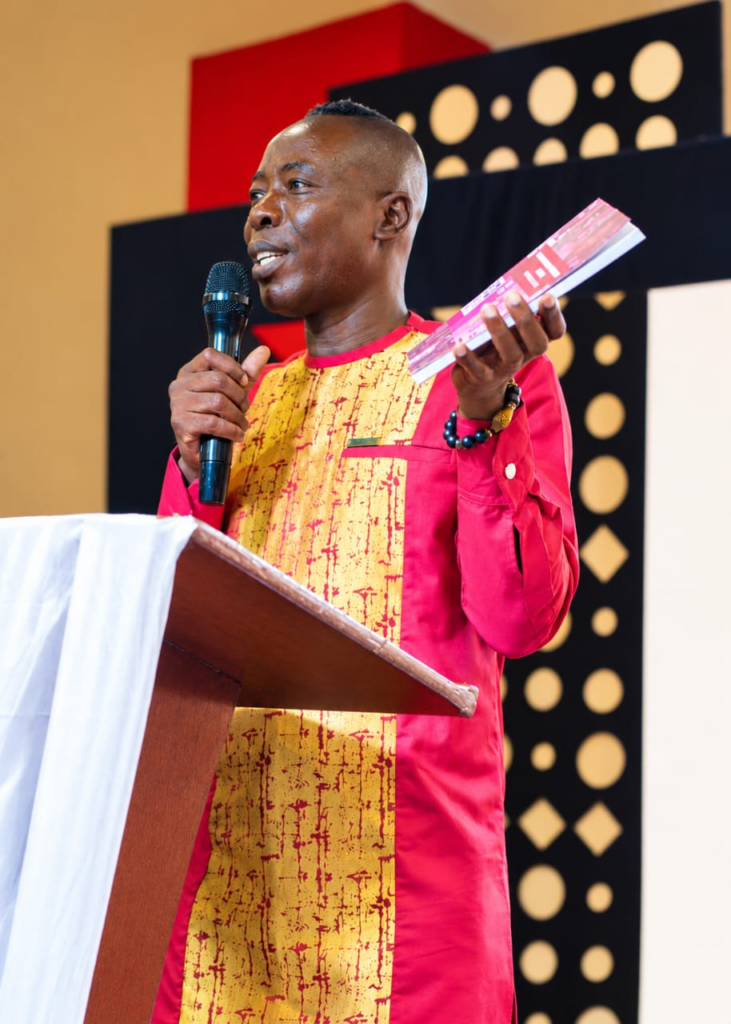
Ghana's publishing industry stands at a critical crossroads as artificial intelligence reshapes content creation and distribution, but the sector must not abandon its cultural roots in pursuit of technological advancement, according to Prof. Samuel Kojo Kwofie, Director of the Institute of Applied Science and Technology at the University of Ghana.
Speaking at the launch of a new book documenting Ghana's publishing industry journey at the 23rd Ghana International Book Fair 2026, Prof. Kwofie stressed that local knowledge systems and indigenous solutions must be woven into the data used to train AI models. This approach, he argued, is essential for promoting culturally inclusive development and preventing the colonisation of African knowledge by global AI systems designed without African input.
Balancing Technology with Human Creativity
While acknowledging that AI already influences publishing through automation and digitalisation, Prof. Kwofie cautioned against treating the technology as a replacement for human creativity and editorial responsibility. He emphasised that artificial intelligence cannot replicate the judgment, ethical grounding and creative vision that publishers and authors bring to their work.
The academic highlighted three foundational principles that must guide AI's integration into publishing: ethics, plagiarism prevention and cognitive ownership protection. These safeguards become increasingly important as AI tools generate content at unprecedented scale, raising questions about authenticity and attribution.
Rather than resisting AI, Prof. Kwofie encouraged Ghanaian publishers to harness its efficiency gains—faster production timelines, streamlined workflows and expanded content creation capacity—whilst simultaneously investing in local technical capacity. This balanced approach would allow Ghana's publishing sector to compete globally without surrendering its distinctive voice.
Why It Matters for Ghana
Ghana's publishing industry represents far more than a commercial sector; it is a critical infrastructure for preserving, transmitting and advancing indigenous knowledge. As global AI systems become standard tools in publishing, decisions made now about how these systems are trained will determine whether Ghanaian voices, stories and knowledge systems remain visible in the digital publishing ecosystem of the future.
The concern Prof. Kwofie raised reflects a broader African challenge: without deliberate inclusion of African data and perspectives in AI development, African knowledge risks becoming marginalised in systems that will increasingly mediate how information is created, organised and accessed globally. For a nation with Ghana's rich literary and scholarly traditions, this represents a genuine threat to cultural sovereignty.
Additionally, as digital publishing expands access—allowing readers with basic devices to access books without physical distribution infrastructure—Ghana's publishing sector has an opportunity to reach continental and diaspora audiences. However, this opportunity is only fully realised if Ghanaian knowledge systems and storytelling traditions are prominently represented in the digital platforms and AI systems that will curate, recommend and distribute content.
The Broader Publishing Context
Prof. Kwofie's comments came whilst reviewing a newly published book documenting nearly four decades of Ghana's Publishing Studies Programme at Kwame Nkrumah University of Science and Technology (KNUST). The publication, authored by I.K. Appiah, traces the evolution of publishing education in Ghana and demonstrates the sector's proven ability to equip graduates with skills applicable across media, technology, communications and information management.
The academic encouraged young Ghanaians to view publishing not as a declining traditional industry but as an evolving field with expanding relevance in the digital age. As publishing increasingly intersects with technology, data science and digital platforms, Ghana's publishing professionals will need the technical literacy to influence how African knowledge is represented in AI systems.
Prof. Kwofie's call ultimately challenges Ghanaian publishers to think strategically: adopting innovation whilst protecting cultural integrity, embracing automation whilst expanding local technical expertise, and engaging with global systems whilst ensuring Ghanaian knowledge remains recognisably Ghanaian.
Source: MyJoyOnline




Comments (0)
Be the first to comment.