
Ghana's English Language Crisis: WASSCE Results Hit Four-Year Low as 62% Pass Rate Signals Urgent Education Rethink
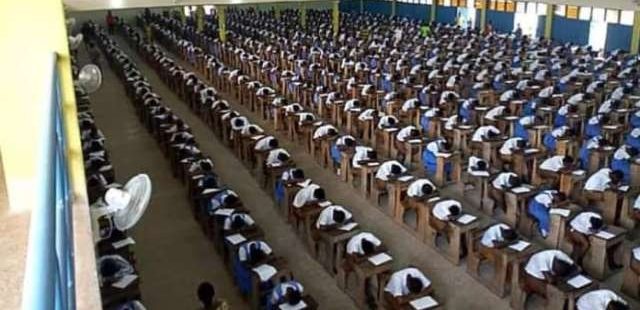

Ghana's secondary school education system faces a mounting crisis in English language proficiency, with the 2026 West African Senior School Certificate Examination (WASSCE) revealing that only 62.40% of candidates achieved passing grades in the subject. This marks a sharp decline from 69.00% in 2025 and represents the fourth consecutive year of deteriorating performance in a core subject critical to tertiary education and employment prospects.
The data from the West African Examinations Council (WAEC) paints an alarming picture. In 2026, while 315,094 candidates secured grades between A1 and C6—the benchmark for university admissions and professional opportunities—nearly 143,000 students fell below this threshold. A combined 49,771 scored D7, 37,080 obtained E8, and 55,940 recorded F9, the lowest passing grade.
A Troubling Downward Trajectory
What makes this decline particularly concerning is its consistency and isolation. English Language performance has slipped steadily: from 73.11% in 2023 to 69.52% in 2024, then 69.00% in 2025, before the sharp drop to 62.4% in 2026. This contrasts starkly with progress in other core subjects, suggesting the problem is specific to English teaching and learning rather than a system-wide issue.
Meanwhile, other foundational subjects have improved significantly. Mathematics (Core) jumped from 48.73% in 2025 to 60.75% in 2026—a 12-point gain. Integrated Science rose from 57.74% to 62.08%, and Social Studies recorded the most dramatic turnaround, climbing from 55.82% to 78.04%. These improvements demonstrate that Ghanaian students can succeed when conditions are right, making the English Language slide more puzzling and urgent to address.
Why This Matters for Ghana
The deterioration in English proficiency carries serious implications for Ghana's education system and economy. English remains the official language of instruction from secondary level onwards and the medium for international communication, trade, and academic collaboration. Students with weak English skills face barriers not only to university placement but to employment in professional sectors, entrepreneurship, and further education abroad.
For tertiary institutions, the influx of students with borderline English grades strains support services. Employers increasingly report difficulty finding school leavers with adequate written and spoken English for office and customer-facing roles. This weakens Ghana's competitiveness in sectors such as business process outsourcing, tourism, and multinational operations.
The crisis also reflects deeper issues in the secondary education pipeline: possible overcrowding in classrooms, teacher shortages or insufficient training in pedagogical methods, limited access to reading materials and digital resources, and potentially declining motivation among students facing exam pressure and competing distractions. WAEC's observation that other subjects have fluctuated but recovered suggests that English Language teaching requires targeted intervention rather than system-wide overhaul.
The Road Forward
Education stakeholders—the Ghana Education Service, WAEC, school administrators, and the Ministry of Education—must investigate the root causes urgently. Possible steps include reviewing English curriculum relevance, assessing teacher qualifications and professional development opportunities, improving classroom resources, and exploring whether assessment methods fairly reflect students' abilities. Early intervention in primary and junior secondary education may also help before students reach WASSCE.
The performance of Mathematics, Integrated Science, and especially Social Studies proves Ghanaian students can improve when systems work effectively. English Language's stubborn decline suggests a specific blockage that, if identified and cleared, could reverse this troubling trend.
Source: The Ghana Report
.jpg)


Comments (0)
Be the first to comment.