
Ghana's culinary future: How Dainess Chef School is pushing chefs to innovate without losing identity
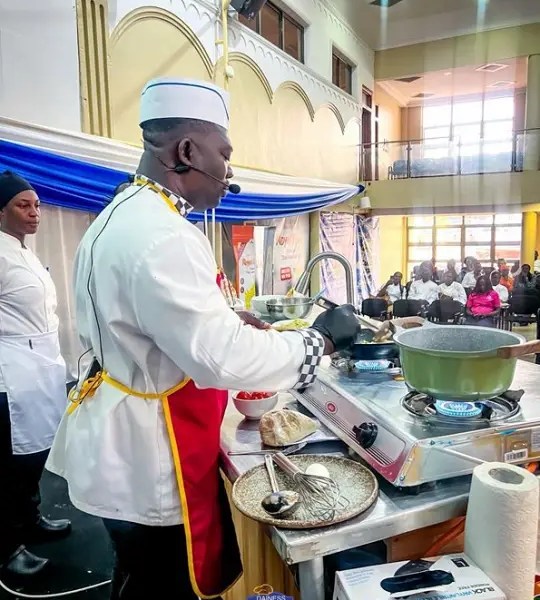

Ghana's food sector is at a crossroads—caught between the pressure to compete globally and the need to preserve culinary traditions that define the nation's identity. This tension took centre stage at Dainess Chef School's third annual Culinary Expo, held recently at the Ghana Academy of Arts and Sciences in Accra, where industry leaders, chefs and hospitality professionals gathered to explore how innovation and heritage can coexist in Ghanaian cuisine.
Under the theme 'Culinary Innovations: A Ghanaian Perspective', the Expo demonstrated that modernising Ghanaian food does not mean abandoning it. Practical demonstrations showed chefs transforming familiar ingredients—plantain through gelification techniques and cassava flour into boba pearls—proving that contemporary culinary science can elevate local produce without stripping away cultural meaning.
Building infrastructure for culinary excellence
Pamela Sarkodee, Principal of Dainess Chef School, framed the Expo as a Corporate Social Responsibility initiative aimed at strengthening Ghana's entire culinary ecosystem. She was candid about what the nation still lacks: whilst Ghana possesses excellent ingredients, talented chefs and rich food heritage, the infrastructure supporting culinary innovation remains underdeveloped.
"We have the ingredients. We have the talent. We have the heritage. What we require now is the infrastructure of innovation, the networks, the policies, the training, the exposure, and the confidence to compete on the global stage," Sarkodee said.
This assessment reflects a genuine challenge facing Ghana's hospitality sector. Training standards vary widely between institutions, equipment shortages persist, and the link between culinary schools and industry remains weak. These gaps limit young chefs' ability to develop world-class skills and restrict Ghana's potential to export food innovation internationally.
Frank Antwi, General Manager of Dainess Chef School, emphasised that modern culinary training must extend far beyond recipes. Chefs today need competency in food safety, nutrition science, food costing, technology and customer expectations. Techniques like molecular gastronomy—which manipulates texture, temperature, aroma and presentation—can help Ghanaian chefs create distinctive experiences whilst honouring traditional flavours and ingredients.
Professional standards and industry collaboration
Joseph Wilson Tetteh, President of the Hospitality Alliance of Ghana, raised critical concerns about inconsistent standards across Ghana's culinary training landscape. He called for stronger professional certification requirements for chefs, minimum competency standards for training institutions and deeper collaboration between schools and working kitchens.
Tetteh also highlighted the importance of standard operating procedures in commercial kitchens. Consistency in taste, quality and service delivery is fundamental to customer satisfaction and brand reputation—something that remains variable across many Ghanaian food establishments. When diners visit a restaurant multiple times, they expect the same quality; fluctuations damage reputation and limit growth.
Why it matters for Ghana: Culinary diplomacy and tourism
Speaking on behalf of the Minister for Tourism, Arts and Culture, Eunice Martey Anakwah positioned food as a powerful tool for cultural diplomacy and tourism promotion. Dishes like jollof rice and kelewele, alongside Ghana's world-renowned cocoa, serve as "delicious culture ambassadors" that communicate Ghanaian identity to international audiences.
This perspective is significant. As Ghana seeks to diversify its economy and boost tourism revenue, the culinary sector offers untapped potential. Food tourism—where visitors travel to experience authentic local cuisine—is a growing global trend. Countries from Thailand to Peru have successfully leveraged their food heritage into major tourism and export revenue. Ghana, with its rich culinary traditions and ingredients, could follow a similar path—but only if the sector is professionalised, innovated and properly supported.
The challenge for Ghana is clear: strengthen the infrastructure supporting culinary talent, establish consistent professional standards, foster collaboration between training and industry, and create confidence among chefs that innovation and tradition can strengthen rather than contradict each other. If successful, Ghana's food sector could become an economic driver whilst ensuring that generations to come continue to understand and celebrate the culinary heritage that defines the nation.
Source: Ameyaw Debrah





Comments (0)
Be the first to comment.