
Ghana's crumbling sports infrastructure is destroying our football future, warns ex-Black Stars captain Opare

Daniel Opare, a seasoned former Black Stars defender who represented Ghana at the highest level, has delivered a damning critique of the country's sports infrastructure, arguing that inadequate facilities are systematically undermining the potential of emerging football talent.
Speaking candidly about a challenge that has long plagued Ghanaian football, Opare refused to sugarcoat the reality facing young players trying to develop their skills. His assessment cuts to the heart of a persistent problem: while Ghana has historically produced talented players who have gone on to succeed internationally, the domestic foundation upon which they build their careers remains weak.
The Infrastructure Crisis Holding Back Talent
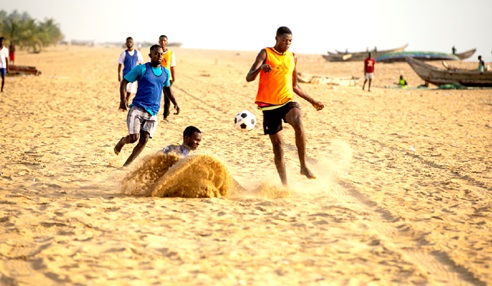
Opare's blunt acknowledgement reflects what many within Ghana's football community have long privately expressed but rarely articulated so directly. Training grounds lacking proper pitches, inadequate gym facilities, poor lighting for evening sessions, and the absence of modern recovery and medical equipment create a significant disadvantage for young Ghanaian players compared to their peers in better-resourced nations.
For a country with a proud football heritage and a large pool of young talent, the disparity is particularly frustrating. Players who show promise at grassroots and academy levels often find their development plateaus not because of lack of ability, but because the infrastructure simply cannot support their progression. This places Ghanaian prospects at a considerable disadvantage when competing for international opportunities, as scouts and clubs from Europe and other advanced football nations increasingly expect players to have trained in modern facilities.
Why It Matters for Ghana's Football Future
Ghana's football ecosystem depends on a steady pipeline of well-developed young players moving into the professional ranks and eventually the Black Stars. When facilities are substandard, this pipeline becomes congested and inefficient. Talented youngsters may never reach their full potential, and Ghana loses competitive edge both domestically and on the continental stage.
The economic implications are also significant. Every talented player who leaves Ghana prematurely to find better training conditions abroad represents lost revenue for domestic clubs and missed opportunities for the Ghana Premier League to strengthen its competitiveness. Additionally, players developed in Ghana's environment should theoretically be better adapted to the local playing style, yet many international scouts and clubs now bypass Ghana entirely in favour of academies in countries with superior infrastructure.
For the Black Stars specifically, Opare's warning suggests that future squads may struggle to maintain the level of performance Ghanaians expect, not because of a lack of raw talent, but because that talent was never properly refined.
A Call for Investment and Action
Opare's statement serves as a reminder that investment in sports infrastructure is not merely about facilities—it is fundamentally about preserving Ghana's footballing legacy and competitiveness. Whether through government allocation, private sector partnerships, or corporate sponsorship, reversing this trend requires sustained commitment and resources that have not yet materialised at the scale needed.
The question now is whether stakeholders in Ghanaian football will act on this warning or allow the infrastructure deficit to continue eroding the nation's talent production and international standing.
Source: 3News
Comments (0)
Be the first to comment.