
Ghana records over 300 extremist recruitment arrests as northern border faces growing security threats


Ghana's security agencies have intensified efforts to counter extremist recruitment networks operating along the country's northern frontier, with over 300 arrests recorded between 2023 and 2025, according to Majority Leader James Agalga. The figures underscore mounting pressure on Ghana's border regions as violent extremism continues to destabilise neighbouring countries in West Africa.
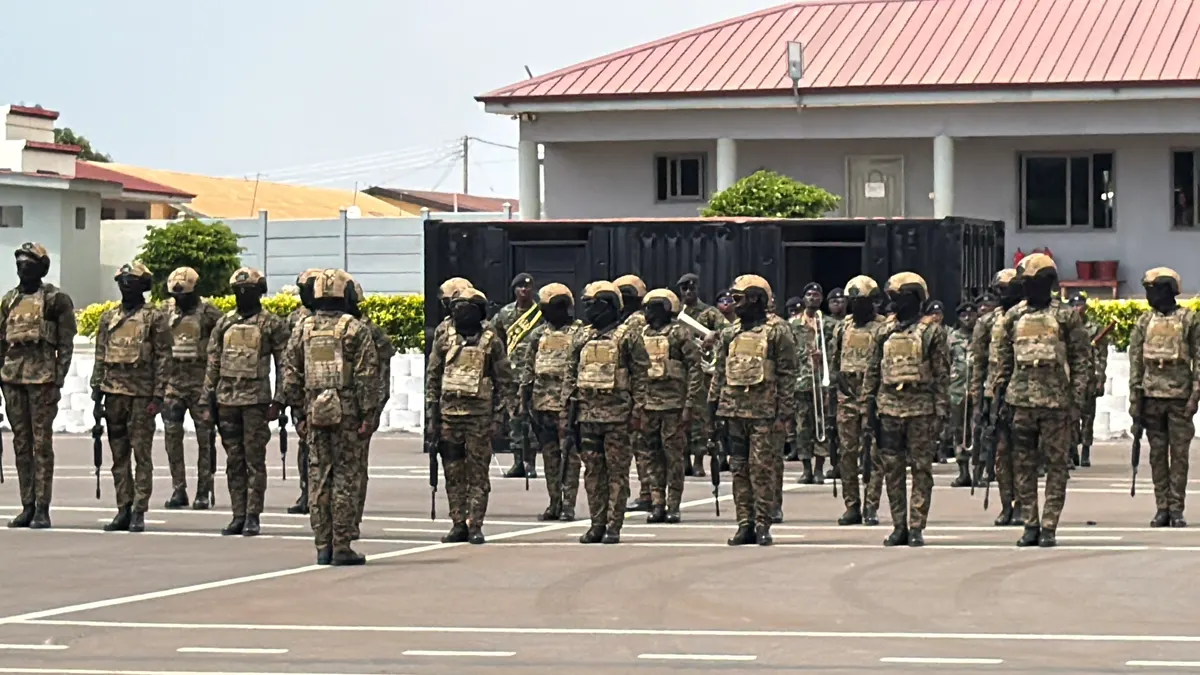
The arrests represent part of a broader security operation by the Ghana Armed Forces and allied agencies to prevent terrorist groups active across the Sahel from establishing recruitment pipelines within Ghana. During the same period, security forces documented 47 cross-border incursions, illustrating the scale of security challenges confronting the country's northern boundary regions.
Speaking at the 9th REPAM-CDS Security Governance Conference, Mr Agalga, who chairs Parliament's Defence and Interior Committee, emphasised that Ghana's historical stability should not breed complacency given the nation's geographical proximity to states ravaged by violent extremism.
A shifting security landscape
Beyond traditional border threats, Ghana faces an evolving security environment marked by sophisticated cyber-enabled crime. Crime statistics for 2024 revealed a 12.3 percent increase in cybercrime and fraud cases, signalling a fundamental shift in how security threats manifest. These non-traditional threats operate across borders and exploit vulnerabilities in governance systems, requiring different response mechanisms than conventional security challenges.
The combination of extremist recruitment attempts and rising cybercrime suggests criminal and terrorist networks are adapting tactics to exploit Ghana's digital infrastructure and social vulnerabilities. This dual threat—physical security risks along borders and digital threats within the country—demands comprehensive, coordinated responses across multiple state institutions.
Why it matters for Ghana
Ghana's position as a relatively stable democracy in West Africa has made it both a sanctuary and potential strategic asset for extremist groups seeking to expand influence in the region. The Sahel crisis—encompassing Mali, Burkina Faso, and Niger—has created a humanitarian emergency and a breeding ground for groups like ISIL and Al-Qaeda affiliates. These organisations have demonstrated capability and intent to operate across international boundaries, recruiting fighters and establishing logistics networks beyond traditional conflict zones.
The 47 recorded cross-border incursions suggest that extremist operatives and smuggling networks are actively testing Ghana's northern perimeter. If recruitment networks take root, Ghana risks becoming a transit point or recruitment hub for terrorist organisations, potentially destabilising the country's hard-won security gains and attracting international extremist activity.
Additionally, Ghana's status as a West African economic hub and hub for regional trade makes it vulnerable to criminal networks that blend terrorism financing, human trafficking, and drug smuggling. The rise in cybercrime compounds these risks by enabling networks to operate with reduced physical footprints whilst accessing banking systems, government databases, and communications infrastructure.
Strengthening defences
Mr Agalga called for Ghana to strengthen border security mechanisms and enhance intelligence-gathering capabilities to prevent extremist networks from gaining operational capacity within the country. This includes improved coordination between military, police, and intelligence services; investment in border surveillance technology; and community-based early-warning systems in vulnerable frontier communities.
The security situation also highlights the importance of addressing root causes—poverty, youth unemployment, and grievances—that make communities susceptible to extremist recruitment messaging. Without complementary development and social cohesion efforts, security operations alone cannot prevent radicalisation.
Source: MyJoyOnline



Comments (0)
Be the first to comment.