
Bawku motorbike ban for women lifted as security situation stabilises


The Government of Ghana has moved to ease restrictions in the Bawku Municipality by lifting a ban on women operating motorcycles, marking a significant shift in the security measures that have governed daily life in the volatile northern enclave. The decision, issued through Executive Instrument on the advice of the National Security Council, represents official recognition that conditions in the area may be stabilising after months of heightened tension.
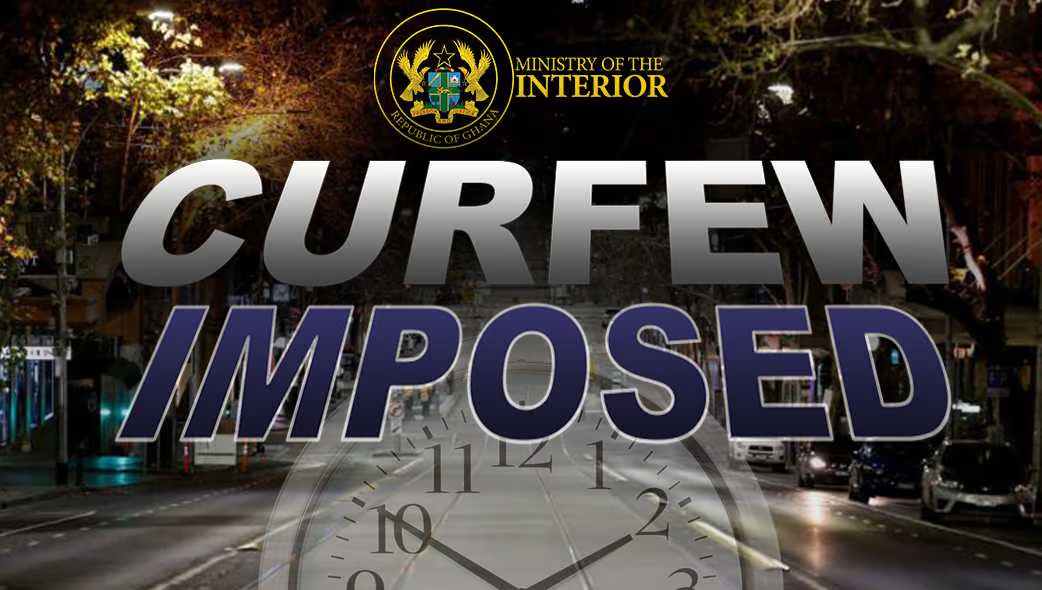
The restriction on female motorcycle riders had been one of several measures implemented as part of broader curfew protocols affecting Bawku and surrounding communities. The lifting of this specific ban signals that authorities believe the immediate security threats that prompted such measures have sufficiently diminished to allow for a gradual restoration of normal activity.
Context: Bawku's security challenges
The Bawku Municipality has faced recurring cycles of communal tensions and security incidents over several years, often centring on chieftaincy disputes and resource competition between ethnic groups in the area. These conflicts have periodically necessitated government intervention, including the imposition of curfews and movement restrictions designed to prevent escalation and protect residents.
The specific targeting of restrictions on women riding motorbikes had been controversial, as it disproportionately affected female mobility and economic activity in an area where motorcycles serve as essential transport for commerce and daily movement. The ban effectively limited women's access to markets, healthcare facilities, and income-generating activities that depend on motorcycle mobility.
Why it matters for Ghana
This development carries several important implications for both Bawku residents and the broader national security landscape. First, it demonstrates the government's confidence that de-escalation efforts have yielded tangible results, allowing for incremental normalisation rather than sudden wholesale removal of all restrictions at once. However, it also signals that other curfew measures likely remain in place, indicating that full restoration of unrestricted movement may still be some distance away.
For women in Bawku particularly, the lifting of this restriction restores a crucial avenue for economic participation and personal mobility. Women traders, healthcare workers, and others dependent on motorcycles can now resume activities that had been severely constrained. The decision also acknowledges that blanket restrictions, however well-intentioned for security purposes, can create secondary harms to vulnerable populations.
Nationally, the move reflects the government's ongoing challenge in balancing security imperatives with the need to maintain civilian freedoms and economic activity in conflict-prone areas. Ghana's approach to Bawku has emphasised dialogue and graduated de-escalation rather than permanent military occupation, and this decision fits that pattern.
Residents and observers will be watching to see whether the lifting of this restriction leads to further easing of curfew measures, or whether a plateau in normalisation occurs. The success of this initial step in restoring restricted freedoms could influence government confidence in pursuing broader reopening of the area.
Source: 3News



Comments (0)
Be the first to comment.