
Ghana must pivot back to agriculture to solve youth joblessness, IEA economist warns
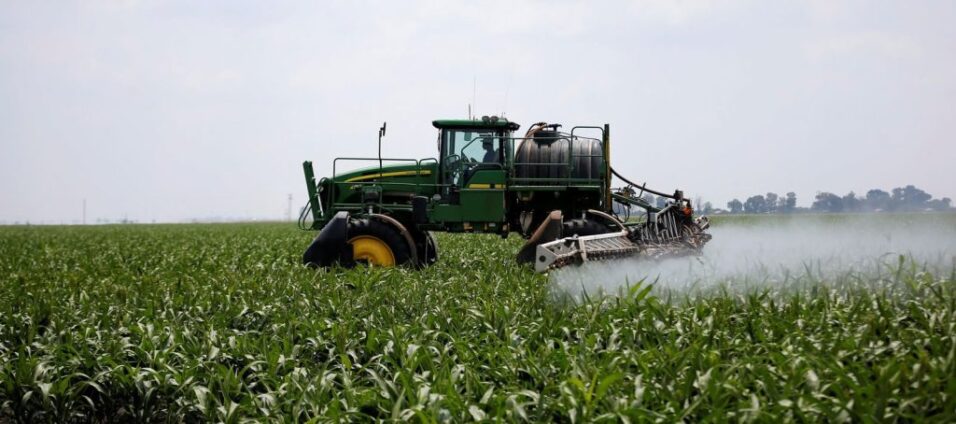

Ghana has abandoned its greatest economic asset in pursuit of a service-led economy that the country is simply not yet ready for, according to research from the Institute of Economic Affairs. Prof. Alexander Bilson Darku, the IEA's Director of Research, is calling for a fundamental reorientation of Ghana's development strategy—one that places agriculture and agribusiness at the heart of job creation and economic transformation.
The warning comes as youth unemployment remains a persistent crisis in Ghana. With a majority of the country's employed workforce still engaged in agriculture, Prof. Darku argues it makes little economic sense to pursue growth strategies centred on services when farms and food production offer far greater employment potential.
The case for agriculture-first growth
Prof. Darku's position challenges the conventional development narrative that suggests all economies should move swiftly from agriculture towards services and high-tech sectors. Instead, he contends that Ghana's stage of development demands a different approach. When a nation's workforce is predominantly agricultural, allowing that sector to stagnate while investing in services creates a structural mismatch—growth in one area does not translate to jobs in the places where people actually live and work.
Agriculture and agribusiness, he argues, offer immediate scalability. The sector can absorb significant numbers of unemployed youth without requiring the lengthy educational pipelines that service-sector jobs often demand. Young Ghanaians could transition into value-added agricultural activities—processing, packaging, exporting, and modern farming techniques—creating a ladder out of unemployment that exists today, not in some distant future.
Critically, Prof. Darku also sees agriculture as the necessary foundation for industrial growth. Raw materials from a vibrant farm sector can feed Ghana's manufacturing aspirations, creating a virtuous cycle where agricultural productivity supports factories and related industries, which in turn generate more jobs.
Why it matters for Ghana
Ghana's rush toward a service-led economy reflects decades of policy decisions that sought to modernise rapidly. However, this strategy has left millions of young Ghanaians—particularly those in rural areas—without viable employment pathways. Youth unemployment remains stubbornly high, contributing to migration, underemployment, and social frustration.
The IEA's intervention suggests that policymakers may have misjudged Ghana's readiness for a service economy. The country still has vast untapped agricultural potential: arable land remains underutilised, yields lag behind regional and global benchmarks, and value chains remain underdeveloped. Rather than competing with India, the Philippines, and other nations already dominant in outsourced services, Ghana could dominate agricultural production and processing across West Africa.
This reframing also has implications for government spending and investment priorities. If agriculture is to drive growth, resources must flow toward rural infrastructure, agricultural extension services, modern farming inputs, and agribusiness incubation—areas that have seen investment decline relative to urban-focused service sectors.
Bridging the gap
Prof. Darku's argument is not anti-modernisation; rather, it is sequentialist. A service economy remains desirable, but it should emerge after agriculture has been strengthened, not before. This approach recognises Ghana's current constraints and assets, tailoring strategy to what will actually create jobs now rather than chasing an aspirational model.
The challenge for policymakers will be reversing years of urban-centric development and re-establishing agriculture as a vehicle for growth and dignity. It requires not just rhetoric but sustained investment, market linkages, and the political will to prioritise the sectors where Ghana's youth can actually find employment.
Source: The Ghana Report





Comments (0)
Be the first to comment.