
Ghana-Korea Alumni Networks Unite in Accra to Drive National Development
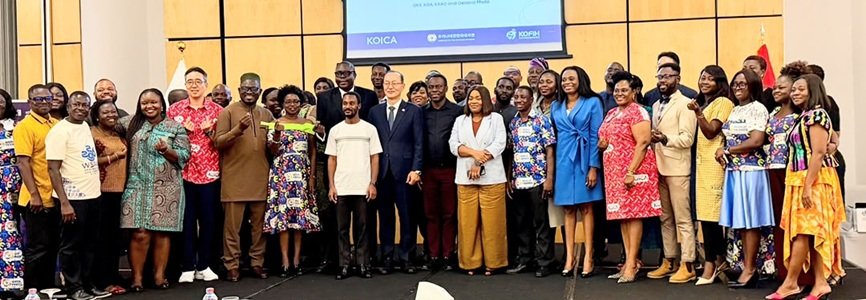

Ghanaian professionals trained under South Korean government programmes have come together for the first time in a unified gathering, as the alumni associations of the Korea International Cooperation Agency (KOICA), the Korea Foundation for International Healthcare (KOFIH), and the Korean Embassy held their 2026 Joint General Assembly in Accra. The event marked a significant step in harnessing the collective expertise of Ghanaians who have benefited from decades of Korea-Ghana bilateral cooperation.
Decades of investment in Ghanaian human capital
Since 1998, KOICA alone has supported approximately 1,700 Ghanaian officials and professionals through training programmes spanning public administration, health, education, and agriculture. Add to that the contributions of the Global Korea Scholarship (GKS) programme — which has funded Ghanaian students pursuing higher education in Korean universities — and the Dr Lee Jong-wook Fellowship Programme under KOFIH, and the scale of Korea's investment in Ghana's workforce becomes considerable.
The Dr Lee Jong-wook Fellowship Programme, established by KOFIH in 2007 in honour of the late World Health Organisation Director-General who died in 2006, has trained 172 Ghanaian health professionals as part of a broader cohort of 1,894 participants from 36 countries by 2025. KOFIH Country Representative Ms Hyang Lee described the programme as a living tribute to Dr Lee's dedication to building health capacity in developing nations.
KOICA Ghana Country Director Mr Dongwan Woo stressed that the true measure of these programmes' success lies not in the number of scholarships awarded, but in whether alumni actively apply what they have learnt to reform institutions and advance Ghana's development agenda. He described the assembly as an important platform for professionals across different sectors to maintain ties forged in Korea and to identify fresh areas of collaboration.
Why it matters for Ghana
Ghana's development challenges — from strengthening its healthcare system to modernising public administration and boosting agricultural productivity — require a well-trained, well-connected professional class. Korean-trained alumni represent a ready-made reservoir of knowledge and international networks that, if properly coordinated, can contribute meaningfully to policy, service delivery, and innovation across sectors.
Korean Ambassador Mr Kyongsig Park drew a pointed lesson from his own country's story: Korea's remarkable transformation from a low-income nation to a global economic power was built substantially on investment in human capital. His message to Ghanaian alumni was that they carry that same potential within their professional communities.
The Ambassador also highlighted practical contributions already being made — KOICA alumni engaging in knowledge-sharing and networking activities, while KOFIH alumni have undertaken community health outreach, including blood donation campaigns and medical equipment management initiatives. These are tangible examples of training translating into public benefit.
A new chapter for Korea-Ghana cooperation
The joint assembly is itself a novel development. Bringing together alumni from KOICA, KOFIH, and GKS under one roof for the first time signals a maturing of the Korea-Ghana relationship — moving from individual programme management towards a more integrated network capable of greater collective impact.
- Mr Woo encouraged participants to forge cross-sector professional relationships and explore collaborative projects that cut across their different fields of expertise.
- Ambassador Park assured the gathering of the Korean Embassy's continued support for the alumni associations and their activities.
- Ms Lee urged health professionals in particular to leverage their shared Korean experience to support improvements in Ghana's healthcare delivery.
As Ghana continues to pursue its broader development goals, the growing community of Korean-trained professionals — now formally networked — could become an increasingly important bridge between the two nations, translating diplomatic goodwill into measurable outcomes for ordinary Ghanaians.
Source: The Ghanaian Times


Comments (0)
Be the first to comment.