
La Residents' Coalition Demands Compensation and Accountability Over Laboma and La Pleasure Beach Demolitions
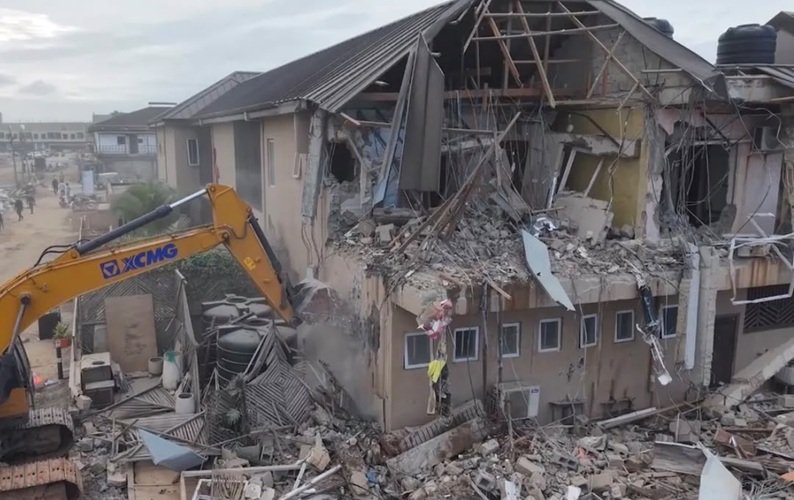

A coalition representing communities along the La coastline in Accra is calling on the government to urgently compensate businesses and traders whose livelihoods were wiped out by two separate demolition exercises carried out at Laboma Beach Resort and La Pleasure Beach in September and October 2026. The Coalition of La Associations (COLA) has set a seven-day deadline for authorities to respond, warning that peaceful protests, petitions to Parliament and the Presidency, and legal action are on the table if its concerns are ignored.
What happened at La's beaches
The first demolition took place on 13 September 2026, when the government's Post Flood Mitigation Task Force moved into Laboma Beach Resort and tore down a number of structures as part of an effort to restore the Kpeshie Lagoon and reduce flooding in surrounding communities. A second operation followed on 2 October 2026, this time at La Pleasure Beach and the adjoining beachfront strip, where restaurants, bars and other small businesses bore the brunt of the exercise.
According to figures cited by COLA from the Ghana Tourism Federation, 85 businesses were affected at La Pleasure Beach alone, putting approximately 4,000 jobs at risk — a significant proportion of them held by women. The coalition noted that the losses at Laboma Beach Resort had not yet been fully captured in any official assessment, suggesting the true scale of the economic damage could be considerably larger.
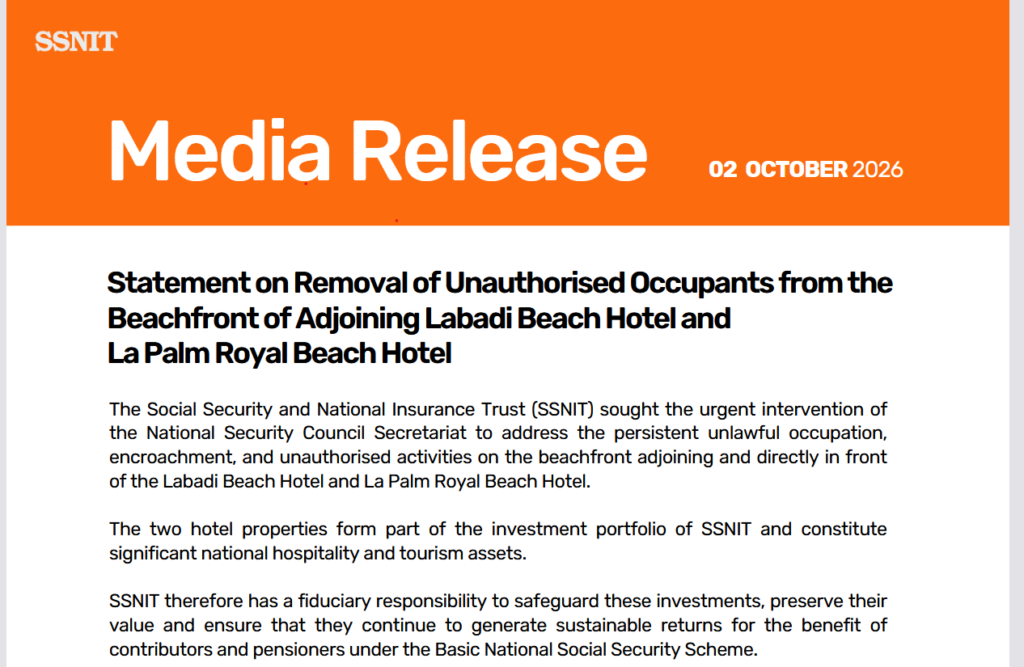
The two demolitions, however, appear to have had different legal and institutional bases. Deputy Chief of Staff Stan Dogbe clarified that the La Pleasure Beach exercise was not part of the government's flood mitigation programme but was instead carried out under National Security supervision following a request from Labadi Beach Hotel. The Social Security and National Insurance Trust (SSNIT), which owns Labadi Beach Hotel, explained separately that it had sought security intervention to protect its hotel investment from alleged encroachment and unauthorised activities. COLA has questioned whether operators — including some who claim to hold valid permits — were adequately consulted before either exercise went ahead.
What COLA is asking for
The coalition, whose statement was signed by First Vice Chairman Daniel M. K. Okpoti, is not opposing flood prevention or environmental protection in principle. It has made clear it supports both. Its demands, however, centre on ensuring that the people whose incomes and investments have been destroyed are not left without recourse.
COLA is specifically asking for:
- Immediate and fair compensation covering destroyed structures, equipment, furniture, stock and other assets, as well as lost income
- Coverage of Laboma Beach Resort businesses under the proposed compensation committee, which so far appears limited to La Pleasure Beach victims
- Transparent assessments that allow affected persons to present permits, ownership documents and evidence of investment
- Emergency assistance for the most vulnerable traders
- An independent review of how the demolitions were conducted, including the notices issued and the role of state security personnel
- A moratorium on further non-emergency demolitions along the La coastline until the legal and environmental justification for such actions is clearly communicated to the public
The coalition also called on authorities to expedite the survey and demarcation of the Kpeshie Lagoon buffer zone adjoining Laboma Beach Resort, so that the resort can secure its remaining investments without inadvertently encroaching on protected land. It further urged that the resort be involved in any planned ecological rehabilitation and mangrove restoration work in the area.
Why it matters for Ghana
Ghana's coastal tourism industry is a significant contributor to employment and local economies, particularly in Greater Accra. La's beachfront has historically been a hub for small and medium-scale hospitality businesses, many of them informal but long-established. When state-led demolitions — whether for flood control, land reclamation or hotel investment protection — displace thousands of workers at once, the social and economic consequences extend well beyond the immediate victims.
The Kpeshie Lagoon flooding problem is real and has caused recurring damage to La and surrounding communities, so the government's flood mitigation rationale is not without merit. But the apparent lack of prior consultation with permit-holding operators, the involvement of National Security in what some describe as a commercial land dispute, and the absence of a clear compensation framework have raised serious governance questions.
COLA is urging the La Traditional Council, the La Dade Kotopon Municipal Assembly, SSNIT and all relevant stakeholders to collaborate on a long-term coastal development plan that balances flood prevention, environmental sustainability, tourism growth and job creation — a framework that, if developed properly, could serve as a model for managing Ghana's increasingly pressured coastline.
Source: The Ghanaian Times



Comments (0)
Be the first to comment.