Ghana hosts Africa's first major tokenisation summit — what it means for investors and businesses
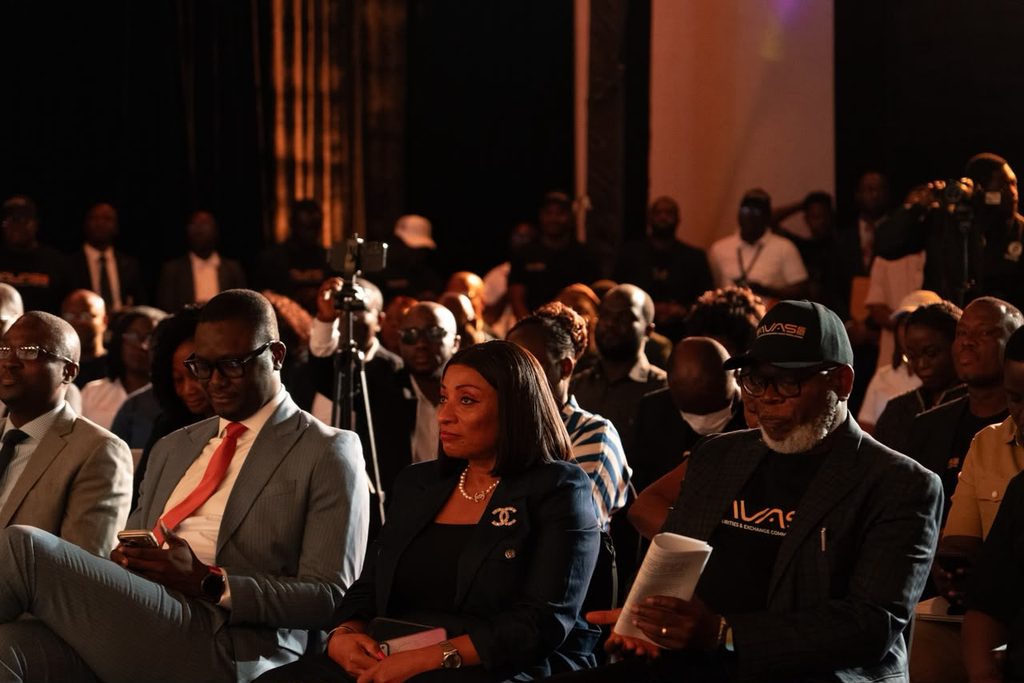
Ghana is positioning itself as Africa's hub for digital finance regulation. The Securities and Exchange Commission (SEC) has announced the Africa Virtual Asset Summit (AVAS) 2026, a landmark two-day conference scheduled for 2 and 3 November at the Kempinski Hotel Gold Coast City in Accra. The event will bring together regulators, central banks, financial institutions and technology firms to shape a unified continental approach to virtual assets and tokenisation — the process of converting real-world assets into digital securities.
The summit's central objective is the proposed Accra Declaration, a framework of shared principles that African regulators will use to guide responsible virtual asset ecosystems across the continent. Unlike fragmented national approaches, the declaration aims to create consistency that allows capital and innovation to flow more freely across borders whilst maintaining investor protection and market integrity.
Why tokenisation matters for Ghana's economy
Africa holds enormous untapped wealth in real assets — land, minerals like gold, agricultural commodities such as cocoa, and infrastructure projects. The challenge has always been liquidity: how to convert these assets into investable instruments that can attract both domestic and international capital. Tokenisation solves this by breaking down large assets into smaller digital shares that can be traded easily, reducing investment minimums and widening the potential investor base.
For Ghana specifically, this creates immediate opportunities. Domestic businesses could tokenise assets to raise capital more cheaply than traditional debt or equity. Ghanaian diaspora investors — a significant source of remittances — could invest in domestic projects without geographical barriers. Real estate developers, agricultural cooperatives, infrastructure operators and commodity traders could all access new sources of financing by converting their assets into tradable digital tokens.
Ghana's regulatory foundation is already in place. The Virtual Asset Service Providers Act 2025 (Act 1154) gives the SEC clear mandate over tokenisation, virtual asset exchanges, investment advisory and virtual asset funds. The Commission also operates a regulatory sandbox — a controlled environment where fintech firms can test new products under supervision before full market launch. This pragmatic approach balances innovation with risk management.
The continental alignment challenge
Virtual assets ignore borders. A transaction that begins in Ghana can be completed in Nigeria, Kenya or anywhere else within seconds. Yet regulation has historically been national. This mismatch creates friction and cost. SEC Deputy Director-General Emmanuel Mensah Thompson highlighted a recent real example: Ghanaian investors trying to participate in a cross-African annuity product were forced to route transactions through Canada because African regulators had not harmonised their rules. This is neither efficient nor competitive.
By convening African regulators at AVAS 2026, Ghana's SEC is attempting to solve this problem collaboratively. Nigeria's SEC Director-General Emomotimi Agama has already endorsed the approach, noting that no single regulator can supervise virtual assets effectively in isolation. The summit will address licensing standards, market conduct rules, anti-money laundering frameworks, and cross-border payment rails — the technical infrastructure that allows money to move safely between countries.
International partnerships also feature prominently. Ghana's High Commissioner to the United Kingdom, Sabah Zita Benson, has called for collaboration that goes beyond policy discussion into genuine investment and technology transfer, positioning Ghana as a bridge between UK financial expertise and African entrepreneurial capacity.
What the summit will cover
The two-day programme is divided into regulation on Day 1 and tokenisation on Day 2. Sessions will explore licensing frameworks, digital securities issuance, anti-money laundering compliance, stablecoins, central bank digital currencies (CBDCs), real estate tokenisation, commodity trading via blockchain, and digital identity solutions. Technical workshops will run alongside policy discussions, ensuring that regulatory frameworks account for real-world technical constraints and market realities.
For Ghanaian entrepreneurs, investors and financial institutions, AVAS 2026 represents an opportunity to shape the rules that will govern digital finance in Africa for the next decade. Attendance is expected to include securities regulators, central banks, stock exchanges, commercial banks, fintech firms, institutional investors and development partners from across the continent and beyond.
Source: MyJoyOnline


Comments (0)
Be the first to comment.