
Ghana Eyes Gates Foundation Partnership to Breed Malaria-Free Mosquitoes and Build Local Research Muscle
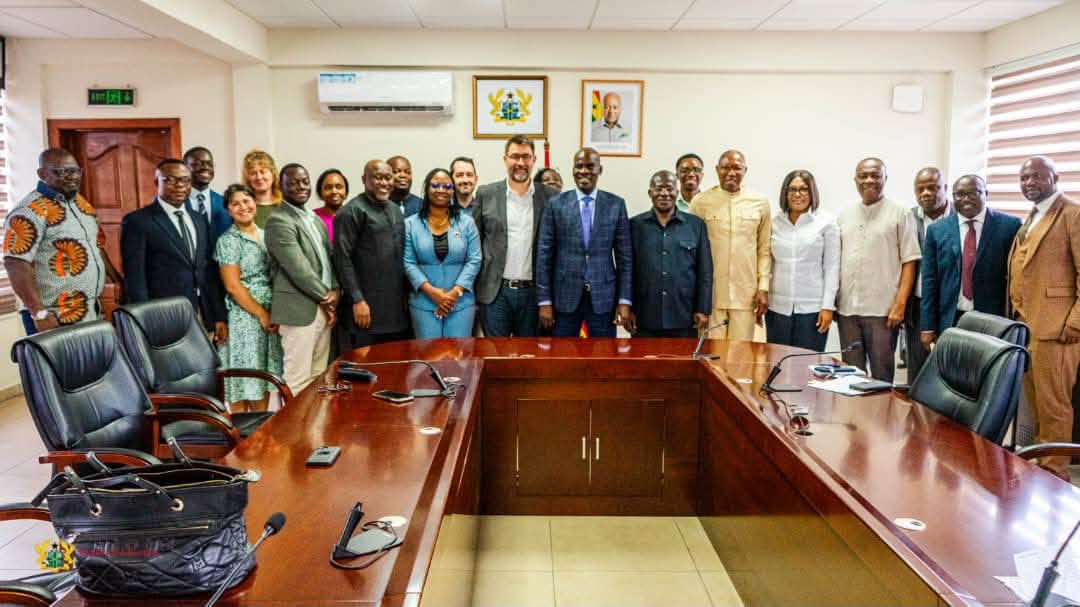

Ghana is moving closer to a landmark research partnership that could transform the country's fight against malaria. The Ministry of Education and the Bill & Melinda Gates Foundation have held high-level discussions aimed at building Ghana's capacity to develop and deploy locally driven solutions to one of the country's most persistent public health challenges — a disease that continues to kill thousands of Ghanaians every year, particularly children under five.
What is on the table?
The talks centred on several interconnected priorities: building local scientific expertise in cutting-edge malaria-control technologies, advancing research into the development of malaria-free mosquitoes, and ensuring meaningful technology transfer to Ghanaian institutions. The goal is not simply to import solutions developed elsewhere, but to cultivate the in-country capacity to design, test and adapt technologies that work for Ghana's specific environment and disease burden.
The discussions brought together senior figures from multiple institutions. The Ghana National Research Fund (GNRF) delegation was led by its Board Chairman, Prof. Eric Yirenkyi Danquah, while the Gates Foundation was represented by its Deputy Director for Malaria, Mr Bruno Moonen. Prof. Gordon Awandare, Pro Vice-Chancellor of the University of Ghana, also contributed to the meeting, stressing the urgent need to equip Ghanaian researchers with both the technical skills and the financial resources required to lead this work from within the country.
The Education Minister reinforced the government's commitment, stating that sustained investment in research infrastructure, talent development and strong local institutions would be essential to making the collaboration a success. The broader ambition, he noted, is to strengthen Ghana's entire research ecosystem — not just for malaria, but as a foundation for tackling future health threats.
Why it matters for Ghana
Malaria remains one of Ghana's heaviest public health burdens. The disease accounts for a significant proportion of outpatient visits, hospital admissions and child mortality across the country, disproportionately affecting rural communities with limited access to healthcare. Despite decades of interventions — from insecticide-treated nets to indoor spraying programmes — transmission persists, partly because existing tools are increasingly constrained by mosquito resistance to insecticides.
Research into malaria-free mosquitoes represents a newer frontier in disease control. Scientists have explored approaches such as gene drives, which are designed to spread malaria-blocking traits through wild mosquito populations. While still largely at the experimental stage globally, such technologies hold significant promise. What makes the proposed Ghana collaboration notable is its emphasis on local ownership — ensuring that Ghanaian scientists are not merely recipients of foreign-developed tools, but active participants in creating them.
This approach aligns with a wider continental push to build Africa's own research and development infrastructure, rather than depending on solutions that may not be tailored to local conditions. Institutions like the University of Ghana's West African Centre for Cell Biology of Infectious Pathogens (WACCBIP) have already established a strong track record in malaria genomics and infectious disease research, providing a credible base on which any such collaboration could build.
What comes next
No formal agreement has yet been announced, and the discussions are still at the exploratory stage. However, the involvement of the GNRF — the government body responsible for funding national research priorities — alongside a Gates Foundation delegation signals that both sides are treating this as a serious and structured process rather than a preliminary exchange of pleasantries.
- Securing dedicated funding streams for malaria research institutions will be a critical next step.
- Technology transfer agreements would need to protect Ghana's intellectual and institutional interests.
- Training pipelines for the next generation of Ghanaian malaria scientists will need long-term commitment from both government and partners.
If the partnership progresses, it could position Ghana as a regional hub for malaria research in West Africa — generating scientific knowledge, training researchers from across the sub-region, and ultimately contributing to the country's stated goal of eliminating malaria altogether.
Source: MyJoyOnline




Comments (0)
Be the first to comment.