Ghana Bar Association pushes back on forced court appearances during legal vacation
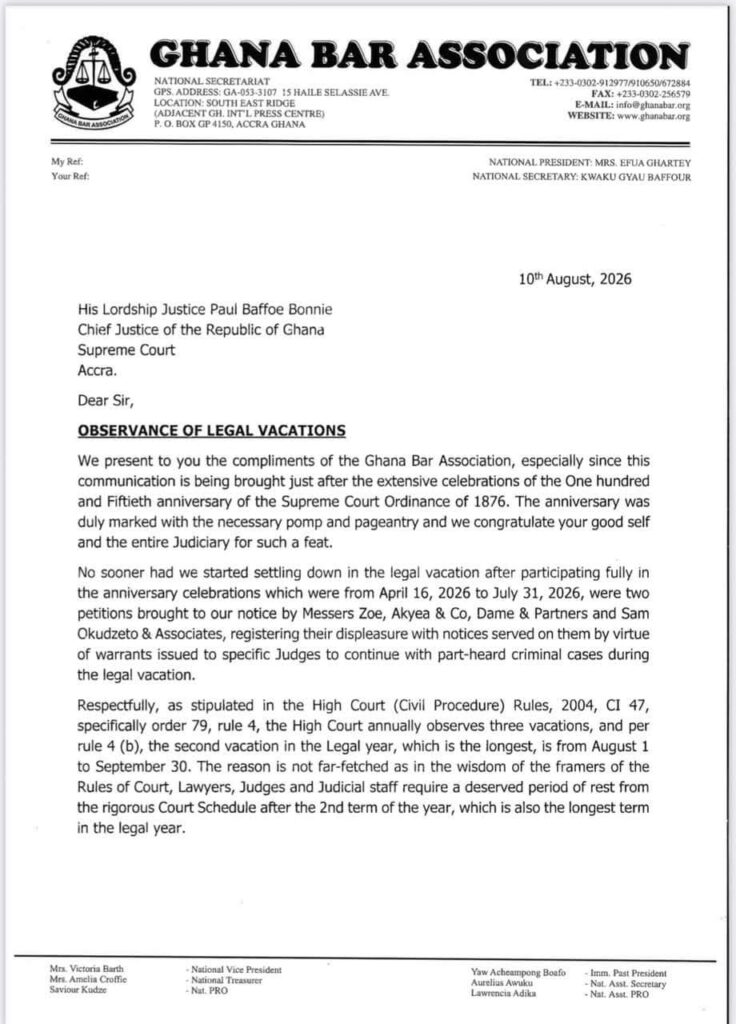
The Ghana Bar Association has formally appealed to Chief Justice Paul Baffoe-Bonnie to enforce established protocols around the annual legal vacation, after judges allegedly directed lawyers to appear in court during the August-September break despite their stated unavailability.
In a letter dated August 10, the GBA raised concerns that some judges have been summoning lawyers to continue part-heard criminal cases during the legal vacation period, which traditionally runs from August 1 to September 30. The association argues this practice contradicts longstanding judicial tradition and undermines the purpose of the break.
What the GBA is demanding
The bar association's core position is straightforward: once a lawyer notifies the court that they cannot appear during the legal vacation, the case should be adjourned. Judges, the GBA contends, should not proceed with trials or substantive hearings if counsel for either side is unavailable.
"Counsels are not under any compulsion whatsoever to appear before a Vacation Court," the GBA stated in its letter. The association emphasised that lawyers have a right to the designated break, and forcing their appearance contradicts established practice.
The GBA acknowledged that Vacation Courts may sit to handle urgent and interlocutory (procedural) matters during the period. However, conducting trials or continuing substantive case hearings without counsel present falls outside this limited scope, the association argues.
Why it matters for Ghana
This dispute touches on fundamental principles of the Ghanaian justice system: the right to adequate legal representation and the balance between judicial efficiency and fair process. When lawyers are compelled to abandon their vacation to appear in court, it affects their ability to prepare cases properly, rest, and maintain work-life balance—all of which have downstream effects on the quality of legal representation available to Ghanaians.
The legal vacation exists partly to ensure that judges, lawyers, and court staff can recharge. When this break is eroded, it can lead to fatigue and mistakes in the administration of justice. Additionally, lawyers who feel pressured to work during their designated vacation may be less available for urgent matters that genuinely require Vacation Court intervention.
The GBA's intervention also signals broader concerns about judicial independence and professional respect. If judges can unilaterally override established vacation rules, it raises questions about the predictability and consistency of the judicial system—matters that affect public confidence in courts and the legal profession alike.
The background
Ghana's legal vacation is a long-established tradition designed to give the entire justice ecosystem a structured break. The GBA's letter indicates that at least three law firms have complained about being directed to appear before judges during this year's vacation. This suggests the problem is not isolated but reflects a pattern that prompted the association's formal intervention.
By appealing directly to the Chief Justice, the GBA is seeking a system-wide reaffirmation of the rules. Such a directive from the head of the judiciary would send a clear message to all judges about expected conduct during the legal vacation period and help prevent future disputes.
The GBA has urged the Chief Justice to take steps ensuring all judges adhere to the established rules, emphasizing that respect for the legal vacation protects its purpose and promotes effective participation in justice administration.
Source: MyJoyOnline

Comments (0)
Be the first to comment.