National Security Busts Major Counterfeit Currency Ring: 16 Arrested Across Accra Region
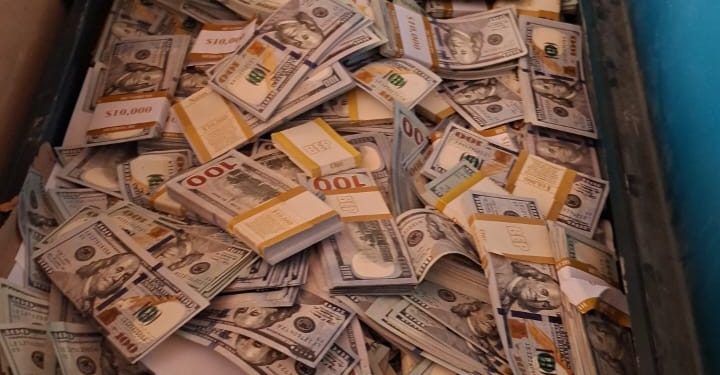
Ghana's National Security has successfully dismantled a sophisticated counterfeit currency operation, resulting in the arrest of 16 suspects—both Ghanaian and foreign nationals—following a series of coordinated intelligence-led operations across the Greater Accra Region and surrounding areas.
The crackdown, which spanned from mid-June to late July 2026, represents one of the most significant disruptions to organised crime networks involved in currency counterfeiting in recent years. Security agencies seized four printing machines, six vehicles, two motorcycles and counterfeit notes valued at over half a million dollars, along with millions of cedis and West African francs awaiting distribution into Ghana's financial system.
The Scale of the Operation
The scope of the seized materials reveals the professional nature of these syndicates. Beyond the currency already in circulation-ready form—$543,000, GH¢196,600 and CFA60,000—investigators discovered unprinted counterfeit materials worth an estimated $5.29 million, GH¢19.55 million and CFA623.55 million. This indicates that the criminal networks were operating on an industrial scale, with the capacity to flood Ghana's markets with fake notes over an extended period.
One particularly significant seizure occurred at Lakeside Estate, where officers recovered five boxes of counterfeit GH¢200 notes with a face value of GH¢12.42 million. The operations also uncovered fake gold bars and sophisticated printing equipment, suggesting these syndicates were diversifying their counterfeiting activities beyond currency.
According to the National Security Council Secretariat, the criminal structure was highly organised. Different individuals handled specific roles: some managed printing operations, others coordinated cross-border movement of fake currency, and commercial motorcycle riders distributed the notes to buyers. This division of labour made the networks resilient, but the sustained intelligence work eventually led to their exposure.
Why It Matters for Ghana
Counterfeit currency poses a serious threat to Ghana's economic stability and public trust in financial institutions. When fake notes circulate unchecked, they debase the currency, inflate the money supply artificially and create uncertainty in transactions—particularly in informal sectors like markets and small businesses where cash remains the primary payment method.
The discoveries at religious and administrative premises are especially concerning, as they highlight how criminals exploit community trust and institutional access to hide illegal operations. This undermines public institutions and raises questions about security protocols at such facilities.
The operation also demonstrates the transnational nature of modern counterfeiting. With foreign nationals involved and cross-border smuggling networks, Ghana's security agencies must maintain international cooperation to prevent similar operations from re-establishing themselves through neighbouring countries.
Next Steps and Public Vigilance
All 16 suspects have been remanded in state custody, with prosecutions underway at the Accra High Court. Security agencies are pursuing asset forfeiture of equipment and vehicles, a critical step in disrupting the financial incentives that drive such organised crime.
The National Security Council has appealed to financial institutions, property owners and religious facility administrators to heighten awareness of suspicious large-scale printing activities and unusual foreign currency transactions. This public engagement component is vital, as community reporting often provides the initial intelligence that enables security operations.
Authorities have confirmed that investigations remain ongoing, with additional suspects identified during the operation still being pursued. The success of this particular crackdown illustrates the effectiveness of sustained intelligence gathering, but vigilance will be required to prevent new syndicates from filling the vacuum left by this dismantling.
Source: The Ghana Report



Comments (0)
Be the first to comment.