GBA Escalates Legal Vacation Row: Calls on CJ to Enforce Court Recess Rules

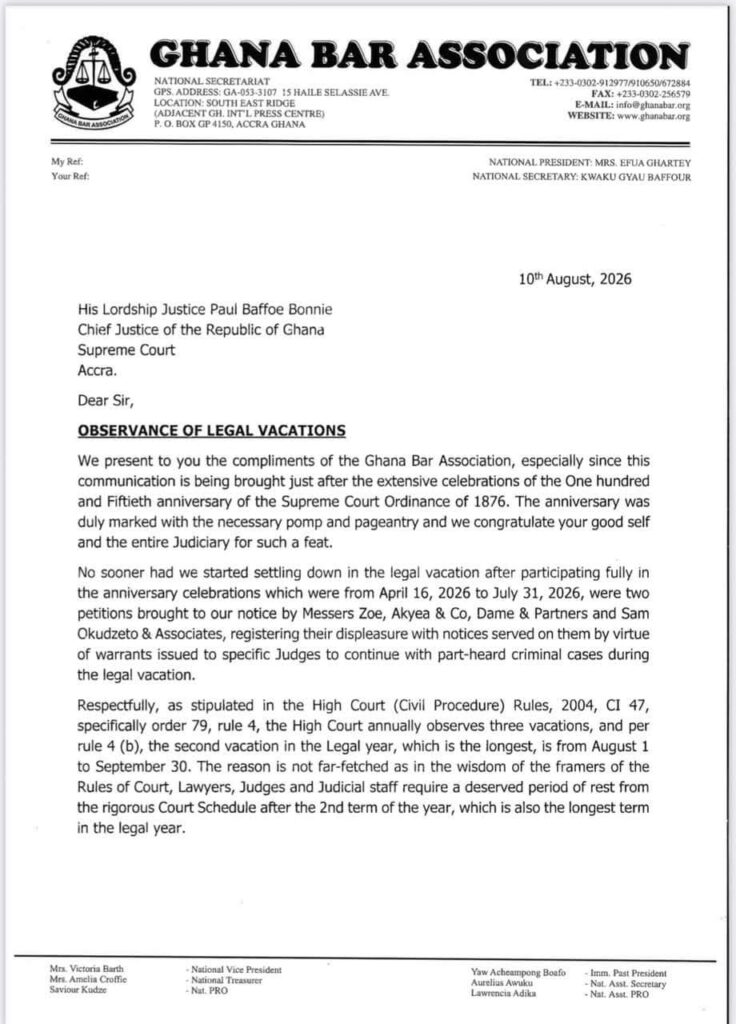
Ghana's legal profession faces renewed tension over judicial conduct during the annual legal vacation period, with the Ghana Bar Association (GBA) formally appealing to Chief Justice Paul Baffoe-Bonnie to enforce adherence to established rules governing court recesses.
The dispute centres on whether judges are properly observing traditions and regulations that define Ghana's legal vacation—a scheduled period when courts typically suspend routine operations. The GBA has expressed concern that some judicial officers may not be following these longstanding protocols, prompting the appeal to the nation's top judicial officer.
What the GBA is Demanding
The bar association's intervention signals broader concerns within Ghana's legal fraternity about judicial discipline and consistency. By appealing directly to Chief Justice Baffoe-Bonnie, the GBA is seeking executive-level action to clarify and enforce vacation rules across all courts.
The Association of Magistrates and Judges, the professional body representing the judiciary, has been identified as a key stakeholder in resolving the matter. However, the GBA's escalation to the Chief Justice suggests that sector-level discussions may not have yielded satisfactory outcomes.
Why This Matters for Ghana
Ghana's justice system depends on predictability and consistency. When rules governing court operations—including scheduled recesses—are inconsistently applied, it creates several problems: legal practitioners cannot reliably advise clients on case timelines, litigants face unexpected delays, and the public's confidence in judicial institutions may erode.
The legal vacation period is not merely administrative downtime; it serves practical purposes including allowing judges time for case preparation, professional development, and administrative work that cannot occur during active court sessions. It also provides structured breaks in the judicial calendar, enabling the Bar Association to hold conferences and manage disciplinary matters.
Disputes over judicial conduct—even procedural ones—reflect underlying tensions between the judiciary's independence and accountability. Ghana's legal profession has historically grappled with balancing respect for judicial autonomy with ensuring that judges operate within established ethical and operational frameworks.
The Broader Context
This row emerges amid broader discussions about judicial performance and public trust in Ghana's courts. The Chief Justice's role in mediating between the judiciary and the Bar is crucial; the office carries authority to issue directives that bind judges across the country.
How the Chief Justice responds will likely set a precedent for similar disputes in future, signalling whether informal professional rules carry weight in Ghana's judicial system or whether clearer, more enforceable guidelines are needed.
For ordinary Ghanaians, the practical implication is simple: clarity on when courts are in session and when they are closed directly affects access to justice. Inconsistent application of vacation rules risks creating confusion that disadvantages litigants and undermines the predictability the legal system requires.
Source: 3News



Comments (0)
Be the first to comment.