
GES Opens Help Desk to Resolve 2024 Teacher Salary Arrears Crisis
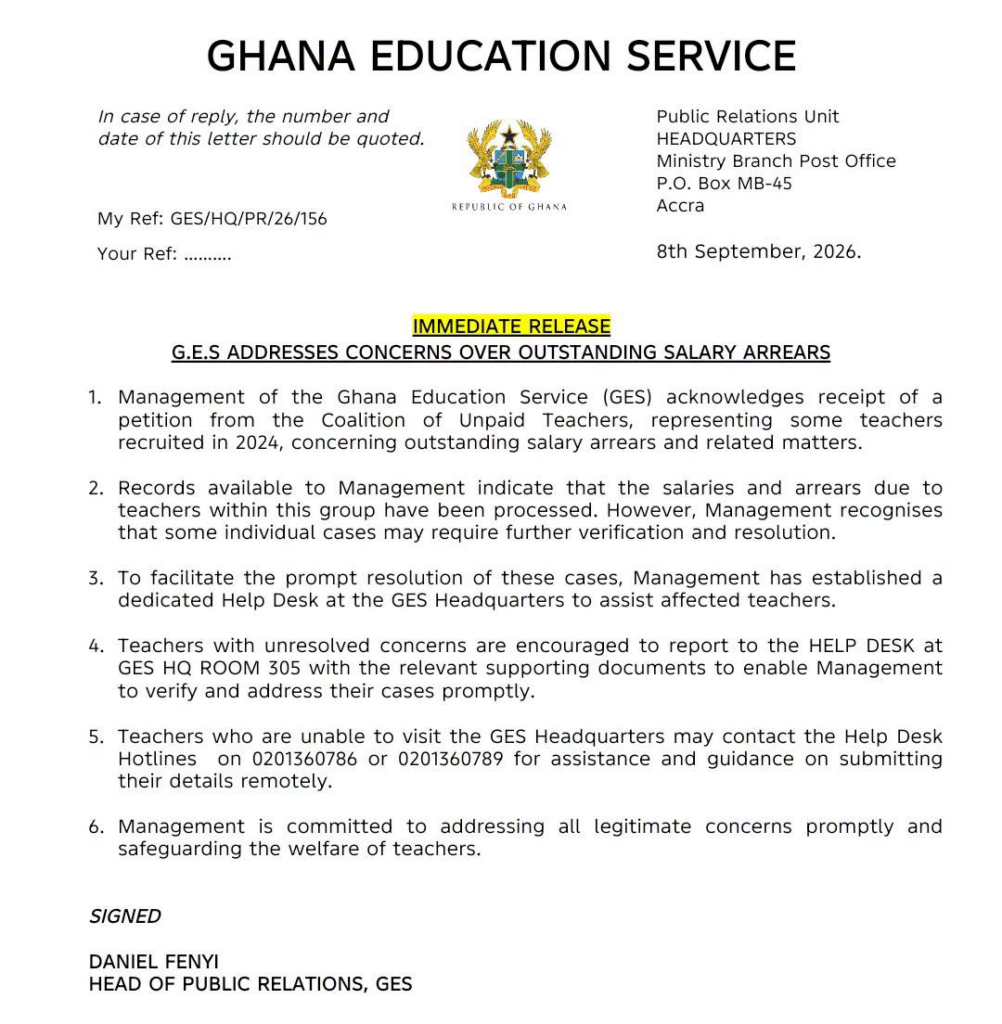

The Ghana Education Service (GES) has responded to mounting concerns from newly recruited teachers by launching a dedicated Help Desk at its headquarters to process outstanding salary payments and resolve arrears affecting the 2024 intake cohort. The initiative marks an official acknowledgement of persistent payment delays that have left a significant portion of Ghana's teaching workforce without full compensation since their recruitment.
The establishment of the Help Desk follows a formal petition submitted by the Coalition of Unpaid Teachers, an advocacy group representing affected educators who have struggled with financial hardship due to delayed and incomplete salary processing. While GES Management claims that salary records show most payments have been processed, the agency simultaneously conceded that individual cases require further verification—an admission that suggests systemic processing challenges within the payroll system.
How Teachers Can Access Support
Teachers with unresolved salary concerns can visit the dedicated Help Desk located in Room 305 at GES Headquarters, bringing relevant supporting documents to facilitate verification of their records. For educators unable to travel to Accra, the Service has established alternative contact channels: telephone lines 0201360786 and 0201360789 are available for remote case submission and guidance.
GES Management has advised that proper documentation will expedite investigation and resolution of legitimate outstanding issues. The agency emphasised that this arrangement aims to ensure thorough examination of each case, particularly those requiring additional verification beyond standard processing protocols.
Why It Matters for Ghana
Teacher salary delays represent a critical challenge for Ghana's education sector. When educators experience payment arrears, it creates a cascade of problems: financial stress among teaching staff, potential brain drain as frustrated professionals seek employment abroad, and operational challenges for schools struggling to retain quality instructors. The 2024 recruitment cohort is particularly vulnerable—these newly appointed teachers often have limited financial reserves and may have relocated to accept positions, making salary delays especially damaging.
This Help Desk initiative, while a positive step, also signals that Ghana's payroll infrastructure for the education sector remains fragile. That individual cases still require manual verification and resolution months after recruitment suggests deeper systemic inefficiencies in how GES processes and tracks teacher payments. For Ghanaians invested in education quality, the message is mixed: the government recognises the problem and is attempting remedial action, but the underlying issue—delayed or incomplete salary automation—persists.
Beyond immediate financial hardship, unresolved arrears undermine teacher morale and professional confidence at a time when Ghana is working to improve learning outcomes and teacher retention. Quality education depends not only on curriculum and infrastructure but also on maintaining a financially secure, motivated teaching workforce.
Next Steps and Commitment
GES Management has reaffirmed its commitment to addressing all legitimate concerns promptly and protecting teacher welfare. The Help Desk represents a transitional measure designed to clear the backlog of unresolved cases, though questions remain about preventing similar delays in future recruitment cycles. Teachers experiencing salary issues should act promptly to register their concerns through the available channels, ensuring their cases are documented and prioritised for resolution.
Source: MyJoyOnline





Comments (0)
Be the first to comment.