Education Minister Convenes Crisis Meeting with Teacher Unions Over Unpaid Salary Arrears

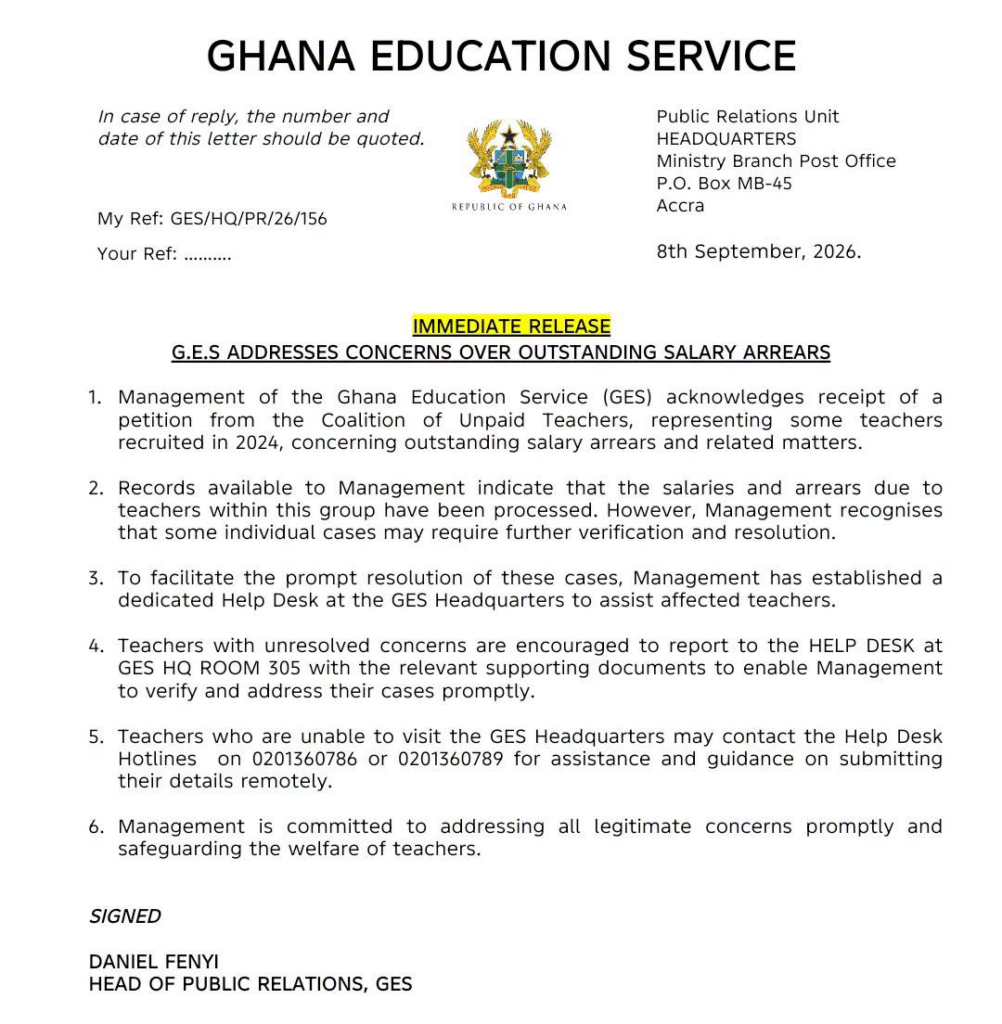
Ghana's Education Minister Haruna Iddrisu is stepping in to broker peace between aggrieved teachers and government agencies after mounting tensions over unpaid salary arrears threatened to escalate into strike action. The minister has scheduled a critical meeting for Monday, September 28, bringing together representatives from major teacher unions, the Fair Wages and Salaries Commission (FWSC), and the Controller and Accountant General's Department to find common ground on the outstanding payment issue.
The Current Crisis
The meeting represents a last-ditch effort to resolve a long-simmering dispute that has left teachers increasingly frustrated with delayed compensation. By convening all stakeholders under one roof—unions representing classroom educators, the body responsible for wage recommendations, and the department overseeing government finances—the Education Ministry hopes to unblock the bottlenecks preventing salary settlements.
Teacher unions have signalled their willingness to escalate the matter, with strike action looming as a possible outcome if arrears remain unaddressed. The involvement of the FWSC and Accountant General's office suggests the government acknowledges this is both a wage-setting and cash-flow problem that requires coordination across multiple institutions.
Why It Matters for Ghana
Teacher strikes carry serious consequences for Ghana's education system. With over 600,000 teachers across public primary and secondary schools, any work stoppage disrupts learning for millions of students and undermines efforts to improve educational outcomes. Ghana has struggled to close achievement gaps and improve student performance; prolonged strikes threaten to widen these gaps further, particularly affecting disadvantaged communities where alternative education options are limited.
Beyond the classroom, unpaid salaries signal deeper public sector management challenges. If government cannot reliably pay teachers—among the largest public sector workforce—confidence in the entire system erodes. Talented educators may seek opportunities abroad, contributing to brain drain in a sector already facing recruitment challenges. Parents may also lose faith in public education, further accelerating the shift toward private schooling, which deepens inequality.
The dispute also reflects broader fiscal pressures. The timing and nature of arrears often reveal cash-management difficulties within government accounting structures, raising questions about budget planning and revenue collection. How quickly this meeting produces results will signal whether the government can competently manage its wage bill while maintaining public sector morale.
What Happens Next
The success of Monday's meeting depends on whether concrete commitments emerge on payment timelines. Teacher unions will likely demand a clear schedule for clearing arrears and assurances that future salaries arrive on time. The FWSC may need to revisit wage recommendations if current structures are unaffordable; the Accountant General's office must demonstrate a realistic path to funding.
If the meeting yields no breakthrough, unions are expected to mobilise members for industrial action, which would compound Ghana's education challenges heading into the final school term. Conversely, a successful resolution would restore stability, preserve classroom time, and demonstrate that government can address systemic grievances through dialogue.
Source: 3News



Comments (0)
Be the first to comment.