Germany, EU boost Ghana's anti-corruption drive with new inter-agency collaboration framework
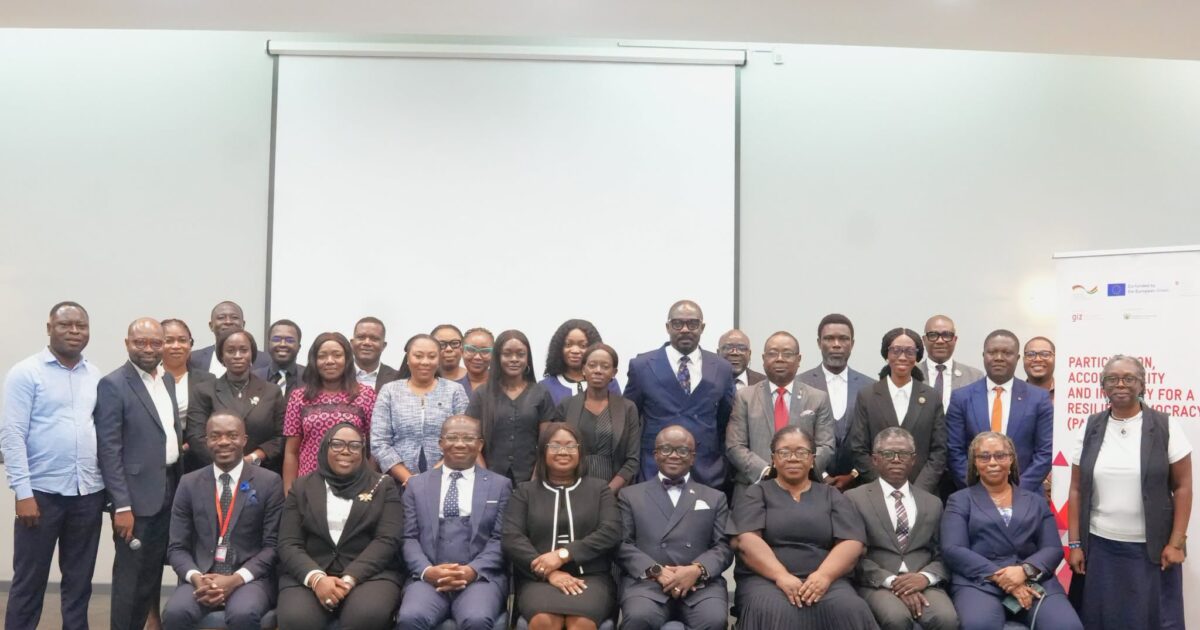
Ghana's battle against corruption has been bolstered by a coordinated international support programme bringing together the country's key law enforcement and accountability institutions under a unified anti-corruption framework. The Deutsche Gesellschaft für Internationale Zusammenarbeit (GIZ), working with Germany and the European Union, has facilitated a landmark inter-agency dialogue designed to streamline how Ghana's various anti-corruption bodies work together on criminal investigations and prosecutions.
The one-day engagement, held in early August, brought representatives from six critical institutions to the table: the Commission on Human Rights and Administrative Justice (CHRAJ), Ghana Police Service, Office of the Special Prosecutor (OSP), Economic and Organised Crime Office (EOCO), the Attorney-General's office and the Judicial Service. This rare gathering of Ghana's accountability machinery reflects growing recognition that siloed approaches to corruption cases often result in delays, duplication and weakened outcomes.
Strengthening the chain of justice
The dialogue provided stakeholders with space to share fieldwork experiences, identify bottlenecks in case management and agree on practical measures to improve communication across Ghana's criminal justice system. By bringing investigators, prosecutors and judges into direct conversation, the initiative addresses a persistent challenge: corruption cases frequently stall when these institutions fail to synchronise their efforts or understand each other's operational constraints.
Officials acknowledged that effective anti-corruption work demands seamless coordination from investigation through adjudication. When police and EOCO investigators, OSP prosecutors, and judges operate without clear protocols, evidence can be mishandled, timelines slip, and public confidence erodes. This dialogue sought to establish informal working relationships and identify concrete solutions—such as agreed communication channels, regular case review meetings and shared performance metrics.
Why it matters for Ghana
Ghana's corruption problem remains substantial, affecting everything from public procurement to land disputes and environmental enforcement. The country has established credible institutions like CHRAJ and the OSP to tackle malfeasance, but their impact is often constrained by fragmented efforts and resource limitations. External support from Germany and the EU signals ongoing international confidence in Ghana's anti-corruption commitment whilst providing technical expertise and funding that domestic budgets alone cannot supply.
The PAIReD initiative, which funds this work, is co-financed by Germany's Federal Ministry for Economic Cooperation and Development, the EU and Switzerland's economic affairs secretariat. This multi-donor model reflects how complex governance challenges require sustained, collaborative investment. For ordinary Ghanaians, better coordination among anti-corruption bodies could mean faster resolution of high-profile cases, reduced opportunities for witnesses to be intimidated through prolonged investigations, and faster recovery of stolen public funds.
The initiative also signals that international partners view Ghana's justice system as worth investing in—a positive sign for the country's institutional reputation across West Africa. However, dialogue alone will not solve endemic corruption; the real test comes in implementation. Whether these institutions sustain their collaboration beyond the initial meeting, secure adequate staffing and resources, and deliver faster prosecutions will determine whether this investment yields tangible results for Ghana's anti-corruption agenda.
Source: MyJoyOnline


Comments (0)
Be the first to comment.