GBA Pushes Back Against Judges Forcing Lawyers to Work During Legal Vacation
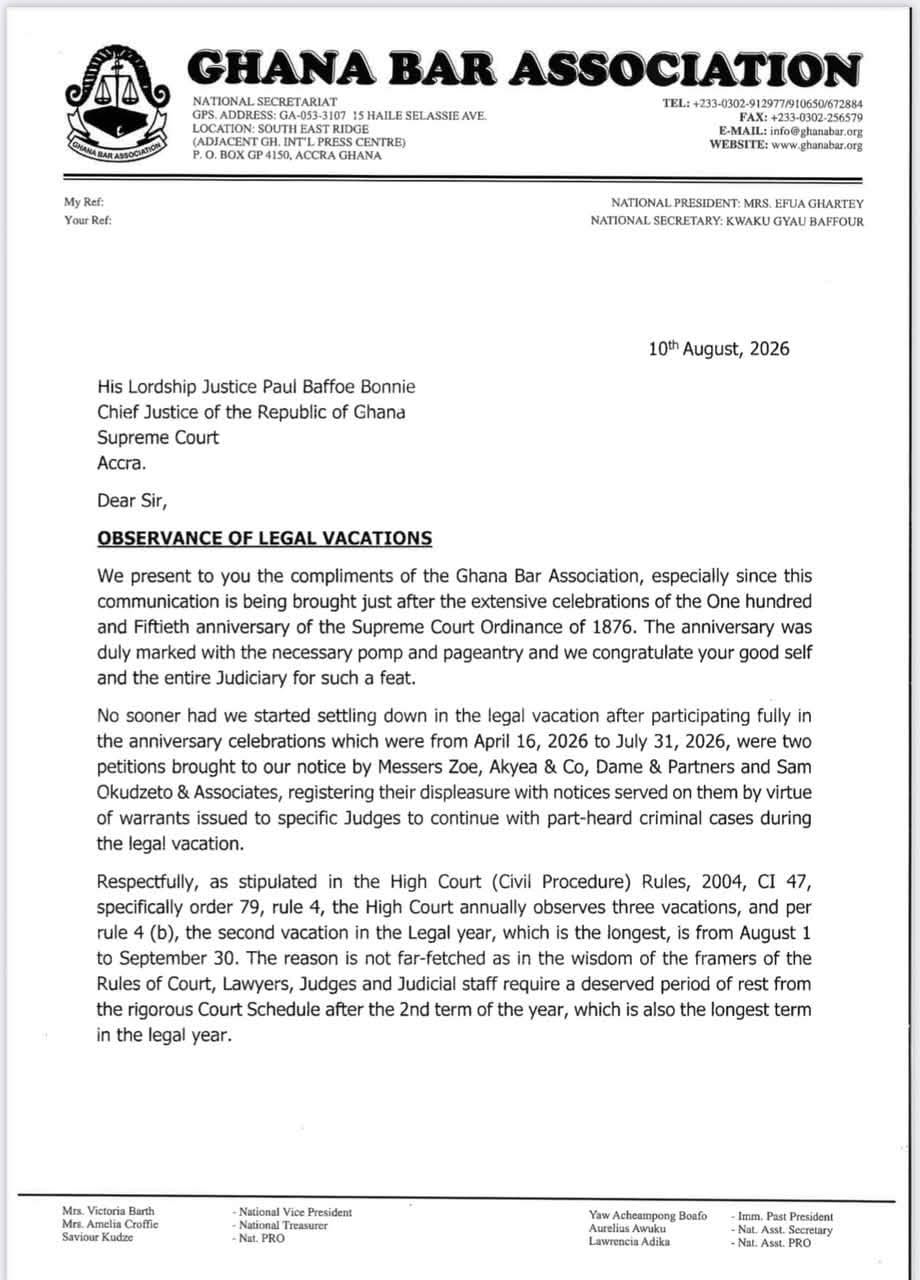
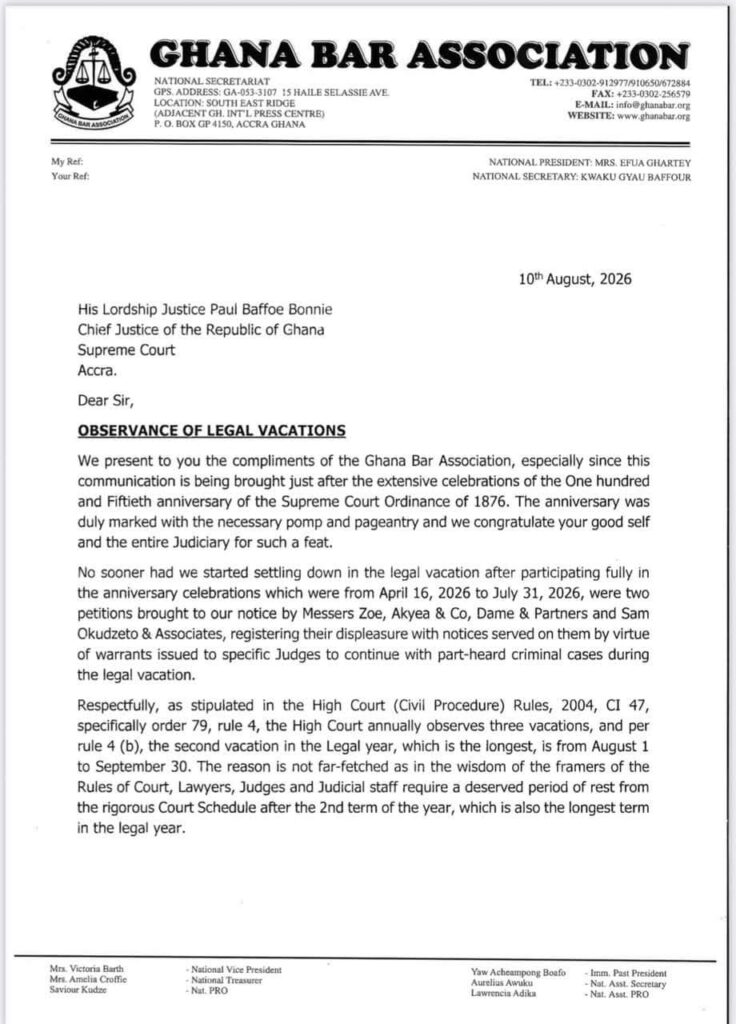
The Ghana Bar Association (GBA) has escalated its concerns about judicial overreach, demanding that the Chief Justice Paul Baffoe-Bonnie rein in judges who are forcing lawyers to appear in court during the mandatory legal vacation period. In a formal letter dated August 10, 2026, the association highlighted complaints from three prominent law firms—Zoe, Akyea & Co, Dame & Partners, and Sam Okudzeto & Associates—that received court notices requiring them to handle part-heard criminal cases during what should be a protected break from August 1 to September 30.
The Legal Framework and Vacation Court Rules
Ghana's legal system has long-established protections for the annual vacation period, anchored in Order 79, Rule 4 of the High Court (Civil Procedure) Rules, 2004 (C.I. 47). The GBA emphasised that Vacation Courts exist solely to address urgent and interlocutory matters—not to conduct full trials or force counsel availability. Under these rules, lawyers have an explicit right not to appear before a Vacation Court if they are unavailable, and courts must adjourn cases to dates suggested by counsel rather than compel attendance.
The association was particularly firm on this point: "Counsel are not under any compulsion whatsoever to appear before a Vacation Court." This directive carries significant weight given the GBA's standing as the regulatory body for the legal profession in Ghana.
Concerns About Self-Representation and Judicial Bias
The GBA also cautioned judges against pressuring litigants to represent themselves simply because their lawyers are unavailable during the vacation. This warning reflects a deeper concern about due process and access to justice. The association stressed that a lawyer's absence during the vacation period should never be treated as deliberate misconduct or grounds for proceeding without legal representation. Instead, adjournment is the only appropriate remedy.
More seriously, the GBA warned that continuing with cases when counsel is unavailable—whether or not arrest warrants are issued—could "smack of bias or selective justice," raising red flags about the integrity of the judicial process itself.
Why This Matters for Ghana's Legal System
This dispute highlights tensions between judicial efficiency and professional rights in Ghana's courts. Many lawyers have already planned professional engagements during the vacation, whilst some law firms have closed entirely for the two-month period. The vacation is not a luxury; it is a sanctioned rest period that allows the legal profession to recharge after an intensive year of litigation, research, and advisory work.
The GBA's intervention suggests that some judicial officers may be prioritising case clearance over compliance with established rules. This creates a problematic dynamic where the vacation becomes meaningless if lawyers cannot actually step away. Furthermore, forcing self-representation or proceeding without counsel undermines the right to legal representation—a cornerstone of fair trial standards.
The association's appeal to the Chief Justice signals that the problem extends beyond isolated incidents and requires system-wide reinforcement of the rules. Until the judiciary collectively commits to respecting the vacation period, lawyers and their clients will remain caught in a bind: honouring professional obligations versus honouring legitimate rest entitlements. The GBA's stance is clear: the rules exist for good reason, and judges must adhere to them.
Source: The Ghana Report



Comments (0)
Be the first to comment.