
From Nkrumah's Dream to Mahama's $200m Commitment: Ghana's Long Road to Nuclear Power
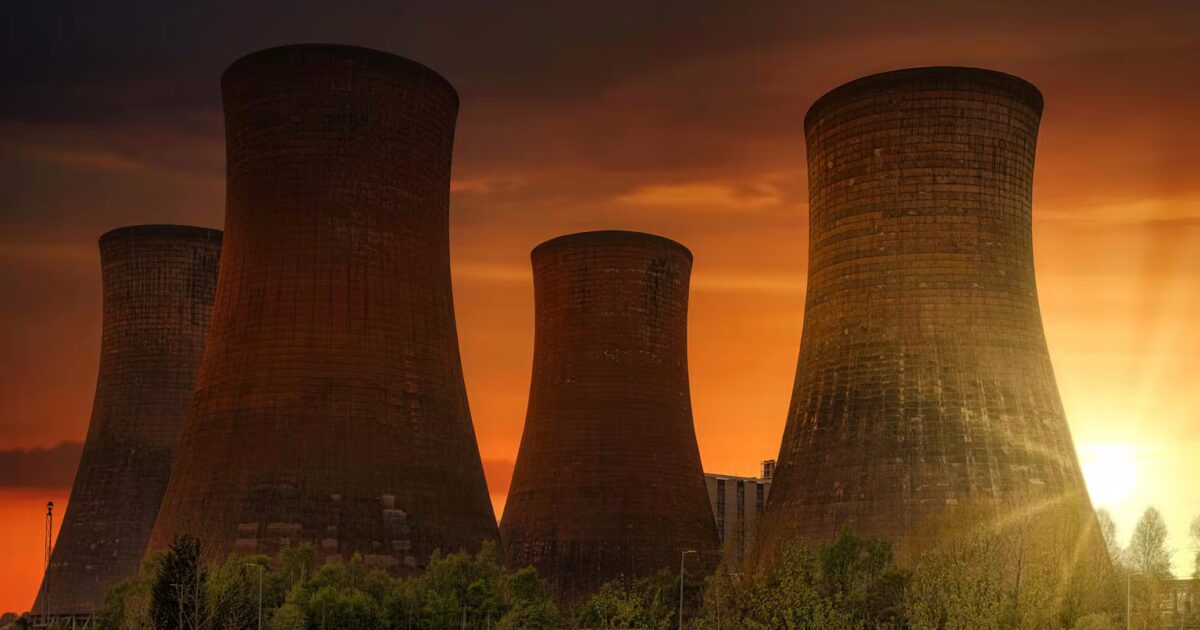

Ghana is edging closer to making nuclear electricity generation a reality, with President John Dramani Mahama's administration proposing a US$200 million investment in nuclear readiness as part of the 2027 Budget. The funding would support a focused 24-month preparatory programme running from January 2027 to December 2028 — the most concrete financial commitment in a national ambition that stretches back more than six decades. Understanding what this money is for, what it is not for, and why it matters requires a look at the remarkable history behind it.
A Vision That Began With Nkrumah
Ghana's nuclear journey started in 1961, when President Kwame Nkrumah directed the country to undertake the Ghana Nuclear Reactor Project. The immediate aim was to establish a research reactor for scientific training, research and the production of radioisotopes. The larger goal was to build the human capital and technical knowledge that would eventually support nuclear electricity generation — energy that Nkrumah believed was essential to power factories, mineral processing plants and growing cities as Ghana industrialised.
The Ghana Atomic Energy Commission was created to give that ambition an institutional home. However, Nkrumah's overthrow in 1966 halted the early momentum, even as scientific work in nuclear technology quietly continued across subsequent decades. A meaningful milestone arrived during President Jerry John Rawlings' administration, when the Ghana Research Reactor — known as GHARR-1 — achieved first criticality in December 1994 and was formally commissioned in March 1995. The reactor gave Ghanaian scientists and engineers hands-on experience in reactor operations, laying a stronger technical foundation for the future.
The policy push towards actual electricity generation gathered pace in the 2000s, driven in part by Ghana's energy supply difficulties at the time. In 2007, President John Agyekum Kufuor established a presidential committee chaired by Professor Daniel Adzei Bekoe to examine the potential role of nuclear power. The committee's recommendations led to a Cabinet decision in 2008 to formally include nuclear energy in Ghana's electricity mix — a historic policy step that subsequent governments have built upon.
Legal progress followed. During President Mahama's first term, Parliament passed the Nuclear Regulatory Authority Act, 2015 (Act 895), establishing an independent body to oversee licensing, inspection, enforcement and radiation safety. That regulatory framework is widely regarded as central to Ghana's credibility as a prospective nuclear power nation. International scrutiny reinforced this: the International Atomic Energy Agency conducted an Integrated Nuclear Infrastructure Review in 2017 and a follow-up mission in 2019. Under President Nana Addo Dankwa Akufo-Addo, Ghana formally entered Phase Two of the IAEA's development pathway in 2022, marking the shift from policy planning to active preparatory work ahead of construction.
What the $200 Million Actually Covers
It is important to be precise about what the latest commitment entails. The US$200 million proposed in the 2027 Budget is not construction funding — it is readiness expenditure. The 24-month programme will cover site studies, technology selection, environmental assessment, financing arrangements, licensing processes, safeguards compliance, emergency planning and the preparation of a safety case.
The stated target is to complete all readiness activities and sign an engineering, procurement, construction and financing contract for a fully state-owned nuclear power plant by December 2028. Completing readiness by that date does not mean nuclear electricity will flow to Ghanaian homes and businesses in 2028. Nuclear construction takes many years beyond the preparatory phase. What it does mean is that Ghana aims to reach the point where a construction contract can be signed — a credible, well-prepared entry into what would be a transformational infrastructure project.
Why It Matters for Ghana
Ghana's electricity demand continues to grow, driven by population growth, urbanisation and the ambitions of a middle-income economy seeking to expand its industrial base. Hydroelectric generation remains vulnerable to rainfall variability, as Ghanaians know from experience with the Akosombo Dam during drought periods. Thermal generation depends heavily on gas and fuel costs that fluctuate with global markets. Nuclear power, by contrast, offers a large, stable and low-carbon baseload generation option — particularly relevant as Ghana works to meet its climate commitments while also expanding access to affordable electricity.
Beyond the energy economics, there is a broader development argument. The nuclear programme has already helped train generations of Ghanaian scientists and engineers. A serious construction programme would deepen that expertise, create skilled employment and strengthen Ghana's standing in international scientific and energy circles.
- Continuity across governments has been critical — NDC and NPP administrations alike have advanced the programme.
- The $200 million is for preparation only; full construction costs will be substantially higher and determined later.
- Ghana's independent nuclear regulator and IAEA reviews give the programme international credibility.
The history of Ghana's nuclear ambition is, above all, a story of institutional patience and cross-party commitment. Whether the current administration can convert decades of groundwork into a signed construction contract by the end of 2028 will be watched closely — not just in Ghana, but across a continent increasingly interested in nuclear energy as part of Africa's power future.
Source: MyJoyOnline

Comments (0)
Be the first to comment.