
Ghana's EV Charging Station Plans Need More Than Rules — Here's What Experts Say Government Should Do
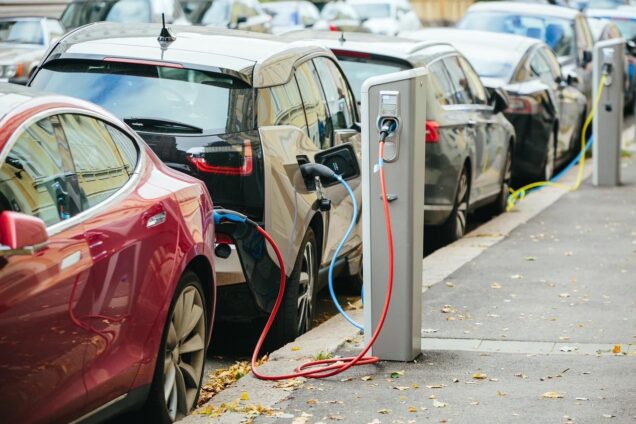

President John Dramani Mahama has signalled that his administration intends to regulate where electric vehicle (EV) charging stations can be set up across Ghana, citing concerns that a poorly planned rollout could place uneven and damaging pressure on the country's electricity distribution network. The rationale is straightforward: if charging stations cluster in areas where existing transformers and substations are already stretched, the consequences for power reliability could be severe. But energy observers are questioning whether regulation alone is sufficient — and whether the government has fully thought through the economics and the behaviour of EV owners.
The investment reality behind EV charging
Setting up a fast-charging direct-current (DC) station is not a small undertaking. Depending on specifications and local costs, a single unit can cost as much as $55,000 to install. For an investor to recover that outlay and move into profit, they typically need a steady and reliable stream of customers — meaning the station must be located where EV owners already travel, work, or shop. If regulations push charging stations into areas deemed electrically convenient but commercially unattractive, investors will simply hold back, slowing the very infrastructure expansion the government wants to encourage.
There is also a less-discussed dimension to this challenge: home charging. Many EV owners across the world — and increasingly in Ghana — prefer the convenience of plugging in overnight using Level 2 home charging units. This habit does not disappear because public stations are regulated. In fact, if public stations become harder to find along regular commuting routes, more owners will rely exclusively on home charging. This shifts the grid pressure from commercial zones to residential suburbs, where transformer capacity upgrades are rarely planned in advance.
Why it matters for Ghana
Ghana's electricity distribution network, managed largely by the Electricity Company of Ghana (ECG), has historically struggled with capacity constraints and infrastructure investment gaps. Introducing a wave of EV charging demand — both commercial and domestic — without a grid upgrade strategy risks compounding existing reliability problems, particularly in densely populated urban neighbourhoods in Accra, Kumasi, and Takoradi.
The broader significance is economic as well. Ghana has ambitions to position itself as a hub for clean energy transition in West Africa, and EVs are increasingly present on Ghanaian roads, driven partly by rising fuel costs and a growing middle class interested in lower running costs. Getting the regulatory framework right at this early stage will determine whether Ghana's EV market grows in an orderly, sustainable way or creates the kind of infrastructure headaches that undermine public confidence in the transition.
Analysts suggest the government consider a more comprehensive approach rather than simply issuing permits or restricting locations. Specifically, recommendations include:
- Mapping traffic and EV ownership patterns across major urban corridors to identify where charging demand will naturally concentrate.
- Designating approved zones for charging station development within practical distances of high-traffic routes, making them commercially viable for investors while remaining manageable for the grid.
- Proactively upgrading transformers and substations in those designated zones before — not after — charging stations come online.
- Planning ahead for residential grid pressure in suburbs where higher rates of EV ownership are projected, acknowledging that home overnight charging is inevitable and will grow regardless of what happens with public infrastructure.
What this means going forward
The government's instinct to bring order to EV charging infrastructure is sound, and early regulation is far better than trying to retrofit rules onto a chaotic market later. However, the policy will only deliver its intended benefits if it is paired with serious capital investment in grid upgrades and a clear mapping exercise that anticipates both commercial and domestic charging demand.
Without that, regulations risk pushing investors away from commercially viable sites, driving more EV owners towards home charging, and ultimately leaving neighbourhood transformers — the very infrastructure the policy aims to protect — under greater strain than before. Ghana has an opportunity to lead thoughtfully on clean transport infrastructure in the sub-region, but that will require a plan that is as much about upgrading electricity supply as it is about issuing licences.
Source: The Ghana Report





Comments (0)
Be the first to comment.