
From Access to Influence: What Ghanaian Professionals Can Learn From Global Leaders on Building Real Power
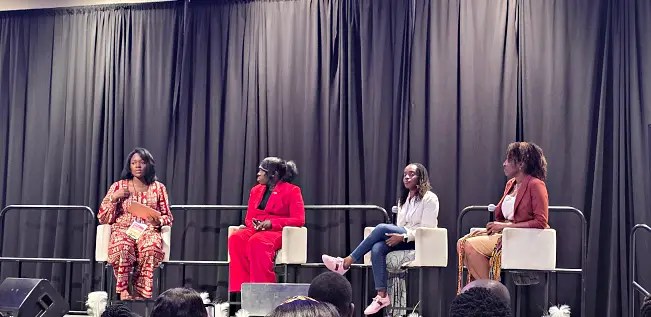

Three accomplished women from government, law, technology and global business recently shared hard-won insights on how professionals—particularly those from underrepresented backgrounds—can gain meaningful access to powerful spaces and, more critically, remain influential once they're there. The conversation took place at the GhanaInnov8 Summit in Atlanta, an annual gathering that draws Ghanaian innovators, entrepreneurs and professionals seeking to advance their careers on the global stage.
For many Ghanaians navigating international workplaces or seeking senior roles at home, the message was direct: access alone is worthless without the credibility and value to back it up. The panelists—Deniece O. Laurent-Mantey (Special Advisor at the U.S. Department of State's Bureau of African Affairs), Therese Conduah (Partner at Alston & Bird LLP), and Amma Kwarteng (Global Marketing Executive at Veeam Software)—challenged a common misconception that career success is primarily about knowing the right people or getting invited to exclusive rooms.
Credibility, Not Connections, Sustains Power
The panel opened with a crucial distinction: knowing influential people gets your foot in the door, but it is the value you bring that determines whether you stay. Laurent-Mantey emphasised that "power is about how you stay in those rooms," not simply about gaining entry. This distinction matters enormously for Ghanaian professionals who often hear that networking is key to advancement—it is, but only as a starting point.
The real currency in powerful spaces, the speakers agreed, is usefulness. Rather than seeking attention or trying to impress senior figures, professionals should focus on identifying the problems others are avoiding and becoming capable of solving them. What critical challenges face your organisation? What are people unwilling to tackle? Becoming the person who can address these gaps transforms you from a network contact into an indispensable asset.
Laurent-Mantey's advice was simple but profound: "Be useful at the onset instead of trying to impress people." This approach is particularly relevant in Ghana's professional culture, where relationship-building is valued but often needs to be paired with demonstrable expertise and results.
Authenticity and Self-Awareness Build Lasting Careers
A second major theme was the danger of imitation. In an age of social media and constant exposure to others' achievements, there is enormous pressure to copy successful professionals. Conduah cautioned against this, urging professionals to understand their own strengths and build careers around what they genuinely do well.
This message challenges a tendency in many professional cultures—including Ghana's—where professionals sometimes feel pressured to adopt foreign styles or approaches rather than leveraging their unique perspectives. Authenticity, Conduah argued, is increasingly valuable precisely because it is rare. Technical excellence, education and efficiency matter, but what truly distinguishes leaders is the confidence to own their identity and understand what unique value they bring to any space.
The emphasis on self-awareness addresses a real gap for many African professionals entering global workplaces. Knowing your strengths is not arrogance; it is self-knowledge. Owning your accomplishments is not boastfulness; it is clarity.
Why It Matters for Ghana: Performance Plus Visibility
Kwarteng brought a practical lens to the conversation about advancing in professional environments. Strong performance—demonstrated by measurable results—is non-negotiable. Numbers, she noted, are difficult to argue with. However, she also delivered a hard truth that resonates particularly in cultures that value humility: being excellent in private is not always enough.
This is especially relevant for Ghanaian professionals navigating both local and international workplaces. In many Ghanaian contexts, humility is culturally valued, and explicitly discussing one's achievements can feel uncomfortable. Yet invisibility is not humility. Professionals who create significant value but never communicate it risk being overlooked for advancement, regardless of how competent they are.
Kwarteng's point was clear: you must be able to confidently articulate what you have accomplished and the impact you have created. This is not bragging; it is professional clarity. For Ghanaians climbing the ranks—whether at home or abroad—learning to market yourself without apology is essential. The panel challenged the equation between humility and invisibility, arguing that the two are not synonymous.
The GhanaInnov8 Summit conversation ultimately offered a roadmap for building sustainable influence: gain access through your network, but cement your position through credible value. Be yourself rather than an imitation. Perform at the highest level, but ensure others know what you have accomplished. For Ghanaian professionals seeking to claim their seat at influential tables—locally and globally—that combination is the real key.
Source: Ameyaw Debrah



Comments (0)
Be the first to comment.