
Ebola Alert: Ghana Medical Association Demands Urgent Preparedness as Deadly Bundibugyo Strain Detected in Nigeria

Ghana's foremost medical body has sounded the alarm over a potentially grave public health threat on the country's doorstep, demanding immediate government action after the Bundibugyo strain of the Ebola virus was detected in Nigeria. The Ghana Medical Association (GMA), speaking at the close of its 68th Annual General Conference, warned that Ghana's proximity to Nigeria makes the country vulnerable and that current preparedness measures, while welcome, are simply not enough.
What the GMA is demanding
GMA President Professor Ernest Yorke was unequivocal in his assessment of the situation, describing the Nigerian detection as a major public health concern requiring swift and decisive preventive action. The Bundibugyo strain, known for its rapid spread and high mortality rates across parts of Central and East Africa, now represents what Professor Yorke called an "imminent" threat to Ghana.
The Association has laid out a comprehensive list of demands it wants the government to act on without delay:
- Intensified public education to inform Ghanaians about Ebola, how it spreads, and how to protect themselves.
- Designation of quarantine and isolation centres across the country to handle suspected or confirmed cases efficiently.
- Stronger community-level surveillance to detect and report potential cases before they escalate into an outbreak.
- Improved case management capacity at health facilities, ensuring medical staff are trained and equipped to respond.
- Advance budgetary allocations to fund emergency interventions should an outbreak occur, rather than scrambling for resources at a moment of crisis.
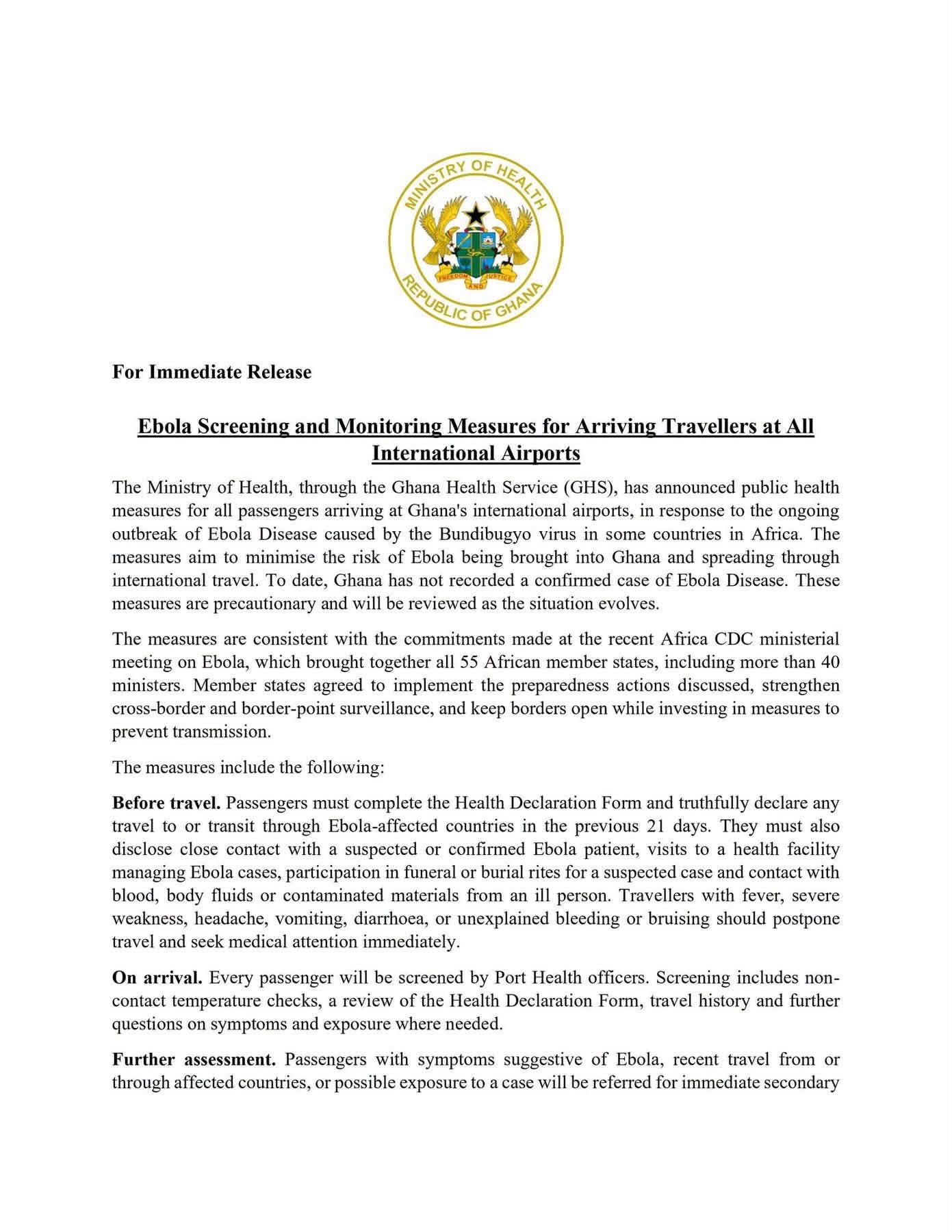
Professor Yorke acknowledged steps already taken by the Ministry of Health and the Ghana Health Service — including public sensitisation campaigns, training of health workers and enhanced screening at ports of entry — but stressed these must be significantly scaled up.
Why it matters for Ghana
Ghana and Nigeria share strong economic, social and travel ties, with considerable movement of people between the two countries for trade, education and family visits. That connectivity, which is a source of great benefit under normal circumstances, also means infectious disease threats do not respect borders. The Ebola virus, in particular, is known to spread through direct contact with the bodily fluids of infected persons, making early detection and rapid isolation critical to preventing community transmission.
Ghana has experience dealing with disease outbreaks — including COVID-19 and periodic cholera and meningitis episodes — but Ebola presents a uniquely severe challenge due to its high fatality rate and the specialised care required to manage patients safely. The Bundibugyo strain, first identified in Uganda in 2007, is considered one of the more dangerous variants of the virus. Its appearance in West Africa would mark a significant geographical shift and would test the region's public health infrastructure.
The GMA's call for advance financial planning is particularly significant. One of the recurring weaknesses exposed during past outbreaks in Africa has been the lag between a declared emergency and the release of funding to respond to it. Pre-allocated resources could make the difference between containing an early cluster and facing a full-blown outbreak.
What the public should do now
While urging government action, the GMA also reminded ordinary Ghanaians that personal hygiene and community vigilance are powerful tools in preventing the spread of any infectious disease. The Association advised the public to wash hands frequently with soap under running water or use alcohol-based hand sanitisers, avoid physical contact with anyone suspected of being infected, and steer clear of objects or surfaces that may have been contaminated.
Critically, the GMA urged anyone displaying symptoms — which include high fever, severe headache, muscle pain, sore throat, general weakness, vomiting, and unexplained bleeding — to seek medical attention immediately at the nearest public health facility rather than waiting or resorting to self-treatment. Members of the public are also being encouraged to report suspected cases in their communities to health authorities promptly.
Ghana's health authorities have not yet declared any elevated alert level, but the GMA's intervention makes clear that the medical community believes the time to act is now — before, not after, any cases are recorded on Ghanaian soil.
Source: The Ghana Report

Comments (0)
Be the first to comment.