
Chief Justice's SOE Comments Spark Judicial Independence Debate; Arthur Kennedy Questions His Suitability
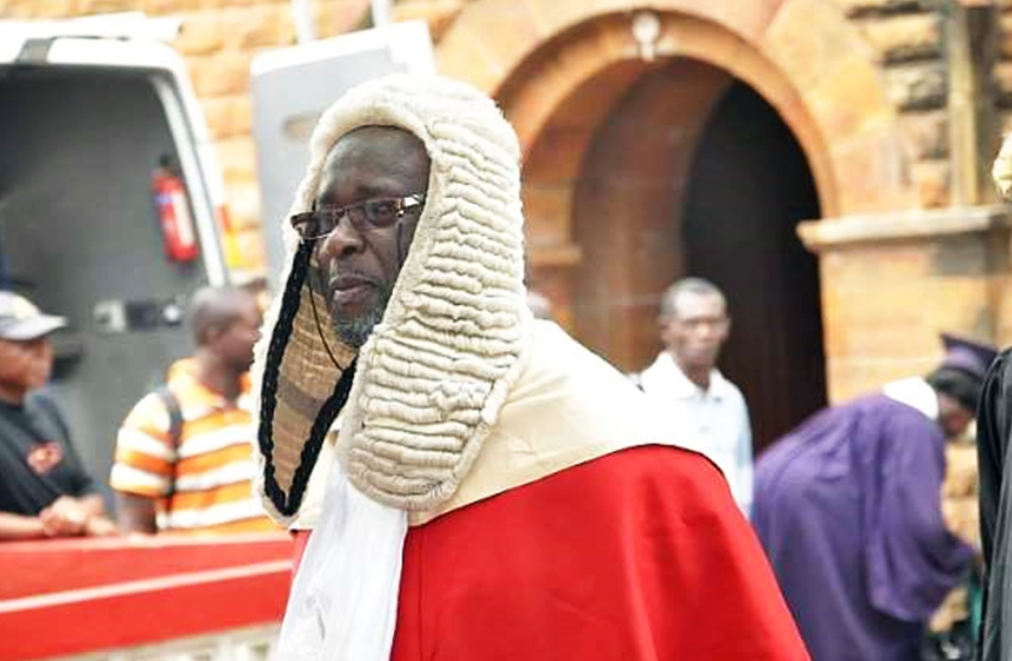

Ghana's judicial independence has come under scrutiny following comments made by Chief Justice Paul Baffoe-Bonnie during visits to state-owned enterprises, with prominent political activist and physician Dr Arthur Kobina Kennedy questioning whether the nation's top judge possesses the moral compass required for his position.
The controversy centres on remarks Justice Baffoe-Bonnie made during a 2 September visit to the Minerals Income Investment Fund (MIIF) and the Social Security and National Insurance Trust (SSNIT). During these visits, he praised the institutions for their improved performance and questioned what Ghana had achieved over the previous eight years, a statement many interpreted as a comparison between the current and previous administrations.
The Core Issue: Perception of Political Alignment
Dr Kennedy's central argument is unsparing: the Chief Justice, by virtue of his office, should instinctively understand the boundaries expected of him without needing formal ethical guidelines to point out inappropriate conduct. "The Chief Justice does not need ethical laws to know that what he did was wrong," Dr Kennedy stated. "If he does, then maybe he is not worthy of his office."
The activist emphasised that comments comparing institutional performance across administrations—particularly when made by the nation's highest judicial officer—risk creating an impression of political alignment. This perception, he argued, undermines public confidence in the Judiciary's neutrality and independence. "A Chief Justice instinctively must know that things like this are inappropriate and avoid them," he said. "He is the exemplar for our judiciary."
The Judicial Service responded on 4 September with a statement acknowledging the mixed public reaction and asserting that the Chief Justice's comments were made in good faith and not intended to compromise judicial independence. However, the Service did not indicate that Justice Baffoe-Bonnie would apologise or withdraw his remarks, a position Dr Kennedy finds inadequate.
Why It Matters for Ghana
This controversy strikes at the heart of Ghana's democratic institutions. The Judiciary's credibility depends significantly on public perception of its independence and impartiality. When Ghana's Chief Justice—the person responsible for upholding the rule of law and defending judicial independence—makes statements that can be construed as political, it weakens public trust in the entire system.
The remarks are particularly concerning given Ghana's history of judicial controversies. Dr Kennedy noted the hypocrisy he observed among both major political parties: NPP supporters who defended former Chief Justice Gertrude Torkornoo were now condemning Justice Baffoe-Bonnie, while NDC supporters who criticised Torkornoo were now defending the current Chief Justice. This partisan inconsistency suggests that Ghanaians across the political spectrum struggle to evaluate judicial conduct on principle rather than partisan interest.
Beyond the immediate controversy, Dr Kennedy highlighted deeper institutional challenges the Chief Justice should prioritise: delays in the appellate process, prolonged prisoner detention, missing case dockets, judicial corruption, and problems with judicial panel assignments. These systemic issues arguably deserve more of the Chief Justice's attention and public comment than comparisons between administrations.
The Path Forward
Dr Kennedy's call for an apology and a commitment to avoid similar conduct reflects the standard many Ghanaians expect from their highest judicial officer. Whether Justice Baffoe-Bonnie will heed this appeal remains uncertain, but the episode has highlighted the fine line senior judges must walk between public engagement and institutional neutrality.
For Ghana's democracy to function effectively, citizens must have confidence that their courts operate independently of political influence. When that confidence is questioned—particularly by respected civil society voices—it reflects a broader anxiety about institutional integrity that cannot be dismissed.
Source: MyJoyOnline



Comments (0)
Be the first to comment.