
Catholic Bishops defend Chief Justice against resignation calls, but warn on judicial appearance
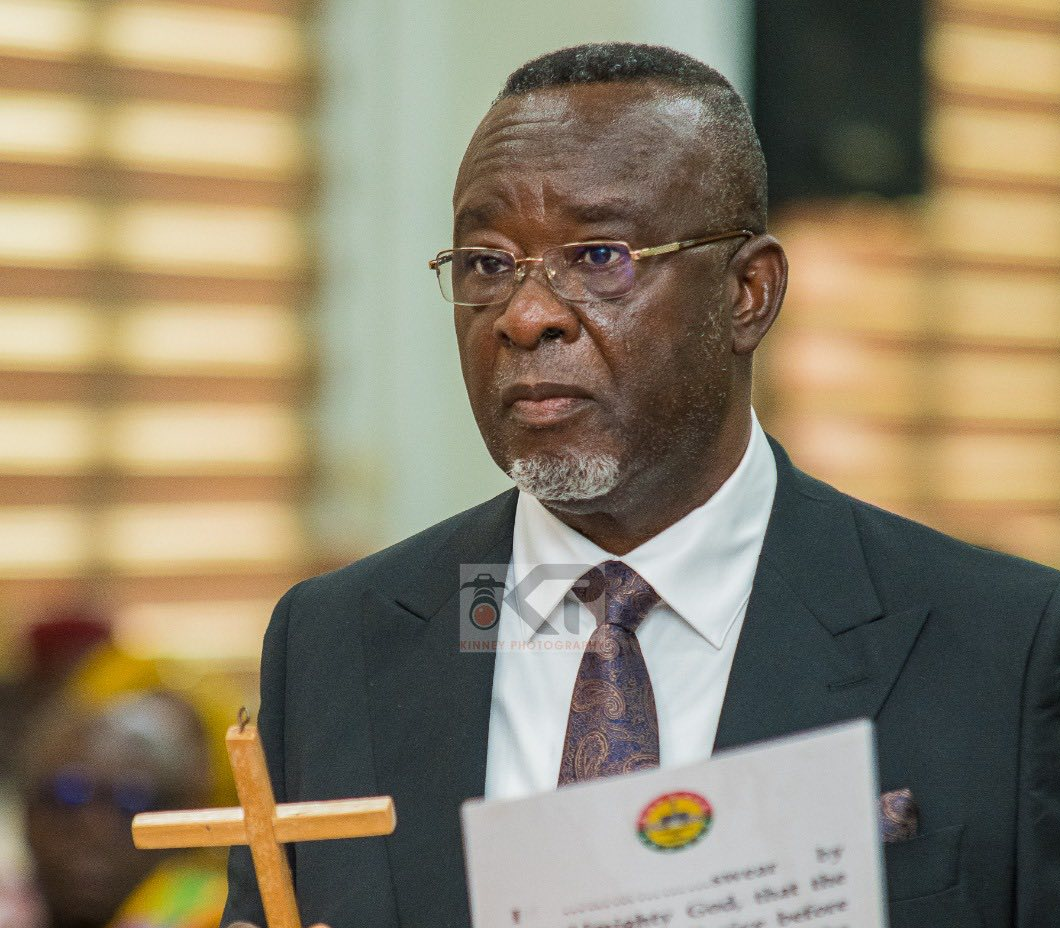

The Ghana Catholic Bishops' Conference has waded into a high-profile controversy surrounding Chief Justice Paul Baffoe-Bonnie, rejecting calls for his resignation over politically-charged remarks made during official visits to state institutions, whilst simultaneously flagging serious concerns about judicial impartiality.
The Bishops' intervention, made public on Sunday 6 September, offers a carefully calibrated response to mounting pressure on the Chief Justice. His comments during visits to the Social Security and National Insurance Trust (SSNIT) and the Minerals Income Investment Fund (MIIF)—particularly a reference to "the past eight years"—have drawn accusations of partisan bias, with civil society groups arguing the remarks undermine public confidence in Ghana's courts.
The core issue: appearance versus substance
The Bishops acknowledged a genuine tension at the heart of the controversy. Whilst there is "nothing improper" about a Chief Justice visiting public institutions to assess their performance, the language used matters profoundly. The reference to "the past eight years" was widely understood as comparing the current administration with its predecessor—a comparison many saw as implicit political endorsement.
"What may have started as a straightforward assessment of institutional performance thus took on, at least in appearance, the character of a partisan judgment," the Bishops stated, echoing concerns raised by the Ghana Centre for Democratic Development.
The Conference emphasised a critical principle: judicial independence depends not only on actual impartiality, but on the "visible, unmistakable appearance of impartiality." This distinction is vital in Ghana's polarised political environment, where public trust in institutions is already fragile.
Why it matters for Ghana
This episode strikes at the heart of Ghana's democratic governance. The judiciary is meant to serve as an impartial arbiter in disputes involving the government, political parties and public institutions. When the Chief Justice's public statements create reasonable doubt about that impartiality—even unintentionally—public confidence in the courts erodes.
For Ghanaians, particularly during election cycles and periods of political tension, judicial independence is a safeguard against authoritarian drift. The Bishops' warning reflects widespread concern that high-ranking judicial officers must be acutely conscious of how their words are received. In Ghana's context, where regional and partisan loyalties run deep, even innocuous comments can be reinterpreted through a political lens.
The Bishops' decision not to call for resignation also carries weight. By rejecting what they termed "disproportionate" calls whilst simultaneously flagging legitimate concerns, they have effectively set a benchmark: judges must be held accountable for appearances, but that accountability does not automatically demand removal from office. This nuanced position may influence how future breaches of judicial conduct are assessed.
The path forward
The Judicial Service has clarified that the Chief Justice acted in good faith with no intention to compromise judicial independence, and the Bishops said they received this explanation in good faith. However, the Conference made clear that the episode raises important questions about judicial ethics that cannot simply be dismissed.
The Bishops also appealed to both the ruling party and opposition to exercise restraint. The governing party should not treat criticism of the Chief Justice as an attack on its record, whilst the opposition should not weaponise his remarks as proof the courts have been captured. This plea reflects growing concern that Ghana's polarised political environment is corroding institutional credibility across the board.
For the Chief Justice, the message is equally clear: high judicial office carries heightened responsibility. Commending institutional achievements on their own merits, without comparative references to different administrations, would have avoided the controversy entirely.
Source: MyJoyOnline



Comments (0)
Be the first to comment.