
Beyond Roads: Why Accra's Real Transportation Crisis Is About Moving People, Not Cars
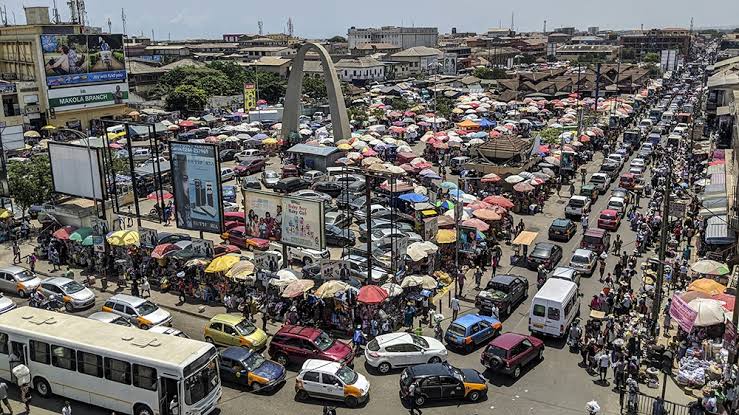

Accra's traffic gridlock is not simply a road problem—it is fundamentally a people-movement problem. A single observation this week crystallised this reality: 10 Aayalolo buses transported approximately 850 passengers from Kasoa to Accra on a route where commuters typically endure two-and-a-half-hour journeys during peak periods. This practical demonstration exposes a hard truth many urban planners overlook: cities do not need more vehicles. They need smarter systems that move more people with fewer cars.
If those same 850 passengers travelled in private vehicles, Accra's roads would need to absorb hundreds of additional cars competing for space. Alternatively, if they relied on the typical trotro system, approximately 60 minibuses would be required to cover the same route. The difference is staggering. One coordinated mass-transit solution replaced what would have been dozens or hundreds of individual journeys, demonstrating that the answer to Accra's mobility crisis lies not in building more roads but in redesigning how the city moves its people.
The Cascading Benefits of People-Centred Transit
When cities prioritise high-capacity public transport, the benefits ripple across multiple dimensions of urban life. Cleaner air ranks first: fewer vehicles per passenger directly reduces transport-related emissions, addressing the air-quality crisis that continues to plague Accra and other Ghanaian cities. Reduced congestion follows naturally—when buses move large numbers of people efficiently, they ease pressure on already overwhelmed road networks and make journey times more predictable for everyone.
But the advantages extend beyond infrastructure. Road safety improves when fewer vehicles compete for limited space, reducing conflicts between cars, buses and pedestrians. Perhaps most crucially, commuters reclaim time stolen by traffic. A Ghanaian losing six hours daily to congestion loses time with family, opportunity for rest, and capacity for productive work. Reliable mass transit restores dignity to ordinary citizens who deserve safe, comfortable, affordable journeys—not the crowded, unpredictable experience that currently defines public transport in Ghana.
What This Means for Ghana's Urban Future
Accra's transportation challenge cannot be solved by mass transit alone. Ghana still needs long-term investment in modern infrastructure, including a reliable, well-integrated railway system that could transform urban mobility across the country. However, waiting for those investments—which require sustained funding and political will—should not prevent immediate action on practical interventions that improve lives today.
The path forward requires several concrete steps. Government must provide sufficient buses to meet genuine passenger demand, establish and maintain reliable schedules, keep fares affordable for ordinary Ghanaians, and enforce dedicated bus-priority lanes with clear markings and consistent traffic management. As financial and operational conditions allow, Ghana should explore the gradual introduction of electric buses, which could reduce both emissions and long-term operating costs.
Critically, success must be measured. Authorities should track whether commuters are saving time, whether fares remain within reach of average workers, whether services are reliable and safe, and whether fewer vehicles are actually making the same journeys. Air-quality improvements and emissions reductions must be quantified, not assumed. These metrics should guide the expansion and continuous refinement of mass transit across Ghana's cities.
Accra's transportation crisis reflects a fundamental design choice: cities can be built around private cars, which consume vast space and resources while serving fewer people per vehicle, or around efficient movement of masses. Ghana has glimpsed what the second approach looks like. The question now is whether the nation will build on this foundation—not as a temporary initiative, but as the cornerstone of how Ghanaian cities move their people for decades to come.
Source: Ameyaw Debrah



Comments (0)
Be the first to comment.