Beyond Family Support: Ghana Must Channel Diaspora Billions Into Economic Growth
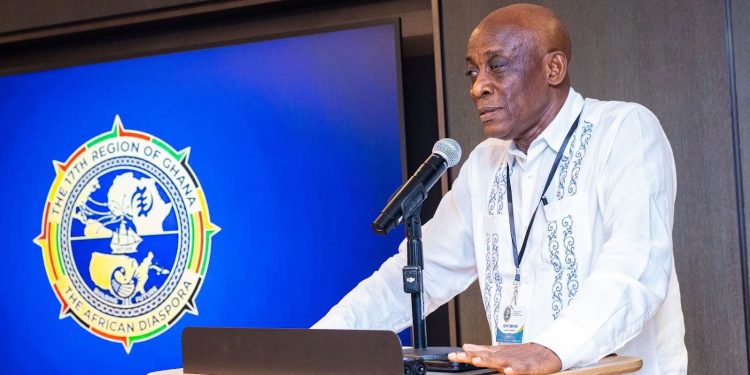
Ghana's diaspora remittances represent far more than survival money for families back home—they are a strategic asset that policymakers must harness to drive broader economic transformation, according to Seth Terkper, Presidential Advisor on the Economy and former Finance Minister.
Speaking at the launch of Region 17, an initiative focused on strengthening diaspora engagement, Terkper highlighted a critical gap in how Ghana currently views and manages the billions of cedis sent annually by Ghanaians abroad. While remittances have become increasingly vital as the country faces tighter access to traditional development financing—concessional loans and grants that once fuelled growth—they remain largely untapped as engines of productive economic activity.
The Untapped Potential of Diaspora Capital
Terkper's core argument is straightforward but significant: Ghana needs to move beyond treating remittances as purely household-level income transfers and instead recognise their broader developmental value. Diaspora funds already flow into housing, business creation, skills transfer and investment activities. The challenge, he suggests, is that without deliberate policy frameworks, this capital remains scattered and undershoots its transformative potential.
The timing of this call is crucial. As Ghana graduates—or aspires to graduate—into higher-income status, reliance on external concessional financing naturally diminishes. International lenders increasingly expect countries at Ghana's development stage to mobilise domestic resources and demonstrate financial self-sufficiency. Diaspora remittances, which totalled over $4 billion in recent years according to World Bank data, offer a tangible path forward if properly channelled.
Terkper outlined several ways diaspora capital could be redirected: structured investment vehicles that encourage diaspora participation in key sectors; policies that incentivise diaspora entrepreneurs to establish productive enterprises rather than passive property investment; and mechanisms to facilitate the transfer of technical expertise alongside financial flows.
Why It Matters for Ghana
Ghana's recent debt default and the broader erosion of investor confidence have underscored the fragility of over-reliance on external financing. The country's fiscal challenges mean that domestic and alternative revenue sources—including diaspora capital—are no longer optional luxuries but strategic necessities.
By institutionalising diaspora engagement through formal policies, Ghana could simultaneously address multiple development priorities: creating jobs through diaspora-backed enterprises, building manufacturing capacity, strengthening domestic financial systems, and signalling to international investors that the country is serious about sustainable, internally-driven growth.
Terkper also invoked lessons from Africa's so-called Lions—countries like Rwanda, Ethiopia and Kenya that have achieved strong growth despite global headwinds—suggesting that Ghana's path to sustained development depends on maximising internal resources and human capital rather than perpetually seeking external bailouts.
Restoring Confidence and Building Momentum
Central to Terkper's message is the link between economic credibility and diaspora participation. Ghanaians abroad, he stressed, are investors first and relatives second when making financial decisions. Restoring their confidence requires consistent policy implementation, transparent economic management, and a clear demonstration that Ghana is serious about structural reform.
The launch of Region 17 represents a formal acknowledgment of this imperative. By creating dedicated structures to engage the diaspora, Ghana is signalling that their resources and expertise are valued partners in national development, not merely remittance corridors.
The question now is implementation. Converting policy rhetoric into actionable frameworks—tax incentives for diaspora investment, streamlined business registration for overseas Ghanaians, diaspora bonds backed by productive projects—will determine whether this initiative becomes transformative or remains aspirational.
Source: The Ghana Report



Comments (0)
Be the first to comment.