
Ato Forson defends tight spending as IMF obligation, not personal caution
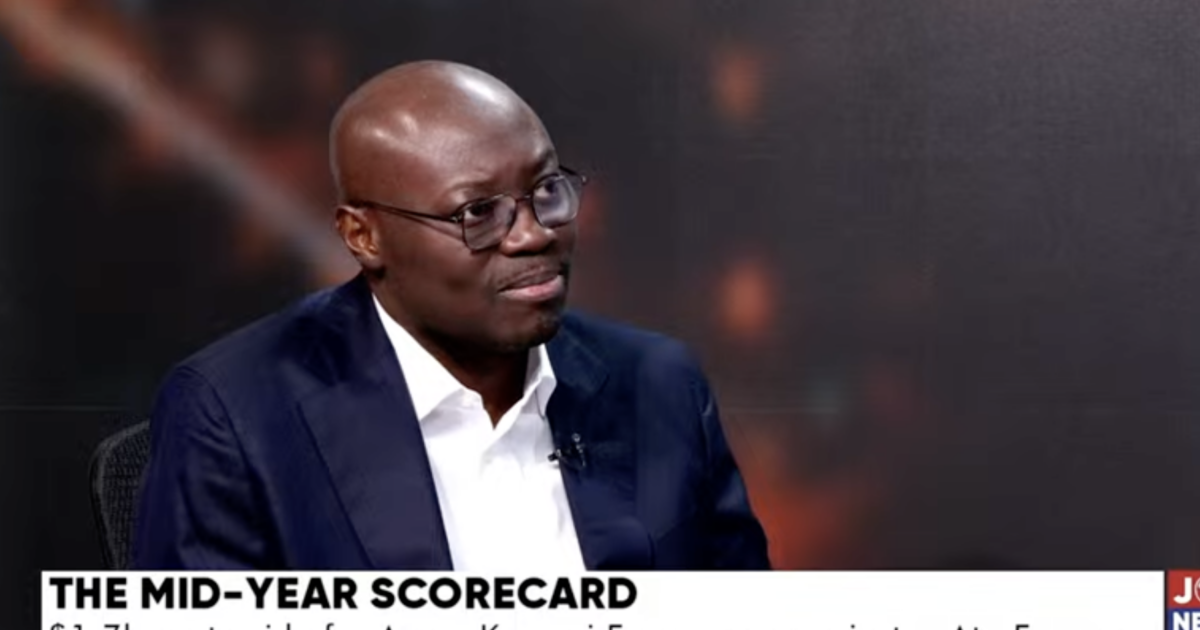

Finance Minister Dr Cassiel Ato Forson has pushed back against perceptions that his cautious approach to government spending reflects personal financial timidity, instead attributing the fiscal discipline to binding commitments Ghana's previous administration made with the International Monetary Fund.
Speaking on PM Express' Mid-Year Scorecard, Dr Forson explained that the New Patriotic Party (NPP) government locked Ghana into a primary surplus target of 1.5% of GDP when it secured a $3 billion IMF bailout—a condition that legally binds the current administration to comply, regardless of political preferences.
"The NPP went into an IMF programme, signed an agreement with the IMF and borrowed $3 billion from them and committed us, this government, that we will do 1.5% of GDP," Dr Forson said. "IMF does not deal with political parties. They deal with governments and countries. I have a responsibility to achieve 1.5% of GDP."
Ghana's progress toward IMF exit
The Finance Minister reported that Ghana had achieved a primary surplus of 0.9% of GDP by mid-year, positioning the country favourably for the IMF Executive Board's approval of programme exit. If the current trajectory holds, this annualises to approximately 1.8% of GDP—exceeding the 1.5% target by 0.3 percentage points.
"That gives us room to spend 0.3% more by the end of the year and still meet the 1.5% target," Dr Forson explained, suggesting the government has demonstrated both discipline and flexibility within the IMF framework.
Dr Forson emphasised that honoring the IMF agreement is non-negotiable. When pressed on whether Ghana should abandon the target, he was unequivocal: "Certainly no. I have to make sure that this condition is met."
Why it matters for Ghana
Ghana's IMF programme represents a critical juncture in the nation's economic recovery. The country entered the fund's support mechanism in 2023 following years of fiscal deterioration, currency depreciation, and debt distress that threatened economic stability. The 1.5% primary surplus target, whilst constraining government spending flexibility, serves as a confidence-building measure for international creditors and investors assessing Ghana's commitment to sustainable fiscal management.
The distinction Dr Forson draws is politically significant. By framing spending restraint as an inherited legal obligation rather than ideological choice, he shields the current government from criticism that it is pursuing austerity-driven policies that limit social investments. Simultaneously, he deflects responsibility toward the previous administration, noting that President Akufo-Addo's government negotiated these terms.
However, the broader debate remains unresolved: whether tight fiscal controls represent prudent stewardship necessary to rebuild Ghana's economic credibility, or whether they impose excessive austerity that constrains the government's ability to invest in critical sectors like education, health, and infrastructure during a period when Ghanaians face cost-of-living pressures.
The Finance Minister's implicit warning—that abandoning IMF targets could trigger another economic crisis and debt restructuring—underscores the stakes. Ghana's previous debt haircut imposed significant losses on creditors and constrained the government's borrowing capacity for years. Compliance with the current programme is therefore not merely a technical requirement but a guardrail against repeating past economic mismanagement.
As Ghana approaches potential programme exit, Dr Forson's comments signal the government's determination to cross the finish line and restore access to normal international capital markets without further IMF intervention.
Source: MyJoyOnline


Comments (0)
Be the first to comment.