Africa's Food Systems Hold Key to Youth Employment Crisis: Ghana Must Seize the Opportunity
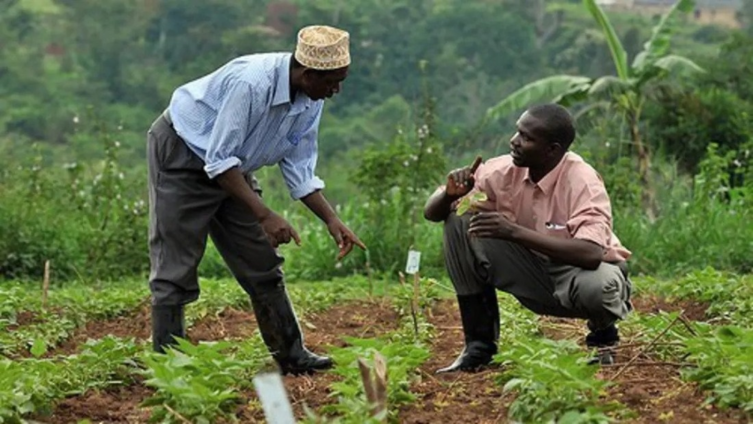
Africa's young population is both its greatest asset and its most pressing challenge. The continent is home to the world's youngest demographic, with more than 60 per cent of sub-Saharan Africans under the age of 25. Yet this youthful energy is colliding headlong with a stubborn economic reality: millions of young people cannot find decent work. According to the Food and Agriculture Organisation (FAO), Africa must create more than 10 million quality jobs annually by 2035 just to absorb the incoming workforce. Presently, approximately one in four young Africans is unemployed, not in education, and not in training—a waste of potential that demands urgent solutions.
The answer, many development experts argue, lies not in the traditional sectors where young Africans have long sought opportunity, but in the modern food system. While agriculture has historically been associated with subsistence farming, rural labour, and minimal returns, today's agri-food ecosystem is far more diverse and dynamic. It encompasses everything from digital platforms connecting farmers to buyers, climate-smart technologies, cold-chain logistics, food processing, packaging design, renewable energy solutions, and artificial intelligence-driven productivity improvements.
Beyond the Farm: The Hidden Jobs in Food Systems
For young Ghanaians and Africans with diverse skill sets, the food system presents multiple entry points into formal, well-paid employment. A young person with a technology background could develop digital platforms that help smallholder farmers access markets directly. Someone trained in engineering might design affordable irrigation systems or renewable-energy solutions for rural communities. A designer could create attractive packaging for locally processed foods targeting export markets. A business graduate could establish companies linking smallholder farmers to institutional buyers—supermarkets, hotels, schools, and multinational corporations.
This perspective shift is crucial. The food system is not merely farming; it is an entire ecosystem that mirrors modern economies in developed nations. It includes finance, data analytics, supply-chain management, quality assurance, export regulation, and e-commerce. Young Africans need not choose between agricultural work and urban employment—the food system increasingly offers both.
Across Ghana and the wider continent, young entrepreneurs are already proving this potential. Startups are addressing food insecurity, climate change adaptation, market inefficiencies, and consumer demand through innovation. However, these ventures often lack access to capital, mentorship, business skills, formal market connections, and professional networks—the very ingredients required to scale from idea to thriving enterprise.
Why This Matters for Ghana
Ghana faces the same demographic pressures as the rest of sub-Saharan Africa. The country's young population is growing faster than formal job creation in traditional sectors. Agriculture still employs a significant portion of Ghana's workforce, yet many young Ghanaians view farming as a last resort rather than a modern career. At the same time, Ghana's food import bill remains substantial, and domestic agri-businesses struggle with inefficiencies in logistics, storage, and market access.
Investing in youth-led innovation within the food system could simultaneously address youth unemployment, reduce Ghana's food import dependency, and strengthen the competitiveness of Ghanaian agri-businesses in regional and international markets. Young Ghanaians trained in agricultural technology, food processing, digital marketing, or supply-chain management could create businesses that generate wealth locally while meeting growing demand across West Africa and beyond.
The upcoming Africa Food Systems Forum 2026 in Kigali, Rwanda (September 1–4) will bring together over 5,000 stakeholders—policymakers, investors, scientists, established companies, farmers, and young entrepreneurs—from more than 50 countries. The Forum's theme, "Investing in Africa's Agri-Food Systems: Nourishing Nations, Growing Jobs, Building Resilience," signals that continental leaders recognise the opportunity. For Ghanaian youth and policymakers, this represents a critical moment to learn from peers, secure investment, forge partnerships, and position Ghana as a hub for agri-food innovation in West Africa.
From Ideas to Viable Businesses
Such gatherings matter because they create spaces where ideas become businesses. A young Ghanaian entrepreneur pitching a food-waste-to-value product might meet an investor willing to fund the next phase. A conversation with an established agri-business could lead to a supply contract. A discussion with a researcher might improve product quality or shelf life. A connection with a logistics company could solve distribution challenges.
Ghana's government, development partners, and private sector must recognise that the food system is not an old economy relegated to rural areas—it is a dynamic, modern sector where young Africans can build prosperous careers and sustainable businesses. The question is not whether the opportunity exists, but whether Ghana will invest in its youth to seise it.
Source: The Ghana Report



Comments (0)
Be the first to comment.