
Africa must chart its own course on climate action, not follow Western blueprints – UN expert
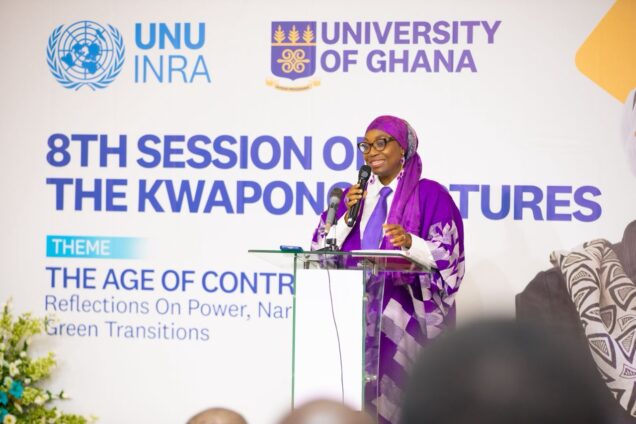

A senior United Nations official has urged African nations to resist pressure to adopt climate strategies designed by wealthy countries, instead crafting their own green transition pathways that address the continent's urgent development needs.
Professor Fatima Denton, Director of the United Nations University Institute for Natural Resources in Africa (UNU-INRA), made the case during the 8th Kwapong Lecture Series at the University of Ghana in Accra. She argued that Africa's approach to decarbonisation cannot ignore a fundamental reality: approximately 600 million Africans still lack access to electricity.
"Africa's green transition could not be reduced to achieving net-zero emissions when about 600 million people on the continent still lacked access to electricity," Prof Denton said. Rather than simply mimicking global narratives, she called for African countries to simultaneously expand energy access, create jobs and drive economic development whilst responding to international climate commitments.
The contradictions in global climate action
Prof Denton highlighted what she termed fundamental contradictions in the global green transition. Whilst industrialised nations push for decarbonisation, she noted that major European oil and gas producers continue extracting fossil fuels, even as Africa faces widespread energy poverty. Mozambique's natural gas and liquefied natural gas reserves exemplify the difficult choices African policymakers face when balancing economic development with climate goals.
She also questioned assumptions about technologies and materials promoted as "green." Critical minerals essential for renewable energy infrastructure are often presented without adequate scrutiny of their extraction costs—both environmental and social. Similarly, green hydrogen production could strain Africa's water resources, whilst deep-seabed mining threatens marine ecosystems.
"Who defines what constitutes a transition? Whose terms are being used? Who decides what is green or what makes a mineral critical?" Prof Denton asked, highlighting how power dynamics shape global climate narratives.
Why this matters for Ghana and Africa
Ghana, like much of sub-Saharan Africa, faces competing pressures. The country has significant oil and gas reserves that generate government revenue and employment, yet international climate finance and trade agreements increasingly incentivise rapid decarbonisation. Prof Denton's argument suggests that Ghana and neighbouring nations should not abandon resource development for Western-defined climate goals, but rather pursue strategic, long-term economic transformation rooted in their own priorities.
Climate finance—often touted as crucial for African development—may actually deepen fiscal vulnerabilities if it comes with conditions that restrict African countries' ability to harness their natural resources. Carbon markets, meanwhile, are shaped as much by politics and institutions as by market forces, meaning African nations risk disadvantageous terms if they lack bargaining power in global negotiations.
Prof Denton called for African leaders to adopt a deliberate, strategic approach informed by research, private sector expertise and grassroots knowledge. She referenced China's model of building its manufacturing base as an example of how nations can organise themselves to transform natural resources into sustainable development.
Moving beyond rhetoric to action
The professor rejected the notion that African countries can simply "leapfrog" conventional development stages through new technology adoption. "Leapfrogging is good, but do we have the space to land comfortably?" she asked, emphasising that innovation alone cannot guarantee development. Strong institutions, sound economic systems and robust social foundations are equally essential.
The Kwapong Lecture Series, co-hosted by UNU-INRA and the University of Ghana, regularly convenes scholars and practitioners to discuss natural resource governance and sustainable development across Africa. Prof Denton's remarks underline a growing consensus among African analysts: the continent must move from passive acceptance of global climate frameworks to active authorship of its own development story.
Source: The Ghana Report

Comments (0)
Be the first to comment.