Afenyo-Markin Stands Firm: Minority Will Scrutinise GoldBod's Financial Management
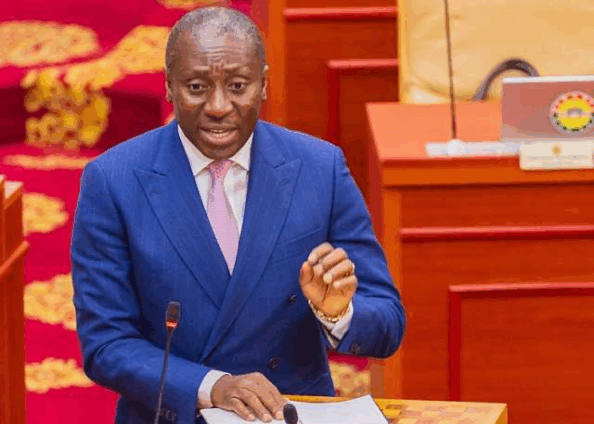
Ghana's Minority Leader Alexander Afenyo-Markin has pushed back against suggestions that the opposition lacks the expertise to scrutinise the Ghana Gold Board's financial performance, vowing to continue holding the state institution accountable for its management of public resources.
Speaking at a parliamentary press conference on Tuesday, August 18, the Effutu Member of Parliament emphasised that the Minority's scrutiny role is both legitimate and necessary, dismissing any notion that opposition lawmakers are unfit for the task. "We're not ignorant; we know our job," he stated, signalling the Minority's determination to maintain pressure on GoldBod despite pushback from the institution's leadership.
The Financial Dispute
The statement comes amid an escalating public dispute between Afenyo-Markin and GoldBod Chief Executive Officer Sammy Gyamfi over the institution's financial health. Gyamfi has rejected claims that GoldBod recorded losses, labelling them a "blatant lie" and attributing the allegations to what he characterised as Afenyo-Markin's "hallucinatory imagination."
According to Gyamfi, GoldBod's audited 2025 financial statements demonstrate strong performance, with an operational surplus of GH¢907 million and an overall surplus of GH¢5.4 billion. These figures stand in contrast to the Minority's concerns about the institution's management and financial accountability.
Despite the CEO's rebuttal, Afenyo-Markin has maintained his position that parliamentary scrutiny is essential. He clarified that the Minority's goal is not to trade insults with GoldBod officials but to ensure transparency and accountability in how the institution manages Ghana's precious gold resources—a critical national asset.
Why It Matters for Ghana
Ghana's gold sector is one of the country's most important revenue sources, with GoldBod playing a key role in managing state participation in gold production and sales. The public dispute between parliamentary oversight and institutional leadership reflects broader concerns about accountability in Ghana's extractive industries.
For ordinary Ghanaians, questions about whether state institutions like GoldBod are efficiently managing national resources are crucial. The gold sector generates significant revenue that should fund public services, infrastructure and development. If resources are mismanaged or accountability is weak, the impact cascades through the economy and affects citizens directly.
The Minority's insistence on scrutiny, regardless of figures presented by GoldBod, underscores the importance of checks and balances in Ghana's governance system. Parliamentary oversight—whether from majority or minority benches—serves as a safeguard against institutional complacency and ensures decision-makers remain answerable to the public.
Path Forward
Afenyo-Markin has signalled that the Minority will persist in examining GoldBod's operations, emphasising that accountability and transparency should not be viewed as adversarial but as essential components of good governance. His remarks suggest the opposition will continue to ask tough questions about how the institution deploys public funds and manages Ghana's gold resources, holding the institution to high standards expected of any state body handling national assets.
Source: MyJoyOnline


Comments (0)
Be the first to comment.