
Yankazia Community's 1,000 Residents Drink From Animal Pools as Borehole Pleas Go Unheard
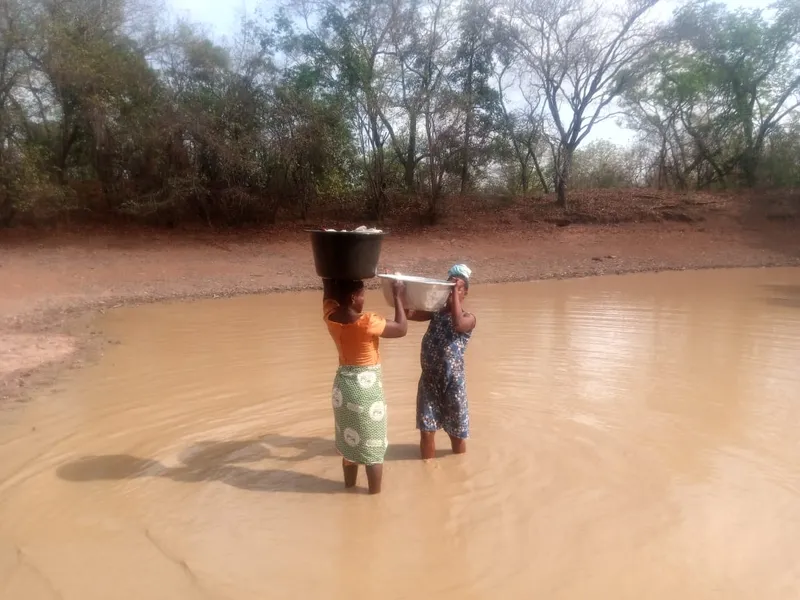

For the roughly 1,000 people living in Yankazia, the daily search for clean drinking water has become a desperate and dangerous routine. With no functioning borehole in the community, residents are forced to trek miles to reach water sources they share with livestock and wild animals — a situation that poses serious risks to public health and human dignity.
Despite repeated appeals to authorities for a borehole, the community's cries have gone unanswered, leaving men, women and children with no choice but to consume water that is visibly unsafe and highly susceptible to contamination from animal waste and other pollutants.
A Daily Struggle That Should Not Exist
The scenes playing out in Yankazia are a stark reminder of the gap between Ghana's development ambitions and the lived reality of many rural communities. Residents — including elderly people and young children — make long journeys on foot each day simply to fetch water, often returning with supplies drawn from open sources that animals freely wade through and drink from.
Failed or non-existent boreholes are a recurring problem in underserved Ghanaian communities. When boreholes break down and there is no immediate repair, entire communities can be thrown back into relying on unsafe surface water, reversing years of progress in water access. In Yankazia's case, the situation appears to have persisted long enough to become entrenched, with appeals to relevant authorities yielding no concrete response.
Access to safe water is not only a basic human need but a legally recognised right. Ghana is a signatory to various international frameworks that commit the government to ensuring clean water access for all citizens, regardless of where they live.
Why It Matters for Ghana
Ghana has made measurable strides in improving water and sanitation access over the decades, but rural communities — particularly in the northern and more remote parts of the country — continue to lag significantly behind urban centres. The Yankazia situation illustrates a persistent structural inequality: those who live furthest from city infrastructure are also those least likely to have their complaints acted upon swiftly.
Drinking water shared with animals carries the risk of waterborne diseases such as cholera, typhoid and dysentery, all of which place additional burdens on already stretched local health facilities. Children are especially vulnerable, as waterborne illnesses are a leading cause of illness and school absenteeism in rural Ghana.
Beyond the immediate health implications, the time cost of fetching water — often borne by women and girls — reduces hours available for education, economic activity and rest. Communities trapped in this cycle find it harder to lift themselves out of poverty, making clean water access a development issue as much as a health one.
What Needs to Happen
Civil society groups and water sector advocates have long argued that community-level water infrastructure must be treated as a priority, not an afterthought. District assemblies have a responsibility to ensure that allocated infrastructure budgets reach communities like Yankazia and that completed projects are maintained properly over time.
- The Ghana Water and Sanitation Authority and relevant district assemblies should be held accountable for responding to Yankazia's borehole requests without further delay.
- Community-led monitoring of water infrastructure has proven effective in other districts and could help ensure that boreholes, once installed, are kept functional.
- Civil society organisations working in the water, sanitation and hygiene (WASH) sector are encouraged to bring Yankazia's situation to wider attention.
Until a functioning borehole is provided, Yankazia's 1,000 residents remain at risk every single day — a situation that is entirely preventable and demands urgent attention from those with the power and the mandate to act.
Source: 3News



Comments (0)
Be the first to comment.