
Wrong Number, Real Fine: How Ghana's Traffic Database Sent a Speeding Ticket to the Wrong Person
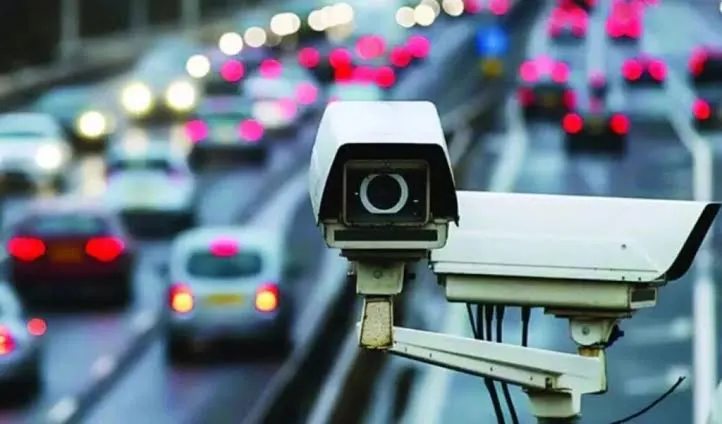

A Ghanaian citizen received a GH¢240.00 speeding ticket on his personal phone in November 2026 — for a commercial minivan he has never owned, travelling on a highway he was nowhere near. The case, which involves the Driver and Vehicle Licensing Authority (DVLA), the Ghana Police Service Motor Traffic and Transport Department (GPS-MTTD), and traffic enforcement platform TraffiTech-GH, has laid bare alarming weaknesses in the country's vehicle registration database, digital enforcement systems, and data protection practices.
What happened
At 2:26 pm on 24 November 2026, a speed camera on a northern highway captured a Greater Accra-plated commercial minivan travelling at 85 km/h in a 50 km/h zone. The MTTD subsequently issued a citation through TraffiTech-GH, which dispatched an SMS to a phone number held in DVLA's records against that vehicle's registration. The problem: the number belonged to an entirely unconnected citizen.
When that citizen followed the link in the GPS-MTTD text message, the portal required no PIN, no plate number, and no verification of any kind before displaying another person's full name, commercial plate details, mobile number, and precise GPS coordinates from the alleged offence. Four categories of personal data — belonging to a complete stranger — were exposed to him in seconds.
What makes this particularly difficult to excuse is the age of the vehicle involved. The commercial plate ends in -26, meaning DVLA issued it in 2026 — well within Ghana's mandatory Ghana Card registration era. This is not a legacy data problem inherited from paper files. It is a fresh entry, made under current rules, that still managed to carry an unverified phone number into an active enforcement system.
Why it matters for Ghana
Ghana has invested heavily in digital identity infrastructure in recent years. The Ghana Card, issued by the National Identification Authority, was intended to serve as an anchor for accurate, deduplicated public records. Since 2 November 2026, Legal Instrument 2523 has further tightened vehicle registration by requiring live biometric matching. Yet, as this case demonstrates, a single unverified data field — a ten-digit mobile number — was enough to send a statutory penalty to the wrong person entirely.
The legal consequences are significant. Under the Data Protection Act, 2012 (Act 843), state data controllers are bound by strict accuracy obligations. Section 21 restricts the indirect collection of personal data without the subject's knowledge; Section 26 requires that data remain accurate and current, not merely correct on the day it was first entered. Sending a statutory penalty notice to an uninvolved person's phone potentially breaches Sections 18 and 20 of the same Act. Additionally, by exposing the actual vehicle keeper's identity, location data, and alleged offence to a third party, GPS-MTTD may have violated Sections 28, 30, 37, and 96, which protect special categories of personal data. Under Section 31, both DVLA and GPS-MTTD are obligated to file formal breach notifications with the Data Protection Commission.
Parliament mandates DVLA under Section 3(1)(k) of Act 569 to maintain accurate vehicle registers. Commercial vans already return to DVLA every six months for mandatory paid inspections — a cycle that happens to mirror the telecom industry's standard six-month SIM deactivation and recycling period. Mobile networks routinely reassign dormant numbers to new Ghana Card holders. This means a phone number that was accurate at registration can, within months, legally belong to someone entirely different. Failing to cross-check SIM ownership against a keeper's Ghana Card at each of those biannual visits converts every recycled number into a potential data breach waiting to happen.
The burden falls on the innocent
For the citizen who received the wrong ticket, the path to resolution is far from simple. The TraffiTech-GH citation gives 14 days to pay GH¢240.00. After that deadline, Regulation 242 of the Road Traffic Regulations 2026 (L.I. 2519) adds a one per cent daily surcharge. Contesting the fine requires an online filing, a visit to a regional MTTD station, and potentially a court appearance — a multi-day errand arising entirely from a data error that a simple One-Time Password (OTP) verification at the registration desk could have prevented.
Article 23 of Ghana's 1992 Constitution requires administrative bodies to act fairly and reasonably. Compelling an uninvolved citizen to navigate a formal legal dispute process — under penalty of daily surcharges — because a state agency skipped a basic verification step raises serious questions about administrative fairness.
- Meanwhile, the actual owner of the commercial van remains legally unserved, unaware that his route, identity, and alleged offence were shared with a stranger, and reportedly facing potential DVLA service restrictions after 9 December.
- DVLA charges motorists a separate GH¢25 fee to digitise older vehicle records ahead of planned 2027 plate changes — yet 2026 registrations are already entering the same database with unverified contact details.
- A simple OTP check at the point of registration, costing a fraction of a pesewa to implement per transaction, would have broken the chain of errors before it began.
Ghana's digital enforcement infrastructure is only as reliable as the data underpinning it. Until DVLA and GPS-MTTD close the gap between what the law requires and what their systems actually deliver, every speed camera flash carries the risk of landing on the wrong phone.
Source: The Ghana Report



Comments (0)
Be the first to comment.