Why Ghana destroys seized guns instead of reissuing them to security forces
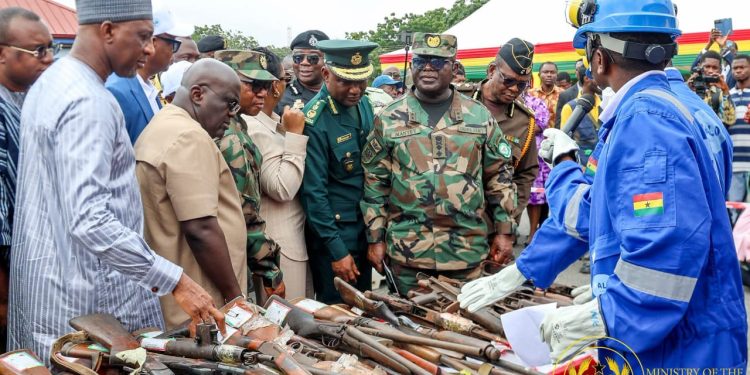
Ghana held its 8th Arms Destruction Ceremony on 9th July 2026, marking the United Nations Small Arms Destruction Day and completing a Gun Amnesty Programme that ran until January 2026. The ceremony, organised by the Ministry of the Interior under Hon. Muntaka Mohammed-Mubarak, alongside the National Commission on Small Arms and Light Weapons, Ghana Police Service, Ghana Armed Forces and National Security Council Secretariat, destroyed thousands of illicit, recovered and obsolete small arms. But the event has reignited a common public question: why not refurbish seized weapons and issue them to Ghana's under-resourced security agencies instead of destroying them?
The answer lies in four interconnected imperatives—legal, operational, forensic and security—that make redeploying seized firearms far riskier than it initially appears. While destroying weapons might seem wasteful when Ghana's security forces face significant logistical constraints, the policy serves a critical national interest that transcends short-term budgetary concerns.
The legal and integrity problem
Once law enforcement seizes a firearm during criminal investigations, intelligence operations or border interceptions, the judicial process determines its fate. When a court authorises forfeiture to the State, the weapon legally leaves Ghana's inventory if deemed unsuitable for retention. Reintroducing such weapons into operational use would fundamentally undermine the integrity of Ghana's disposal procedures and cast doubt on the fate of confiscated arms—a critical transparency concern for public confidence in firearms control.
Seized firearms typically have unknown or questionable histories. Many are illegally manufactured, smuggled across borders, modified to increase lethality or poorly maintained. Without reliable ownership and maintenance records, their mechanical integrity cannot be guaranteed. Hidden defects invisible during inspection may only emerge during live operations, exposing officers to preventable weapon failures at critical moments. No responsible security institution can afford that risk.
Forensic evidence and criminal intelligence
Seized firearms used in armed robbery, murder, illegal mining, terrorism and organised crime remain forensic objects long after legal proceedings conclude. Their history forms part of Ghana's criminal intelligence records. Returning such weapons to active service would compromise future investigations should they reappear in subsequent crimes. Maintaining an unbroken chain of custody from seizure to destruction preserves the integrity of Ghana's criminal justice system and ensures investigators can reliably trace weapon histories.
This forensic imperative extends to preventing the reintroduction of crime-linked weapons into circulation. Every confiscated firearm that re-enters Ghana's security forces remains in the system indefinitely—vulnerable to theft, diversion, corruption or unauthorised transfer. Destruction permanently removes these weapons from both legal and illegal markets, reducing the domestic and regional pool of illicit firearms.
Why this matters for Ghana
Ghana's security agencies rely on standardised weapon systems to simplify training, ensure operational compatibility, streamline maintenance and manage ammunition supply chains efficiently. Seized firearms are rarely compatible with these standards. They represent a patchwork of calibres, manufacturing standards and mechanical conditions that would complicate armoury management, confuse procurement and undermine operational readiness.
More broadly, Ghana's commitment to destroying seized firearms signals to the international community and regional partners that the country takes small arms control seriously. This posture strengthens Ghana's standing in ECOWAS security frameworks and supports broader West African efforts to combat illegal weapons trafficking. For a nation working to maintain stability and prevent the proliferation of illicit firearms that destabilise the Sahel and Gulf of Guinea regions, destruction of seized weapons is not wasteful—it is strategic.
The public perception argument is equally important. When Ghanaians see their government systematically destroying confiscated criminal weapons rather than recycling them, it reinforces confidence that law enforcement is serious about removing dangerous implements from circulation. That confidence, in turn, encourages civilian participation in future gun amnesty programmes and voluntary weapon surrenders—essential to long-term firearms reduction.
While Ghana's security forces undoubtedly face resource constraints, the answer lies not in repurposing seized weapons but in sustained government investment in legitimate procurement from certified manufacturers and licensed dealers. The 8th Arms Destruction Ceremony reflects a mature policy framework that prioritises the safety of security personnel, the integrity of the criminal justice system and the security of the nation over short-term cost savings.
Source: The Ghana Report

.jpg)

Comments (0)
Be the first to comment.