
WhatsApp Usernames Could Complicate Fraud Investigations in Ghana, Experts Warn

WhatsApp is preparing to roll out a username feature that will allow users to communicate without revealing their phone numbers — a convenience for privacy-conscious users, but one that raises serious questions for Ghana's fraud investigators and digital security framework. As the country has spent years building a robust identity verification system tied to mobile numbers, the change could quietly erode one of the key tools used to track down online criminals.
Ghana built its fraud-fighting infrastructure around phone numbers
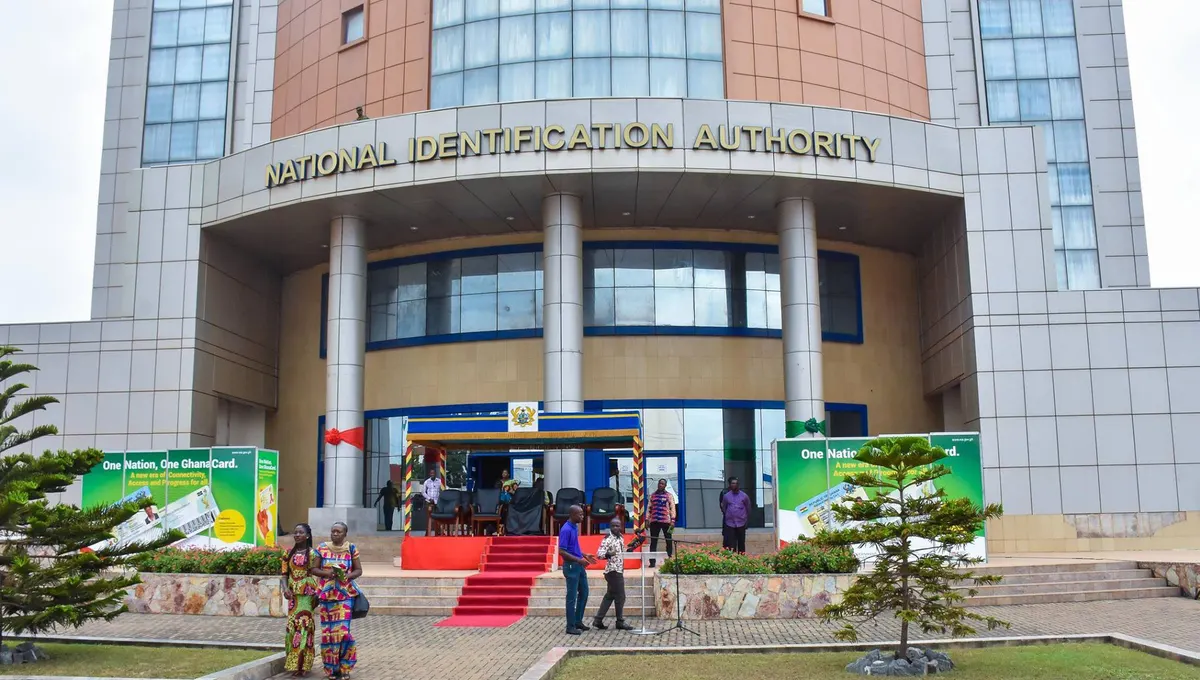
Over the past decade, Ghana has developed one of West Africa's more sophisticated mobile identity frameworks. Under the country's SIM registration regime, every subscriber must register their SIM card using verified identity information — specifically their Ghana Card details — which are cross-checked in real time with the National Identification Authority (NIA) database before a SIM is activated. This process is overseen by the National Communications Authority (NCA).
The legal backbone of this system stretches back to the National Identification Authority Act, 2006 (Act 707), which established the NIA, mandated the creation of a national identification system and placed strict obligations on the protection of collected data. More recently, the National Identity Register (Amendment) Regulations, 2026 (L.I. 2523) tightened these requirements further, compelling qualifying organisations to verify identities through approved biometric processes rather than relying on simple photocopies or visual checks of ID cards.
The practical result of this architecture is significant: when a mobile phone number surfaces in a criminal investigation, it can serve as a meaningful lead. Investigators can potentially trace a number back to a verified identity, giving them a starting point they would otherwise lack. Phone numbers, in this sense, have become anchors in Ghana's digital crime-fighting toolkit.
What the username feature changes
In June 2026, Meta announced that WhatsApp would introduce unique usernames. Once the feature is fully rolled out, users who activate it will be able to receive messages and initiate conversations without the other party automatically seeing their phone number. The stated purpose is to offer greater privacy — a legitimate and understandable goal given growing concerns about data exposure across digital platforms.
But consider a scenario that is already familiar to many Ghanaians: a victim receives a WhatsApp message from an account posing as an investment advisory firm. The messages are professional, the returns promised are attractive and the conversation goes on for weeks. The victim transfers money via mobile money or a bank channel. When the expected returns never arrive, the account disappears, conversations are deleted — and the only identifier the victim ever saw was a username like @secureinvest, not a phone number.
Under the traditional WhatsApp model, a phone number would typically have been visible. That number, even if used on a SIM registered to a fictitious or borrowed identity, still provided investigators with a thread to pull. A username, by contrast, is not tied to Ghana's SIM registration framework. It tells investigators nothing directly about who is behind it.
Why it matters for Ghana
Ghana's digital economy is growing rapidly, and so is the sophistication of fraud conducted through it. Mobile money scams, investment fraud and impersonation schemes have become increasingly common, with WhatsApp serving as a primary channel for many of these crimes. The NCA and law enforcement agencies have relied, at least in part, on the linkage between phone numbers and registered identities to pursue cases.
The introduction of WhatsApp usernames does not destroy that framework entirely — a phone number is still needed to create a WhatsApp account, and Meta retains account data that may be accessible through lawful legal processes in appropriate circumstances. However, the practical reality is that many victims and even investigators begin with the information immediately visible to them. When that information is a username rather than a phone number, the first step of any investigation becomes harder.
Ghana's broader policy direction is unambiguous: digital transactions and communications of consequence should be traceable to verifiable identities. The new WhatsApp feature introduces a tension into that vision that regulators, the NCA and law enforcement agencies may need to address proactively.
- Stakeholders could engage Meta directly about cooperation mechanisms for fraud investigations involving username-only accounts.
- The NCA may need to issue public guidance reminding Ghanaians of the risks of transacting with contacts whose phone numbers they cannot verify.
- Public awareness campaigns warning of the new fraud surface area this feature creates would be a sensible precaution before the feature is widely adopted in Ghana.
For now, the advice to Ghanaians is straightforward: be deeply cautious about any financial dealings initiated through WhatsApp — and be especially wary of accounts that are unwilling or unable to share a verifiable phone number.
Source: The Ghana Report



Comments (0)
Be the first to comment.