
What Four Countries' Mining Reforms Teach Ghana About Fixing Galamsey


Ghana's National Democratic Congress (NDC) communicator and current Chief Executive of the Ghana National Petroleum Corporation (GNPC), Sammy Gyamfi, has written a detailed policy piece examining how four countries have navigated the complex challenge of formalising artisanal and small-scale mining (ASM) — and what those experiences mean for Ghana as it pursues its own framework known as the rCOMSDEP.
The global ASM formalisation challenge
Artisanal and small-scale mining is a livelihood for millions of people across the developing world, yet it is frequently associated with environmental destruction, mercury pollution, child labour, and lost government revenue. Recognising both its economic importance and its dangers, a number of countries have over the years attempted to bring informal and illegal miners into a regulated, taxable, and safer framework — a process broadly called ASM formalisation.
Gyamfi's analysis looks at four countries that have gone down this road before Ghana's current push. While he acknowledges that none of these programmes has been without difficulty — describing "teething problems" that hampered implementation — he argues that meaningful progress was still achieved in each case, and that those achievements carry instructive lessons for Ghanaian policymakers.
Common threads in successful formalisation efforts internationally have included strong community engagement, clear and accessible licensing pathways for small operators, dedicated financial and technical support for registered miners, and consistent law enforcement that targets those who refuse to comply rather than criminalising the entire sector indiscriminately.
What this means for Ghana and rCOMSDEP
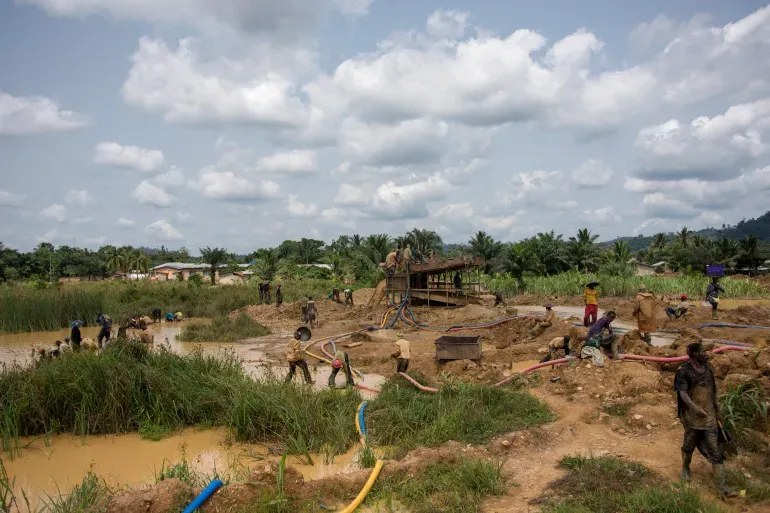
Ghana's own artisanal mining sector — widely discussed under the term galamsey — has been one of the most politically and environmentally contentious issues in the country for over a decade. Rivers including the Pra, Ankobra, and Offin have suffered severe pollution, farming communities have lost land, and successive governments have struggled to find a lasting solution that balances economic inclusion with environmental protection.
The rCOMSDEP — the revised Community Mining Scheme and other related formalisation frameworks — represents the current administration's attempt to move beyond periodic military crackdowns and towards a more structured, long-term solution. Gyamfi's piece appears aimed at building a policy case for this approach, using international evidence to counter critics who doubt whether formalisation can work in the Ghanaian context.
His central argument is that the difficulties experienced elsewhere should be read not as proof that formalisation fails, but as a roadmap of pitfalls to avoid. Where other countries struggled — whether through weak institutional capacity, insufficient funding, corruption within licensing systems, or lack of community buy-in — Ghana has the opportunity to plan proactively rather than react after problems emerge.
- Licensing accessibility: Making registration simple and affordable is critical so that small operators have a genuine incentive to come into the formal system rather than remain underground.
- Environmental compliance: Formalisation must come with clear, enforceable environmental standards and technical guidance on safer mining methods, including the phasing out of mercury.
- Revenue sharing: Communities that host mining activity must see a tangible share of the benefits, otherwise local resistance and illegal activity tend to persist regardless of formal frameworks.
The political backdrop
Gyamfi's intervention comes at a time when the galamsey debate remains intensely politicised in Ghana. Environmental groups, traditional rulers, and civil society organisations have all pressed for more decisive action, while mining communities and small operators have pushed back against blanket bans that they say destroy livelihoods without offering alternatives.
By anchoring his argument in comparative international experience, Gyamfi is attempting to shift the conversation from partisan point-scoring towards evidence-based policy. Whether the government can translate that framework into effective action on the ground — given the scale of illegal mining and the institutional challenges involved — remains the central question Ghanaians will be watching closely in the months ahead.
Source: 3News




Comments (0)
Be the first to comment.