
Government galamsey crackdown lacks teeth, says policy think-tank leader
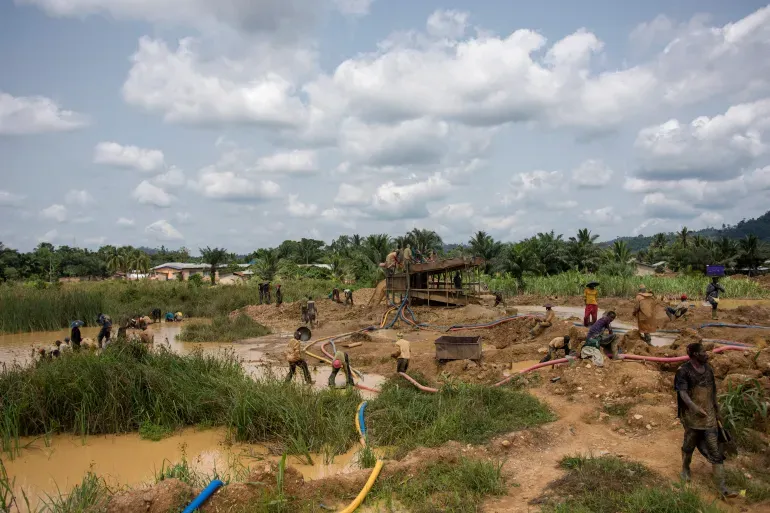

A prominent Ghanaian policy analyst has levelled sharp criticism at the government's approach to combating illegal small-scale mining, arguing that current efforts amount to little more than performative gestures rather than genuine enforcement.
Kofi Bentil, a senior figure in Ghana's policy and governance circles, contends that whilst the government projects an image of taking galamsey seriously, the substance behind these actions remains hollow. His assertion touches on a long-standing frustration among observers who have watched years of mining operations continue to ravage water bodies, farmland and forest reserves across the country.
The performance versus reality divide
Bentil's core argument centres on the distinction between activity and impact. He suggests that headline-grabbing operations, public statements and enforcement drives create the appearance of governmental seriousness without translating into meaningful reduction in illegal mining activity. This critique reflects wider concerns that anti-galamsey efforts, whilst visible and sometimes dramatic, have failed to stem the tide of unregulated mining that continues to damage Ghana's natural environment and public health.
The challenge of tackling galamsey has proven complex for successive administrations. Illegal mining operations often involve networks with local protection, capital resources for sophisticated equipment, and incentives that keep communities involved despite environmental costs. Critics argue that without addressing root causes—economic alternatives, enforcement consistency, and tackling corruption within enforcement bodies themselves—surface-level crackdowns cannot be effective.
Why it matters for Ghana
Galamsey's impact on Ghana cannot be overstated. Illegal mining operations have poisoned major water sources including the Ankobra and Offin rivers, threatening drinking water supplies for communities and jeopardising aquatic ecosystems. Agricultural productivity in mining regions has declined markedly, whilst respiratory and waterborne diseases have surged in affected areas.
The economic stakes are equally significant. Ghana loses substantial tax revenue when mining occurs outside regulatory frameworks. Additionally, Ghana's legitimate mining sector and international reputation suffer when illegal operations dominate headlines. Foreign investors and development partners increasingly scrutinise the country's environmental governance record.
Bentil's critique suggests that meaningful progress requires a departure from current strategies. Effective anti-galamsey work would likely demand stronger inter-agency coordination, prosecution of high-level actors beyond foot soldiers, alternative livelihood programmes in mining communities, and genuine political will to challenge connected interests rather than orchestrating periodic visible raids.
What needs to change
Moving beyond symbolic action would require several shifts:
- Consistent enforcement with follow-through prosecutions rather than episodic crackdowns
- Addressing corruption within security and regulatory agencies that enable galamsey operations
- Creating economic alternatives in communities dependent on illegal mining income
- Tackling the high-level financing and equipment supply networks that sustain these operations
- Environmental rehabilitation of already-damaged waterways and land
Bentil's comments add weight to a growing chorus of voices questioning whether current approaches can achieve the stated objective of eliminating illegal mining. For Ghanaians dependent on clean water, farming, and a healthy environment, the distinction between performative action and real results is not academic—it directly affects their wellbeing and economic security.
Source: 3News





Comments (0)
Be the first to comment.