West Bank Tensions Escalate: Israeli Military Forces Palestinians from Homes in Qusra Village
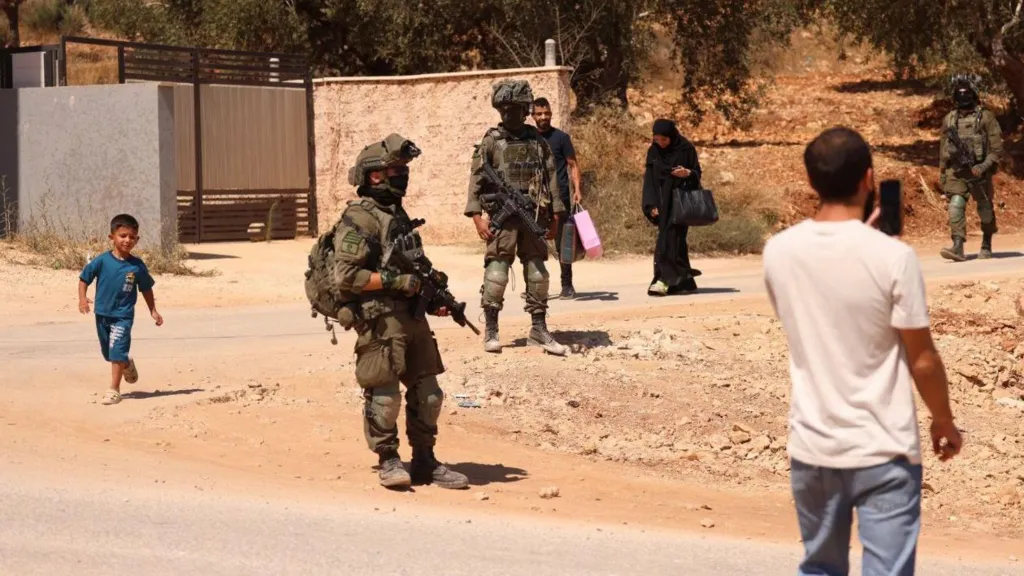
Tensions in the occupied West Bank have intensified following a military operation in Qusra village, where Israeli forces ordered approximately a dozen Palestinian households to vacate their properties whilst simultaneously removing Israeli settlers from the area. The operation highlights the escalating violence and displacement affecting Palestinian communities and raises questions about the role of Israeli military forces in protecting civilians caught in the crossfire.
The crisis began on Sunday when Israeli settlers blocked access roads to Palestinian homes and cut off power and water supplies to families in three residences. The settlers remained positioned outside these homes for days, effectively besieging the residents. On Thursday, Israeli military forces arrived to remove the settlers, but in a move that drew criticism, they ordered the trapped Palestinian families to leave their own properties during the operation.
What Happened in Qusra
According to accounts from residents and village officials, Israeli soldiers entered homes throughout the village, informing occupants they were now in a military zone and must evacuate immediately. Resident Qaher Odeh described how more than twenty soldiers entered his house, returning later to tell him and his brother they needed to leave as the property had become a military post. Residents were forced to relocate to lower parts of the neighbourhood as the entire area was sealed off by Israeli forces.
The Israel Defense Forces (IDF) stated they had dismantled two illegal outposts and detained one Israeli settler whilst confiscating equipment near Qusra and Jalud areas close to Nablus. Israeli government spokesman David Mencer characterised the settlers' actions as deplorable and unacceptable, pledging investigation and prosecution of those responsible. However, the decision to displace Palestinian residents during the operation raised further concerns about whose interests were being prioritised by the military.
Video footage from the scene showed extensive Israeli military presence, including security vehicles and a bulldozer, alongside long lines of armed forces positioned throughout the village. Confrontations between Israeli soldiers and border police with settlers reportedly involved the use of tear gas and stun grenades, though security forces appeared to confiscate only the settlers' temporary shelter rather than their equipment.
Why This Matters for Ghana and Africa
Whilst Ghana and West African nations are geographically distant from the Israeli-Palestinian conflict, the situation in Qusra carries significance for the continent's diplomatic landscape and principles of justice. Ghana, as a founding member of the United Nations and an advocate for international law, has historically supported Palestinian rights and self-determination through voting patterns at the UN General Assembly.
The Qusra incident exemplifies broader patterns of displacement and alleged violations of international humanitarian law that attract scrutiny from African nations and the African Union, which has granted Palestine observer status. The situation also connects to discussions about colonialism, land rights, and civilian protection—issues that resonate across Africa given the continent's own history of land dispossession and ongoing struggles for sovereignty and equitable resource distribution.
Additionally, for Ghanaians with diaspora connections or interest in international affairs, this conflict represents a test of whether international law and principles of civilian protection are applied consistently across different regions and conflicts. The involvement of the United States Ambassador in commenting on the situation also underscores how Western foreign policy positions on the conflict remain contested and significant.
Ongoing Patterns of Displacement
Qusra's mayor, Abdel Azim Wadi, indicated this operation is part of a sustained pattern targeting the village. Last month, a newly constructed mosque was set on fire with Hebrew graffiti sprayed nearby—an incident attributed to settlers. Such incidents contribute to a climate of insecurity that affects Palestinian community development and reconstruction efforts.
The case underscores the challenge Israeli military forces face in managing rising settler violence, which has accelerated alongside the current Israeli government's rapid expansion of settlements. International law designates all Israeli settlements in occupied territories as illegal, yet their proliferation continues with apparent government support, creating friction between stated military operations and the protection of Palestinian civilians.
Source: MyJoyOnline


Comments (0)
Be the first to comment.