
VP Opoku-Agyemang Calls on Bank of Ghana to Back Rural Banks Through Community Banking Shift


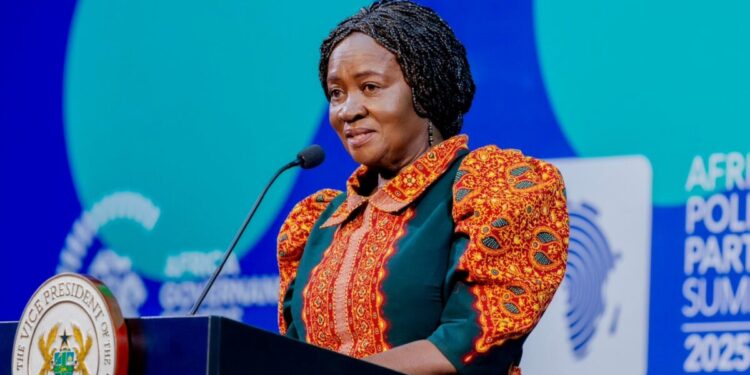
Vice President Jane Naana Opoku-Agyemang has called on the Bank of Ghana to stand firmly behind rural banks that are finding it difficult to satisfy the new regulatory demands being introduced as part of Ghana's shift from a rural banking framework to a community banking model. Her appeal underscores growing concerns that smaller financial institutions operating at the grassroots level could be left behind if the central bank does not play an active enabling role during this critical transition period.
What the transition involves
Ghana's move from rural banking to community banking represents a significant structural reform of the country's local financial sector. Community banks are envisioned as more robust, better-capitalised institutions capable of serving broader geographic areas and a wider range of customers than the traditional rural bank model. However, the shift comes with tougher regulatory requirements — including higher minimum capital thresholds and stricter governance standards — that many existing rural banks are finding challenging to meet within the stipulated timeframes.
Rural banks have historically been the financial backbone of Ghana's countryside, providing credit, savings facilities and other basic banking services to farmers, small traders and low-income households who are largely excluded from the formal commercial banking sector. Any disruption to their operations during the transition risks cutting off these communities from even the modest financial services they currently rely upon.
Why it matters for Ghana
The stakes in this transition are high. Ghana has well over a hundred rural and community banks spread across its regions, many of them deeply embedded in local economies. If a significant number of these institutions are unable to comply with the new requirements and are subsequently forced to close or merge under unfavourable conditions, the consequences for financial inclusion could be severe — particularly in rural areas where commercial bank branches remain sparse.
The Vice President's intervention signals an awareness at the highest levels of government that the reform process must be carefully managed. Her call is essentially a reminder that regulation should not become a barrier that destroys the very institutions it seeks to strengthen. The Bank of Ghana, as the sector's regulator, is well-positioned to offer technical guidance, phased compliance timelines and targeted capacity-building programmes that give struggling rural banks a realistic path to meeting the new standards.
Financial inclusion has been a consistent policy priority for successive Ghanaian governments, and rural banks have been central to that agenda. The community banking model, if implemented thoughtfully, could deepen that inclusion by creating more resilient local institutions. But achieving that outcome requires close collaboration between the regulator and the banks themselves — not a one-size-fits-all enforcement approach that penalises smaller players for resource constraints beyond their control.
The broader context
Ghana's banking sector has been through a turbulent period in recent years. The banking sector cleanup exercise carried out between 2017 and 2019 saw numerous banks and financial institutions lose their licences, shaking public confidence in parts of the financial system. While that exercise focused mainly on universal banks and savings and loans companies, it left a lasting impression on how Ghanaians perceive regulatory reforms in the sector.
Against that backdrop, the Vice President's call for a supportive rather than purely punitive approach from the Bank of Ghana is likely to resonate with rural banking stakeholders. The message is clear: reform is necessary, but it must be pursued in a manner that preserves the essential services these institutions provide to millions of Ghanaians at the base of the economic pyramid.
Source: 3News



Comments (0)
Be the first to comment.