Traffic fix or pipe dream? Sowah's bold call for dedicated bus lanes in Accra
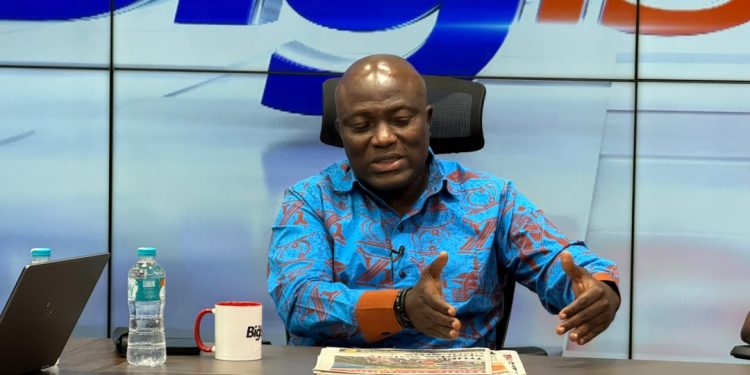
Ghana's capital is choking under the weight of traffic, and former Accra Mayor Mohammed Adjei Sowah has a deceptively simple solution: give buses their own lane. Speaking recently, Mr Sowah urged the government to reserve dedicated lanes on major Accra roads exclusively for buses carrying large numbers of passengers, arguing the move could dramatically reduce congestion and speed up public transport across the city.
The proposal targets a fundamental problem with how Accra moves people. Instead of fewer, larger buses efficiently carrying hundreds of commuters, the city relies heavily on smaller vehicles like trotros and private cars—meaning more vehicles on the road competing for space. According to Mr Sowah's logic, dedicated bus lanes would flip this equation: fewer vehicles needed, smoother traffic flow, faster commutes.
A solution that requires minimal new infrastructure
What makes Sowah's idea intriguing is that it does not require massive road reconstruction. He pointed to the Accra-Adenta stretch as a case study. That stretch already has five lanes—three main lanes plus two outer lanes—making it ideal for converting one lane into a dedicated bus corridor without expensive infrastructure overhaul. "If you look at the Adenta stretch, it's almost a five lane. You have three main lanes and then two outer lanes. So, you don't need an additional infrastructure," he explained, challenging critics who cite cost as a barrier to bus lane schemes.
The mechanics are straightforward: designate one existing lane for buses only, remove other vehicles from it, and enforce the rule. Yet Sowah was clear that the technical simplicity masks a harder truth—success depends entirely on political will and enforcement muscle.
The enforcement challenge and multi-agency coordination
Here lies the real obstacle. Dedicated lanes only work if they are properly policed and protected from the chaos of everyday Accra traffic. Sowah emphasised that the Accra Metropolitan Assembly cannot do this alone. The Ministry of Roads and Highways, Ghana Police Service, and other relevant agencies must act in concert—a level of coordination that has historically proven elusive in Ghana's public transport planning.
The proposal also reflects a broader tension in Accra's transport landscape. While the city desperately needs modern, high-capacity public transit systems, informal transport operators—trotro drivers and their unions—remain politically influential. A shift towards larger buses threatens their livelihoods, making implementation politically risky regardless of its technical merit.
Why this matters for Ghana
Accra's traffic crisis is not merely an inconvenience. It drains productivity, increases air pollution, wastes fuel, and makes commuting a daily ordeal for millions. A functioning public transport system is essential for a growing city competing for foreign investment and regional influence. Most African capitals—from Lagos to Nairobi—have attempted bus rapid transit (BRT) systems with mixed results, but those require dedicated infrastructure and large capital investment. Sowah's stripped-down model seeks to achieve similar benefits through policy reallocation rather than budget expenditure.
The proposal also signals frustration with Accra's incremental approach to urban planning. Rather than waiting for a mega-project, Sowah advocates using existing road space more intelligently—a pragmatic approach that, if executed well, could demonstrate quick wins and build momentum for larger reforms.
Whether the government will act on this suggestion remains unclear. But the conversation reflects a growing recognition among urban planners and former officials that Accra cannot muddle through indefinitely. Without intervention, the city's arteries will continue to clog, with real economic and social consequences.
Source: The Ghana Report

Comments (0)
Be the first to comment.