Accra's New Contraflow System: Ayalolo Buses Get Dedicated Lanes on Four Major Routes
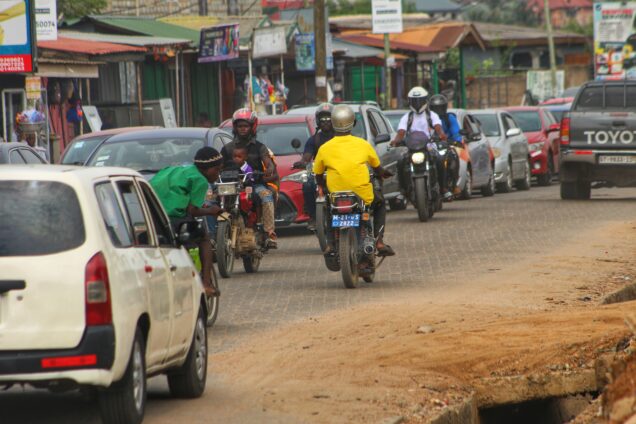
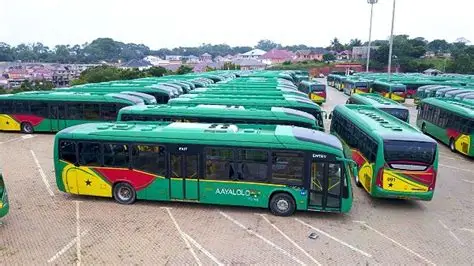
The Greater Accra Passenger Transport Executive (GAPTE) is rolling out a contraflow pilot programme this week aimed at decongesting Accra's notorious traffic gridlock by giving Ayalolo buses dedicated lanes during rush hours. Starting Tuesday, September 29, private vehicles, taxis, trotros, okadas and trucks will be barred from four newly restricted corridors during peak periods, with violators facing court action.
The initiative targets four critical commuter routes: Amasaman, Pokuase, Kasoa and Adenta—all major arteries feeding into and out of Accra Central Business District. During morning rush (6am–9am), inbound Ayalolo buses will occupy lanes normally reserved for opposite-direction traffic. In the evening (4pm–7pm), outbound buses heading away from the CBD will use inbound lanes. The lanes will be plainly marked with traffic cones, reflective dividers and signage to prevent confusion.
How the System Works
Enforcement will rely on dedicated GAPTE contraflow wardens stationed along each corridor, with support from the Motor Traffic and Transport Department (MTTD) at key intersections. The restricted lanes are designed to give Ayalolo buses a clear, unobstructed path, reducing travel times for thousands of daily commuters who rely on the public transport operator.
Each corridor has designated pickup points. The Amasaman route covers Amasaman, Kwame Nkrumah Circle and Achimota; Pokuase includes the same endpoints plus Pokuase itself. The Kasoa corridor spans Kasoa Main Station, Tuba Junction, Old Barrier, Weija Barrier and Kaneshie First Light. Adenta passengers board at Adenta Barrier, Madina Junction, Legon and 37 Hospital.
Why This Matters for Ghana
Accra's traffic congestion is widely regarded as one of West Africa's worst, costing the economy millions in lost productivity annually. About 70% of the city's commuters depend on public transport, yet Ayalolo buses—a key carrier—are frequently caught in the same gridlock as private vehicles. This pilot tests whether dedicated lanes can meaningfully improve bus speeds without causing broader traffic disruptions.
The contraflow model is not new globally, but its success in Accra depends heavily on public cooperation and consistent enforcement. GAPTE's willingness to prosecute violators signals seriousness, though Ghanaian motorists' compliance history with traffic rules is mixed. If the four-corridor pilot succeeds, it could become a blueprint for expansion across the city and potentially other Ghanaian urban centres.
For commuters, faster Ayalolo buses mean shorter journey times and less time idling in fumes. For informal transport operators—taxis, trotros and okada riders—the restriction may temporarily reroute them, but it could also signal GAPTE's broader vision to formalize and streamline Accra's transport ecosystem.
What Drivers Need to Know
- Contraflow lanes are active only during designated peak hours (6–9am inbound; 4–7pm outbound)
- Unauthorised use will result in court prosecution, not just fines
- Clear signage and lane markings will identify restricted zones
- The pilot runs for an unspecified period before review and potential expansion
GAPTE is urging all road users to cooperate with enforcement officers and strictly adhere to the restrictions. The success of this pilot will likely determine whether Accra's transport authorities pursue bolder measures to tackle the city's chronic congestion.
Source: The Ghana Report



Comments (0)
Be the first to comment.