Poor governance, not lack of money, is Africa's real financial crisis – expert
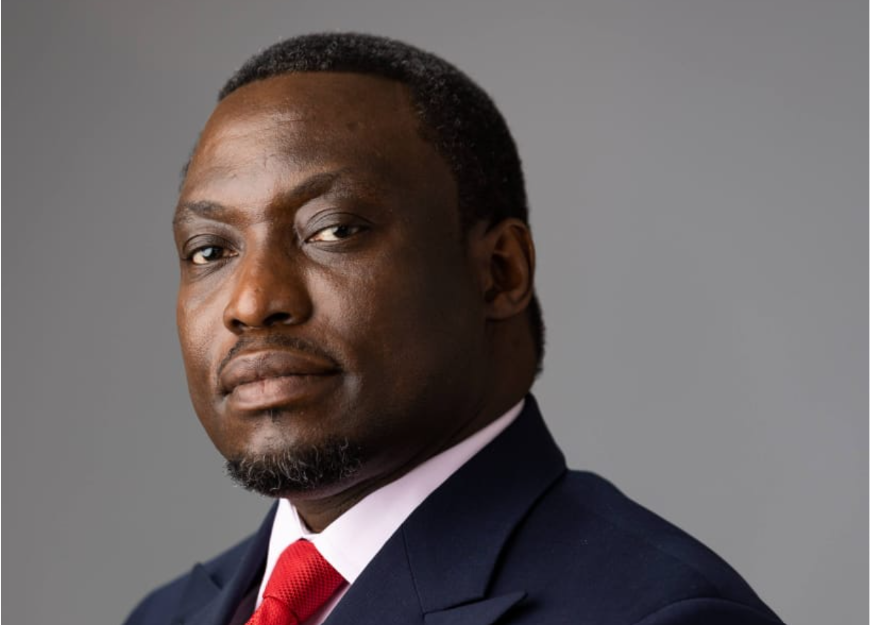
Africa's financial challenges run far deeper than a shortage of capital. According to Dr Sam Ankrah, the continent's most pressing obstacle is institutional weakness and poor governance that prevents money from reaching those who need it most.
The diagnosis comes as the informal sector—which employs the vast majority of workers across Africa—remains chronically underfunded despite global liquidity. Millions of traders, artisans, farmers, and small-scale entrepreneurs operate without access to basic financial services, not because capital doesn't exist, but because governance structures fail to channel it effectively.
The informal sector's financing squeeze
Africa's informal economy is the lifeblood of continental employment. Street vendors, market traders, craftspeople, and smallholder farmers form the economic backbone of most African nations. Yet this massive workforce operates under severe financial constraints, unable to access credit, savings schemes, or insurance at reasonable terms.
The financing gap isn't theoretical. Without access to affordable loans, informal workers cannot invest in tools, stock, or expansion. They remain trapped in subsistence-level operations, unable to build capital or weather shocks. This perpetuates poverty cycles across families and communities.
Why it matters for Ghana
Ghana's economy relies heavily on informal activity. From Accra's markets to rural agricultural zones, informal workers generate substantial economic value yet remain largely outside formal financial systems. Poor governance—including weak regulatory frameworks, corruption, and limited enforcement of contracts—discourages banks from serving this segment.
Dr Ankrah's analysis suggests that throwing more money at Africa's problems without fixing governance will yield minimal results. Ghana's financial sector development depends not just on expanding bank branches, but on building trustworthy institutions that informal workers can rely on. This includes transparent credit systems, effective contract enforcement, and accountability mechanisms that reduce lender risk.
The implications are significant. If Ghana can strengthen institutional capacity and improve governance, existing capital could be redirected toward informal sector financing. This would unlock entrepreneurship, create jobs, and generate tax revenue—without waiting for new international funding.
The governance-capital disconnect
International development finance flows into Africa regularly. Multilateral institutions, bilateral donors, and private investors commit billions annually. Yet the informal sector remains starved of funds. The disconnect reveals a critical truth: institutional failure, not capital scarcity, is the binding constraint.
Weak contract enforcement means lenders cannot reliably recover loans. Opaque regulatory environments create uncertainty. Corruption increases transaction costs. Absent property rights mean collateral cannot be assessed. These governance failures make the informal sector appear too risky for institutional lenders, regardless of available capital.
Fixing this requires sustained institutional reform: strengthening courts, improving financial regulation, reducing corruption, and building transparent credit information systems. It demands political will and technical capacity that many African governments struggle to muster.
The message is both sobering and hopeful. Sobering because it means Africa cannot simply borrow or attract its way out of poverty without institutional change. Hopeful because governance improvements are within African nations' control—they don't require waiting for external resources.
For Ghana and other African economies, the path forward centres on building credible, accountable institutions that can safely channel available capital into the hands of informal workers. That's where real financial transformation begins.
Source: 3News

Comments (0)
Be the first to comment.