
Parliament to grill Health Minister over shutdown of Ghana's critical health systems following $64,000 unpaid bill
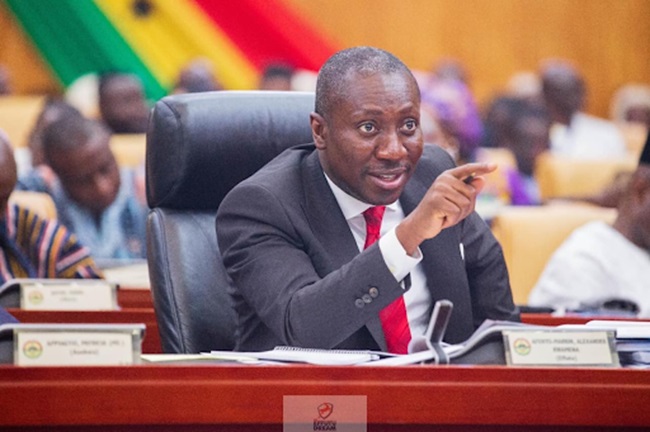

Ghana's Parliament is set to summon Health Minister Kwabena Mintah Akandoh to explain how the country's digital health infrastructure went dark after a technology provider suspended services over an outstanding bill of just over US$64,000. Minority Leader Alexander Afenyo-Markin raised the alarm on the floor of the House, demanding a full ministerial briefing on what many lawmakers see as an avoidable and deeply damaging lapse in public health administration.
What happened and which systems are affected
According to information from the Ghana Health Service, cloud hosting provider Akamai suspended ten servers on 29 October 2026 after an outstanding payment of US$64,510.95 went unresolved. The suspension triggered a cascade of system outages affecting several platforms that the country's public health network depends on daily.
The most consequential casualty is the District Health Information Management System, widely known as DHIMS2. This platform sits at the heart of Ghana's health data ecosystem, enabling facilities across all sixteen regions to collect, analyse and report health statistics — from routine immunisation figures to disease surveillance data. Without it, health workers and administrators are effectively flying blind.
- The Planning and Budget Management Information System, used for health sector financial planning, has also gone offline.
- Disease-specific tracking tools — including platforms for HIV, tuberculosis and the National Malaria Data Repository — are among the suspended systems.
- The eTracker platform, which supports community health monitoring, is similarly affected.
With digital access cut off, health facilities across the country have been forced to revert to paper-based record keeping — a step backwards that public health experts warn can introduce errors, delays and gaps in reporting that may take months to fully reconcile.
Why it matters for Ghana
The timing and scale of this disruption carry serious implications for the country's health governance and international reporting obligations. Ghana's public health system relies heavily on real-time data to manage disease outbreaks, allocate resources and meet reporting commitments to bodies such as the World Health Organisation and global health funds that support HIV and malaria programmes.
A prolonged blackout of systems like the HIV and tuberculosis trackers could compromise Ghana's ability to monitor treatment adherence and flag emerging outbreaks — risks that go well beyond administrative inconvenience. For a country that has made measurable strides in digital health integration over the past decade, the sight of health workers returning to paper ledgers is a significant reputational and operational setback.
Perhaps more troubling than the outage itself is what it reveals about financial oversight within the health sector. An amount of roughly US$64,000 — while not trivial — is a relatively modest sum compared to the total health budget, raising uncomfortable questions about why the bill was left unpaid long enough to trigger a complete suspension of services. Parliament's investigation will likely probe whether this was a budgetary oversight, a procurement failure, or a symptom of broader cash flow problems within the Ghana Health Service.
Majority Leader James Agalga acknowledged the gravity of the situation, assuring the House that the minister would be invited to provide a detailed account and that Parliament would use the engagement to identify remedies and prevent a recurrence.
Path to restoration and what comes next
The Ghana Health Service has indicated that if the outstanding hosting fee is settled promptly, the suspended platforms can be brought back online without the need for a full system rebuild — a relatively straightforward resolution, provided the funds are made available quickly. However, every additional day of downtime deepens the data gap that health administrators will eventually have to reconcile.
Lawmakers and civil society groups are likely to watch closely not only for a quick fix but for a credible explanation of how the country arrived at this point, and what safeguards will be put in place to ensure that essential public health infrastructure is never again held hostage to an unpaid invoice.
Source: MyJoyOnline



-1200x675.webp)
Comments (0)
Be the first to comment.