Over 100 Fake Universities Operating in Ghana – GTEC Issues Urgent Warning to Students
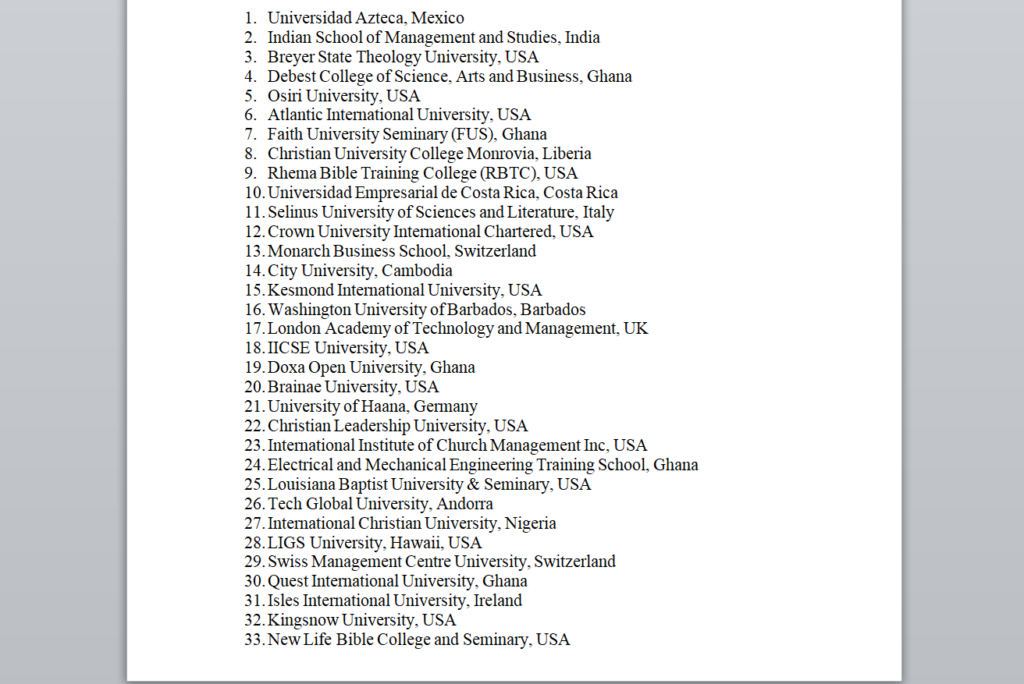
The Ghana Tertiary Education Commission (GTEC) has sounded the alarm over more than 100 tertiary institutions operating illegally across the country without official recognition, raising serious concerns about educational quality and the validity of qualifications being awarded to unsuspecting students.
In a formal statement released in September 2026, GTEC warned prospective students, parents and employers to exercise extreme caution when dealing with these unrecognised institutions. The Commission emphasised that these operations have not met the required standards and oversight mechanisms necessary for legitimate tertiary education in Ghana.
What Students and Parents Need to Know
The warning from GTEC carries significant implications for Ghana's education sector. Students enrolling at unrecognised institutions face several risks: their qualifications may not be accepted by employers, further education providers may reject their credentials, and they could lose their tuition fees without receiving legitimate qualifications. Parents are particularly urged to verify the recognition status of any tertiary institution before committing to enrolment and fees.
GTEC has advised the public to conduct thorough checks using the Commission's official database before making enrolment decisions. Students should demand evidence of GTEC recognition from any institution claiming to offer tertiary education in Ghana. Similarly, employers and further education institutions should verify the legitimacy of qualifications presented by job applicants or admission candidates before accepting them as valid.
Why This Matters for Ghana
The proliferation of unrecognised tertiary institutions represents a significant threat to Ghana's education system and human capital development. When students obtain fake degrees, they enter the job market with invalid qualifications, undermining workforce competence and productivity. This can have cascading effects across critical sectors including healthcare, engineering, public administration and finance.
The issue also damages Ghana's international reputation. Employers and international institutions may become sceptical of Ghanaian qualifications if they cannot be verified through legitimate channels. Additionally, the existence of these institutions represents lost tax revenue and reduced oversight of educational standards, making it difficult for genuine institutions to compete fairly and maintain quality assurance.
For the Ghanaian economy, the consequence is a workforce that may lack genuine skills, potentially affecting competitiveness and professional standards across sectors. Students who discover their qualifications are invalid after spending years and significant money face personal financial and reputational damage.
What GTEC Recommends
The Commission has issued clear guidance to protect the public:
- Always verify an institution's recognition status through GTEC's official channels before enrolling
- Request documentary proof of GTEC accreditation directly from the institution
- Be cautious of institutions offering unusually fast degree programmes or suspiciously low fees
- Confirm the legitimacy of any certificate before using it for employment, further education or professional purposes
- Report suspected unrecognised institutions to GTEC for investigation
Students and parents are encouraged to visit GTEC's official website or contact the Commission directly to verify the recognition status of any tertiary institution in question. This simple step can save thousands of cedis and years of wasted time on invalid qualifications.
Source: MyJoyOnline
-1200x675.webp)

Comments (0)
Be the first to comment.