
Obuasi SHTS to reopen in phases: Third-years October, second-years November
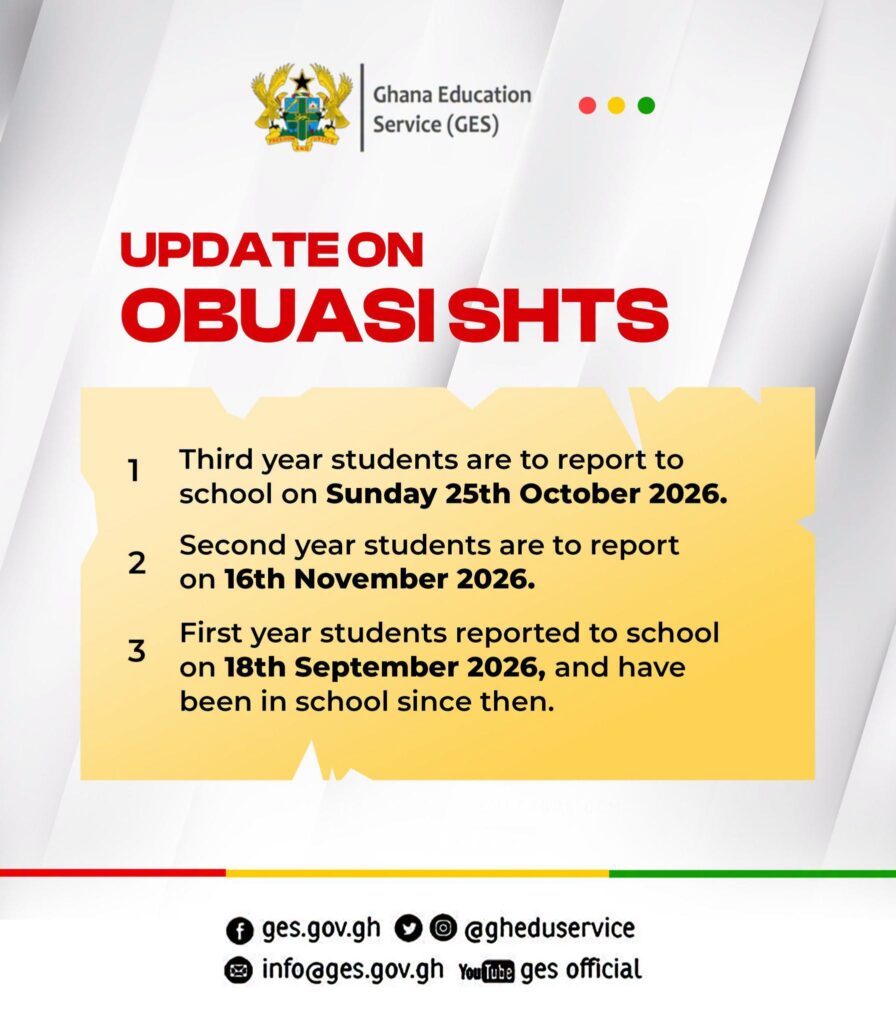

The Ghana Education Service has announced a phased reopening of Obuasi Senior High Technical School, with third-year and second-year students returning on staggered dates following the institution's temporary closure in August. The decision aims to manage the return of continuing students after months of disruption triggered by campus unrest and allegations of misconduct involving school leadership.
According to the GES announcement, third-year students—who are among the most affected by the closure—will report on Sunday, October 25, 2026. Second-year students are scheduled to return approximately three weeks later on Monday, November 16, 2026. By contrast, first-year students have already been on campus since September 18, 2026, having resumed without interruption.
What triggered the closure
The school was shut to continuing students on August 5, 2026, following serious disturbances that resulted in damage to school property and raised serious safeguarding concerns. During the unrest, Headmaster Zakaria Abdulai was physically attacked by students, an incident that drew significant media attention and prompted urgent intervention by education authorities.
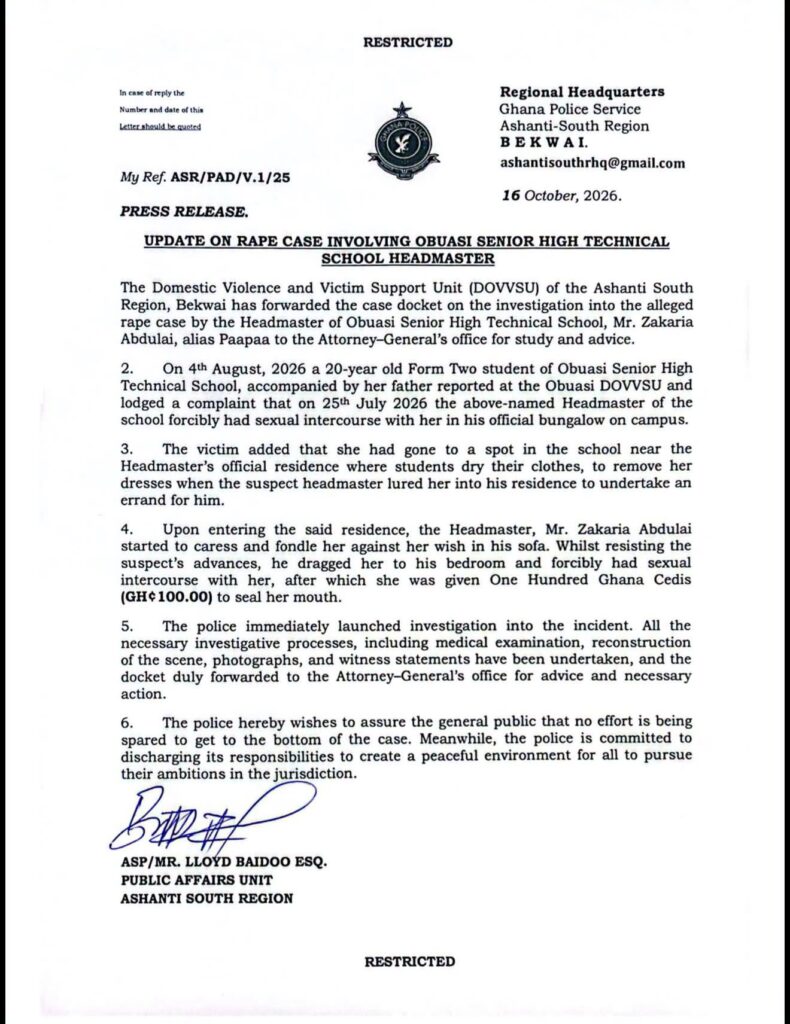
The campus unrest occurred amid formal allegations of sexual misconduct involving the headmaster. In response, the Ghana Education Service interdicted Mr Abdulai pending a full investigation. The matter also escalated to law enforcement, with police lodging a complaint involving a student. After investigation, the police forwarded their case docket to the Attorney-General's office for further review and advice on potential prosecution. The headmaster's administrative interdiction operates separately from this criminal inquiry.
Why it matters for Ghana
The prolonged closure has created genuine anxiety about the academic futures of affected students, particularly final-year students preparing for the West African Senior School Certificate Examination (WASSCE). Any extended disruption to their education calendar risks compromising their exam preparation during a critical academic window, with potential ripple effects on university admissions and career prospects.
The incident also reflects broader concerns within Ghana's secondary school system about student safety, institutional discipline, and the mechanisms available to both students and authorities when serious allegations emerge. The careful handling of allegations, investigation, and the decision to stagger reopening signals that the GES is attempting to balance swift academic recovery with the need for thorough accountability processes.
For parents and guardians, the phased return represents both reassurance that the school is reopening and acknowledgement that the situation required careful management before students could safely return. The staggered approach may also allow time for enhanced security measures and staff reorientation following the violent incidents.
What happens next
The GES has indicated that preparations are underway to facilitate the return to normal academic operations, though the specific measures being put in place—whether additional counselling, security enhancements, or staff restructuring—have not been detailed in the announcement. The Service has committed to providing further updates as necessary.
The timing of the staggered return reflects academic calendars: third-years, as the most advanced cohort, have the shortest window before final examinations and thus return first. Second-years follow, while first-years, having experienced minimal disruption, remain unaffected. This sequencing prioritises the exam preparation of final-year students while allowing time to implement any institutional reforms across all year groups.
The case remains under investigation, with the police docket and Attorney-General's advice still pending. The outcomes of these parallel inquiries may determine whether further institutional changes occur at the school.
Source: MyJoyOnline

Comments (0)
Be the first to comment.