
Obuasi Sec Tech Scandal Exposes Ghana's Broken School Safeguarding System
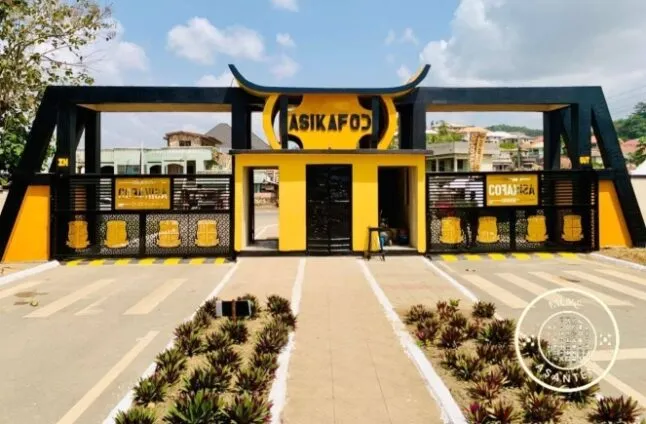

The sexual abuse scandal at Obuasi Senior High Technical School has laid bare a deeply troubling reality about Ghana's public education system: the structures meant to protect children in boarding schools are, in too many cases, either absent, ignored or actively subverted by the very officials entrusted with pupils' welfare. What happened at Obuasi Sec Tech was not simply the act of one predatory individual — it was the predictable outcome of a system designed, whether by neglect or intent, to protect institutions rather than children.
A culture of silence and complicity
Three interlocking failures enabled the abuse to persist. First, a staff-room culture of silence meant that those who knew — or strongly suspected — what was happening chose institutional loyalty over the safety of vulnerable teenagers. In Ghanaian boarding schools, teachers and housemasters occupy positions of enormous authority, and that authority, when weaponised or ignored, leaves students with nowhere to turn.
Second, the administrative instinct at the first sign of trouble was reputational management, not child protection. School anniversaries, WASSCE league tables and donor relations apparently ranked higher than the welfare of the pupils in the dormitories. Third, the power asymmetry between a boarding student and any member of staff is extreme. Children are conditioned to obey authority figures without question — a cultural norm that predators exploit with devastating efficiency.
The legal framework was clear and simply disregarded. Ghana's Criminal Offences Act, 1960 (Act 29) classifies the defilement of a child under 16 as a first-degree felony carrying a sentence of between 7 and 25 years. The Children's Act, 1998 (Act 560) explicitly places the interests of the child as the primary concern in all matters involving children and protects every child from cruel, inhuman or degrading treatment. Any administrator who received a complaint and filed it away did not merely fail in a professional duty — they potentially made themselves an accomplice to a felony under Ghanaian law.
Why it matters for Ghana
Ghana holds a symbolic distinction on child rights: it was the first country in the world to ratify the United Nations Convention on the Rights of the Child in 1990. Article 19 of that convention obliges signatory states to take all appropriate measures to protect children from violence, neglect and sexual abuse. Ghana is further bound by Article 16 of the African Charter on the Rights and Welfare of the Child. These commitments are proudly displayed at international forums. At home, in dormitories across the country, they remain largely unenforced.
The Ghana Education Service (GES) does possess written child protection policies, codes of conduct and complaints procedures. The fundamental problem is structural: in most schools, a complaint must be reported to a colleague of the accused or, in some cases, the accused themselves. A reporting system that routes allegations back to those implicated is not a safeguarding system — it is a suppression system.
The familiar response to such scandals — the ministerial fact-finding committee — has also drawn sharp criticism. Well-appointed committees convened weeks after public outrage erupts do little beyond absorbing and exhausting that outrage through delay. The conclusions are rarely surprising, the recommendations are rarely implemented and the cycle repeats at the next school.
What meaningful reform looks like
Genuine change requires structural intervention, not procedural tweaks. Among the reforms most urgently needed are the establishment of an independent National School Safeguarding Authority operating entirely separately from the GES, with powers to investigate, sanction and refer cases to prosecutors without going through school or district education officials.
- An anonymous digital reporting platform that allows pupils to report abuse directly to an independent authority, bypassing headmasters entirely.
- Criminal liability for any education administrator who fails to report allegations to the police within 24 hours of receiving a complaint.
- Mandatory, independent oversight of all single-sex boarding facilities, with unannounced inspections carried out by personnel with no prior relationship to the school.
Obuasi Sec Tech should not be treated as an isolated incident. It is a case study in what happens when institutional reputation is valued above children's safety, when the law is treated as optional and when those appointed to protect the vulnerable are given neither the oversight nor the accountability that the role demands. Ghana has the legal architecture to protect its children. What has been missing, repeatedly and inexcusably, is the political will to enforce it.
Source: The Ghana Report




Comments (0)
Be the first to comment.