
GES Scraps Basic School Mid-Term Break to Recover Lost Teaching Days

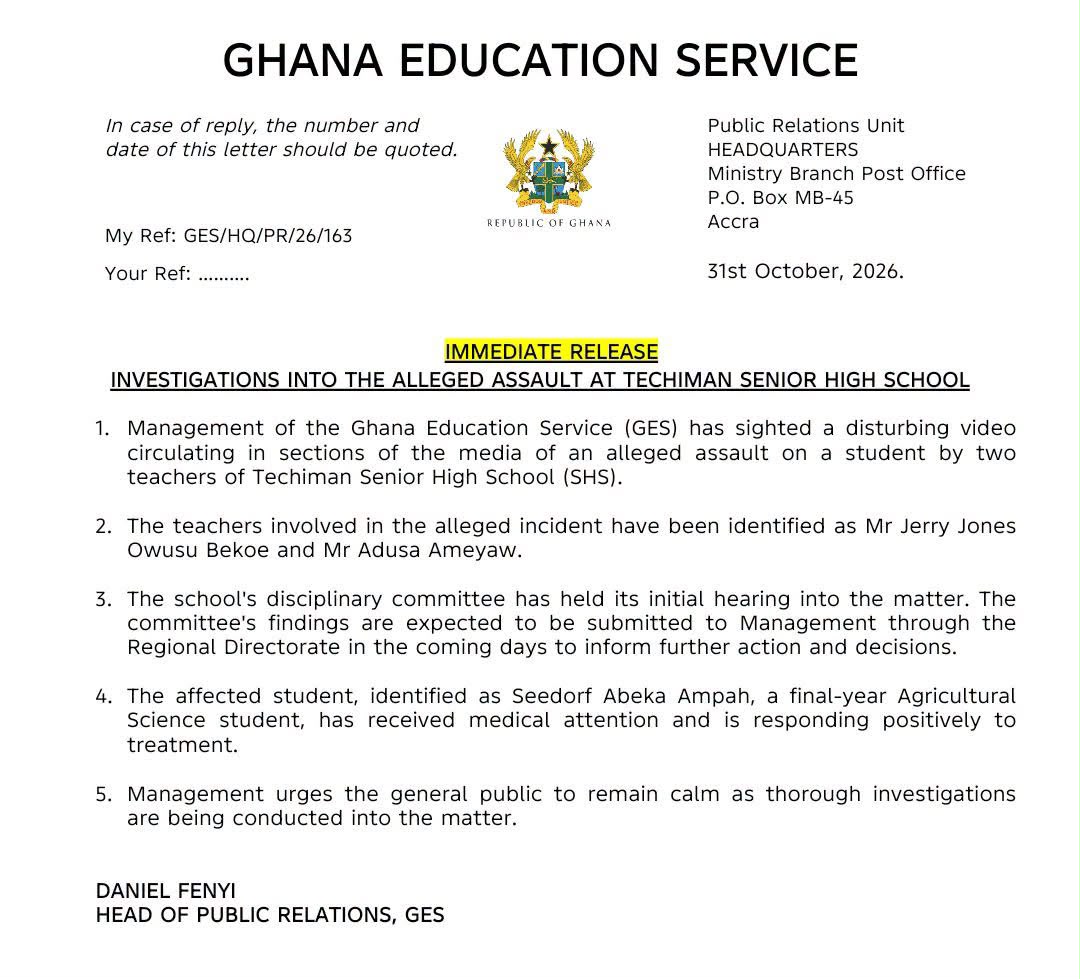
The Ghana Education Service (GES) has directed all basic schools across the country to remain open on what was previously scheduled as a mid-term break, cancelling the two-day rest period on November 5 and 6 in a bid to recover teaching hours lost during a recent industrial action. The notice, signed by GES official Daniel Fenyi, urges teachers, pupils, parents and guardians to take note of the change immediately.
What has been announced
Under normal academic scheduling, basic school pupils and their teachers would have had Thursday, November 5 and Friday, November 6 off as a mid-term break. That will no longer be the case. GES Management confirmed in an official public notice that schools are expected to carry on with full, normal academic activities on both days — meaning no holiday, no shortened sessions, and no exceptions outlined for specific regions or districts.
The directive applies to basic schools nationally, covering primary and junior high school levels. Parents and guardians are being asked to ensure their children report to school as usual on both days, while teachers are equally expected to be present and deliver lessons as scheduled.
The background: industrial action and lost learning time
The cancellation is a direct consequence of an industrial action that disrupted schooling at the basic level in recent times. When teachers down tools or schools are forced to close due to strikes, the academic calendar suffers — and it is ultimately pupils who bear the cost in lost instructional hours and incomplete syllabi coverage.
Ghana's academic authorities have in the past faced recurring challenges balancing the legitimate labour grievances of teachers' unions with the educational needs of millions of pupils. Industrial actions by teacher unions, including bodies such as the Ghana National Association of Teachers (GNAT) and the National Association of Graduate Teachers (NAGRAT), have periodically led to classroom disruptions. While the GES notice does not specify which industrial action prompted this particular decision, the intent is clear: the service wants schools to maximise every available school day before the term ends.
Recovering lost instructional time is not merely an administrative concern — research consistently shows that gaps in classroom contact time can widen inequalities, particularly for pupils in under-resourced communities who have fewer alternatives such as private tutoring or online learning tools.
Why it matters for Ghana
For Ghanaian families, the scrapping of a scheduled break requires quick adjustment to childcare arrangements, transportation plans and household routines — especially for working parents who may have already made alternative plans for those two days.
For pupils preparing for standardised assessments, including the Basic Education Certificate Examination (BECE), every additional day of structured teaching can be meaningful. Teachers, too, will welcome the opportunity to cover outstanding topics, though some may have had personal commitments tied to the anticipated break.
The broader implication is a reminder of how industrial actions in the education sector create ripple effects that extend well beyond the immediate dispute. When negotiations between government and teacher unions break down, it is the classroom — and the child sitting in it — that ultimately pays the price. The GES decision to cancel the break signals a determination to limit that damage as much as possible.
- Mid-term break for basic schools on November 5 and 6 has been cancelled by GES.
- The cancellation aims to recover instructional time lost during a recent industrial action.
- Teachers, pupils, parents and guardians are urged to note the change and act accordingly.
Source: Today GH



Comments (0)
Be the first to comment.