Nursing Officer's Arrest in 'Ghana Jollof' Case Sparks Outcry Over Due Process Violations
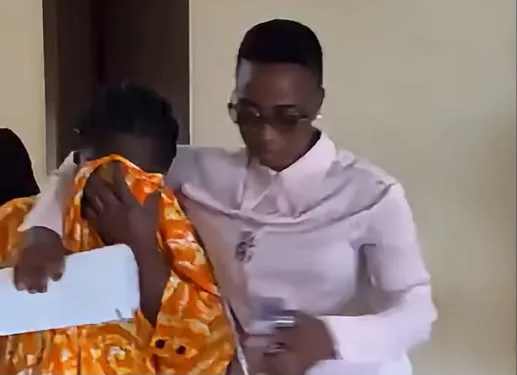
A groundswell of public concern has erupted following the arrest and remand of Salomey Awiti Baffoe, a Senior Nursing Officer, over allegations she operates the anonymous "Ghana Jollof" TikTok account—a claim her former classmates say is demonstrably false and that raises serious questions about police procedure and due process in Ghana.
Ms Baffoe, a mother of three from Techiman, was taken from her home on September 13 at approximately 11pm by three individuals claiming to be National Security operatives. According to accounts from those who know her, no warrant was presented, no grounds for arrest were stated, and she was not permitted to contact a lawyer or her children before being removed.
The Evidence Against the Arrest
The case against Ms Baffoe appears to crumble under scrutiny. Most critically, the prosecution itself acknowledged in court that the actual "Ghana Jollof" account operator is currently in the United Kingdom. This admission creates a fundamental logical problem: how can someone remanded in a Ghanaian cell be running an active social media account from abroad?
Shortly after Ms Baffoe's arrest, the "Ghana Jollof" account posted a video in which the voice explicitly stated: "You arrested the wrong person. Salomey Baffoe is not Ghana Jollof. I am Ghana Jollof. You think you can silence me by arresting an innocent woman? You are wasting your time." The account has continued posting regularly since the arrest, further undermining any connection between Ms Baffoe and the account.
Her former classmates from the 2001 Final Year Batch of Adventist Junior High School, Techiman, issued a detailed statement on September 17 characterising Ms Baffoe as a disciplined, quiet individual who excelled academically, pursued nursing as a career, and maintained no political affiliations or activism—a stark contrast to the profile of someone running a provocative political satire account.
Why It Matters for Ghana
This case raises alarming questions about Ghana's commitment to constitutional protections and the rule of law. The arrest exhibits several troubling patterns: midnight detention without a warrant, silence from authorities about grounds for arrest, and detention that appears to contradict the prosecution's own evidence in court.
The incident also highlights broader concerns about how security agencies respond to online criticism. The "Ghana Jollof" account has gained prominence for satirical commentary on governance and political issues, yet rather than address substantive criticism, authorities appear to have conducted an operation based on thin evidence or possible mistaken identity.
For healthcare workers and civil servants more broadly, the case sends a chilling message: you can be removed from your home without warning based on speculative allegations, separated from your children, and held in custody even when the evidence contradicts the charges.
Calls for Accountability
Ms Baffoe's former classmates are demanding several actions: her immediate and unconditional release, a public apology from the state to her and her family, full investigation into who authorised the arrest, and compensation if she is found to have been falsely accused. They are also pressing for prosecution of those responsible if the investigation confirms wrongdoing.
These demands reflect frustration not merely with a single case, but with a pattern where security operations appear to prioritise speed and political expediency over constitutional procedure. The statement concludes with a pointed question applicable far beyond this incident: "The Ghanaian people deserve to know."
As Ms Baffoe's case proceeds, it will test whether Ghana's courts and security agencies operate according to law or political pressure—and whether an innocent mother's detention can be corrected before greater damage is done.
Source: MyJoyOnline
.jpg)

Comments (0)
Be the first to comment.