
Most Ghanaians Are Working But Earning Far Less Than They Produce, GSS Report Warns

Ghana's workforce is growing, but the quality of jobs and the rewards workers receive are failing to keep pace — that is the central finding of the Ghana Statistical Service's 2026 Productivity, Employment and Growth Report. The report, which analyses three and a half decades of economic data from 1991 to 2025, paints a sobering picture of an economy where more people are employed than ever before, yet structural weaknesses continue to hold back living standards for the majority.
The numbers behind the headlines
Total employment in Ghana rose from 11.1 million people in 2021 to 13.3 million in 2025 — a significant increase. Yet the unemployment rate still stands at 12.8% overall, and climbs sharply to 32.4% among young people aged 15 to 24 who are actively seeking work. Close to one in five Ghanaians aged 15 to 35 — some 17.9% — are classified as NEET, meaning they are not in education, employment or training.
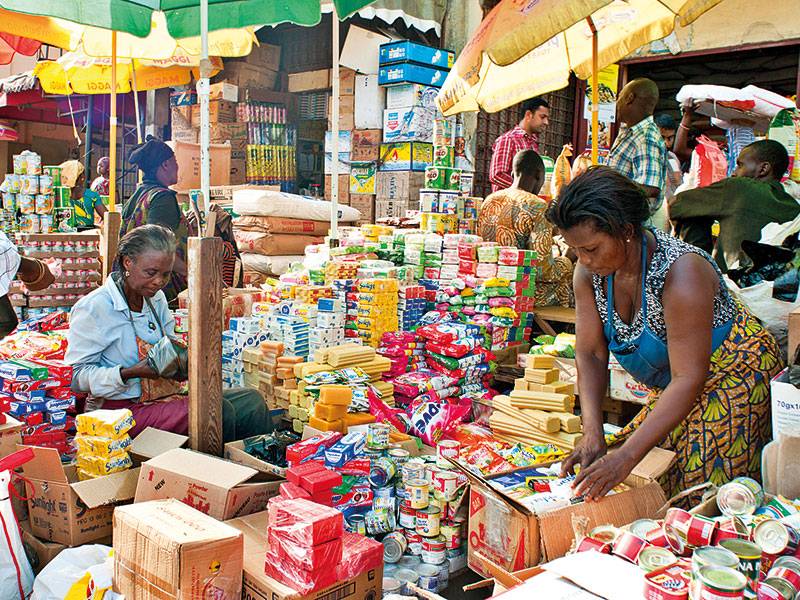
The informal economy continues to dominate. Around 86% of workers were in informal employment as of the third quarter of 2025, while 72% were in what the GSS classifies as vulnerable employment — work that offers little security, few benefits and limited prospects for advancement. A further 11.6% of workers are underemployed, putting in fewer hours than they would like.
Perhaps the starkest finding concerns the gap between what workers produce and what they actually take home. In 2025, the average Ghanaian worker generated GH₵15,197 in value added but earned only GH₵9,388 — a difference of nearly GH₵6,000. In industry, the gap is even wider: output per worker reached GH₵30,588, while average earnings stood at GH₵15,822. Average earnings across the economy have still not recovered to pre-pandemic levels, meaning many workers are worse off in real terms than they were before COVID-19 struck.
Agriculture, which remains the single largest employer in the country, recorded the lowest output per worker of any sector at GH₵8,859 in 2025. Meanwhile, growth in capital per worker — a key driver of long-term productivity — has slowed to just 1.0% per year since 2020, suggesting that businesses and the broader economy are investing less in the tools, machinery and technology that make workers more productive.
Why it matters for Ghana
These figures matter because productivity growth is the engine through which an economy translates hard work into higher incomes and improved living standards. When workers produce more for every hour they put in, there is more wealth to distribute — through wages, public services and investment. Ghana's challenge, as the GSS report makes clear, is that growth has largely been driven by adding more workers and more capital rather than by using existing resources more efficiently. That model has limits, and the country appears to be approaching them.
The concentration of employment in agriculture and informal services means that productivity gains in high-growth sectors such as information and communication, or electricity and gas, benefit only a small slice of the workforce. For the majority of Ghanaians — farmers, traders, artisans and informal service workers — productivity improvements in their sectors would have the broadest and most immediate impact on household incomes.
Youth unemployment is a particularly urgent concern. With nearly a third of young labour-force participants unable to find work, and a mismatch between the skills of secondary school leavers and what employers need, the report signals a risk that a generation of Ghanaians could be left behind precisely when the country needs their energy and talent most.
What the GSS is recommending
The GSS has outlined five priorities based on the evidence. It is calling for productivity to be treated as a formal national goal, tracked and reported alongside traditional growth indicators. It recommends directing investment and policy attention towards raising output in sectors where most people already work, particularly agriculture, trade and manufacturing. The Service also stresses the need for investment to recover and to be deployed more efficiently — through better technology, stronger management and smarter allocation of resources.
- Youth skills must be better matched to available jobs, with particular attention to those leaving secondary school without clear pathways into employment.
- Wage-setting mechanisms and social dialogue should be strengthened so that productivity gains are actually reflected in workers' pay packets.
- Measuring and reporting productivity as a national target would hold policymakers accountable for translating growth into better living standards.
The report draws on four censuses and multiple surveys, following methods established by the International Labour Organization and the OECD, lending its findings considerable credibility. For policymakers, businesses and workers alike, the message is clear: Ghana's economy is growing, but growth alone is not enough if the majority of citizens do not share meaningfully in its fruits.
Source: MyJoyOnline




Comments (0)
Be the first to comment.